Owner and facility manager questions
Industrial roofing FAQ
Do you do industrial roofing in Myrtle Beach?
WeatherShield's commercial roofing page lists warehouses among the Grand Strand buildings it serves, alongside retail centers, hotels, offices and medical or HOA properties, and says it installs TPO, EPDM, PVC, modified bitumen, built-up and commercial metal roofing. The page also says that several regional and national firms handle large-scale commercial and industrial roofing along the Carolina coast, and that the right fit depends on your building, not company size. Start with the free on-site assessment: it documents the roof's condition, leak points, drainage, the existing system and the next steps, and tells you whether the job is a fit.
What does industrial roofing cost?
WeatherShield does not publish prices. Its commercial page lists what moves the number: roof size, tear-off requirements, wet insulation, decking condition, roof access, drainage, edge metal, wind-uplift specifications, membrane thickness, warranty length, and whether the work must be phased around business hours. It adds that coastal buildings may need upgraded fasteners, flashing and edge details because salt air and wind are harder on commercial roofing materials. A written estimate follows the free on-site assessment.
Which roof system is best for a warehouse on the coast?
WeatherShield's page recommends TPO or PVC for most Myrtle Beach flat roofs, for heat reflection, hurricane resistance and longevity in coastal conditions, with PVC where grease or chemicals reach the roof, EPDM as a cost-effective choice on complex roofs, and metal where strength matters. The EPA notes that cool roofing products have been used for many years on commercial and industrial buildings and lists single-ply membranes with light-colored pigments among low-slope cool roof products.
When should an industrial roof be replaced on the Grand Strand?
Outside hurricane season when possible. The National Hurricane Center's Atlantic season runs June 1 to November 30, with the first hurricane of an average year forming in early to mid-August. A roof that is already open, ponding or losing edge metal should not wait for the calendar; WeatherShield's page says it offers 24/7 emergency repair and tarping, with permanent repairs scheduled afterwards.
Can production keep running during the re-roof?
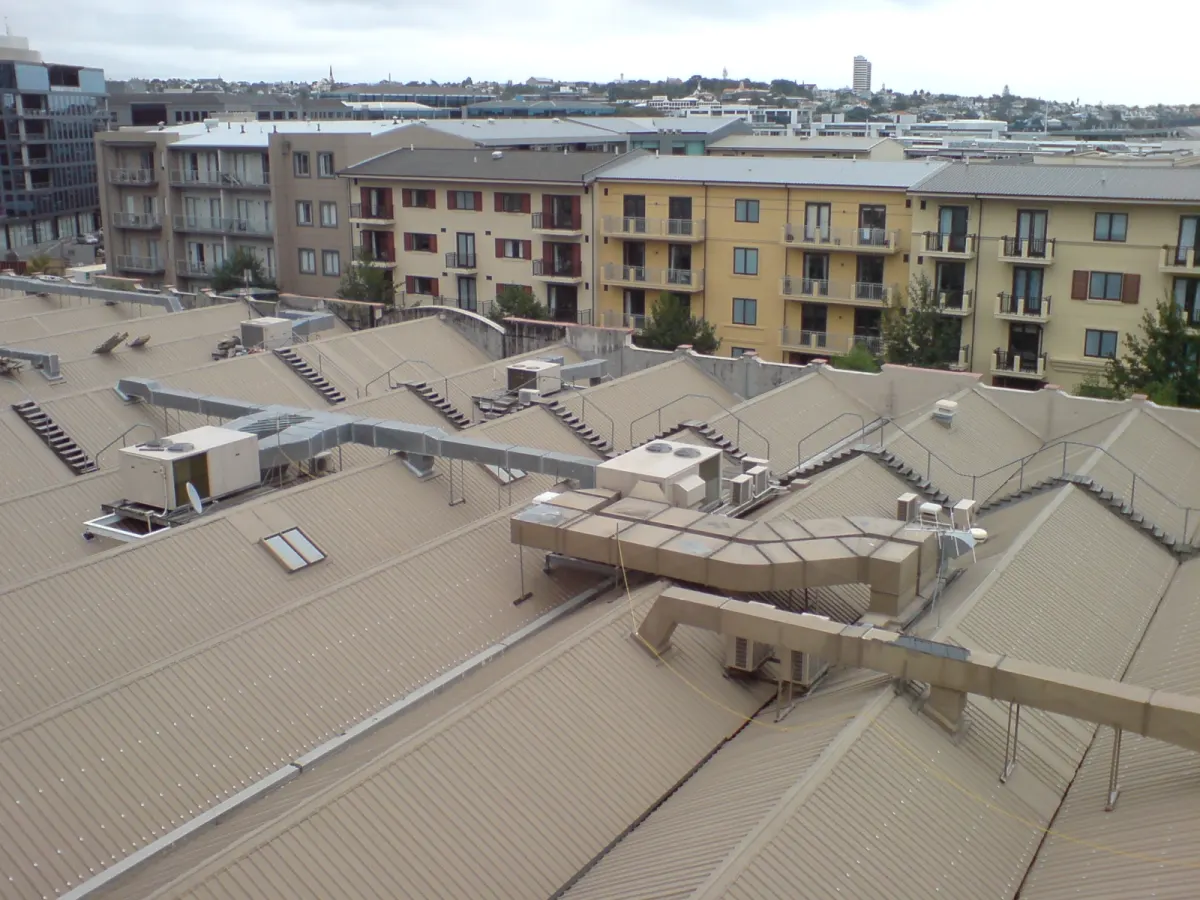
WeatherShield's commercial page says its teams work around active businesses by scheduling off-hours or weekends and phasing the installation, with safety protocols for employees, customers and property. The phasing plan is written after the assessment, because it depends on the roof layout, the rooftop equipment and where your people and inventory are.
What safety rules apply when roofers are on our building?
Two OSHA rules. The roofing crew does construction work (OSHA 29 CFR 1910.12 defines it as work for construction, alteration, and/or repair), so 29 CFR 1926.501 applies: fall protection on an unprotected side or edge 6 feet (1.8 m) or more above a lower level, in hoist areas 6 feet or more above lower levels, and from falling through holes (including skylights) more than 6 feet above lower levels, with a specific paragraph for roofing work on low-slope roofs. Your own building staff on the roof are covered by the general industry rule, 29 CFR 1910.28, which starts at 4 feet (1.2 m). WeatherShield's commercial page says its team follows OSHA safety protocols. Ask for the safety plan in writing.
Which areas do you cover?
Myrtle Beach, North Myrtle Beach, Surfside Beach, Garden City, Murrells Inlet, Conway, Carolina Forest, Socastee and Little River, plus the nearby Grand Strand ZIP codes the request form accepts. Our office is at 215 Ronnie Ct. Unit F in Myrtle Beach.