Flat + metal commercial roofs

Commercial Roof Restoration in Myrtle Beach, SC

A worn commercial roof can often be restored instead of torn off, if the insulation under it is dry. The roof coating makers' association says a properly applied coating can add up to 10 years or more of life. WeatherShield checks the roof first and puts restore, repair or replace in writing.

  • Myrtle Beach office, Grand Strand crews
  • Free on-site commercial assessment
  • Restore, repair or replace in writing

Commercial roof assessment

Tell us about the building and the roof.

Roof type if you know it, rough size and age, where it leaks, and whether the building stays open. Choose Roof Repair or Other and say it is a commercial roof.

Online requests are limited to WeatherShield's Grand Strand service area.

Water coming through the ceiling right now?

That is a repair first, not a coating. Call us, and see what to do in the first hours on our commercial roofing page.

Commercial roof repair in Myrtle Beach
(843) 877-5539

The short answer

Repair, restore or replace a commercial roof?

Restoration is the middle path. It costs the building less disruption than a tear-off and covers far more than a patch. But it only works on a roof that is still a sound base. Here is how the three options compare.

Repair

What it is
Fix the leak points: seams, flashings, drains, penetrations, fasteners.
It fits when
Leaks come from a few spots, the membrane is sound across most of the roof, the insulation is dry.
On the roof
Small areas are opened, patched or replaced. The rest of the roof is left alone.
Disruption
Lowest. Usually a short visit.
Worth knowing
A good time to ask how many years the rest of the roof has left.

Restoration

What it is
Clean the whole roof, repair every defect, then apply a fluid-applied coating over the entire surface.
It fits when
The membrane or metal is worn and weathered but still serviceable, and the insulation under it is dry.
On the roof
No tear-off. The existing roof stays as the base, and the coating becomes its new top layer.
Disruption
Lower than replacement. No open deck, no tear-off debris chute.
Worth knowing
Coating systems can usually be recoated later as they wear, per the coating makers' association.

Replacement

What it is
Tear off down to the deck (or as far as needed), replace wet insulation and damaged deck, install a new roof system.
It fits when
Wet insulation across large areas, broad membrane or seam failure, deck damage, or a roof that has already been coated and failed.
On the roof
New insulation and a new membrane or metal roof, built to today's details.
Disruption
Highest. Tear-off, disposal and more days on the roof.
Worth knowing
A new system comes with its own manufacturer warranty terms.

Up to 10 years or more

How much a properly applied roof coating can extend a roof's life, based on long-term histories, according to the coating makers' association. Coating type, conditions and film thickness change the result.

50°F and rising

The air temperature the association gives for water-borne coatings, with no rain for the next 24 hours. Solvent-borne coatings can go on in colder weather.

June 1 to November 30

The official Atlantic hurricane season. A coating is a surface layer; it does not fix loose edges or fasteners, so those get checked before the season.

600 million tons

Construction and demolition debris generated in the US in 2018, with just under 145 million tons sent to landfills. A restored roof stays on the building instead of going into that pile.

Is your roof a candidate?

Six signs restoration can work, six that rule it out

The question is not how old the roof is. It is whether what sits under the surface is still dry and sound.

Restoration can work when

  • The roof surface is weathered, chalky or crazed, but not split, blistered or soft across large areas.
  • Leaks come from details (seams, flashings, drains, penetrations) that can be repaired.
  • A moisture check shows the insulation under the membrane is dry, or wet only in small areas that can be cut out and replaced.
  • The roof drains. Ponding is limited, or the coating chosen is one its maker says can sit in standing water.
  • On metal, rust is surface rust, and fasteners can be tightened, treated or replaced.
  • Nobody has coated it before, or the old coating is sound and compatible with the new one.

Look at replacement when

  • Wet insulation across large parts of the roof. Coating over it seals the water in.
  • Soft, sagging or rotten deck, or metal that has rusted through.
  • A ballasted or gravel-surfaced roof, unless it is specially prepared first. The coating makers' association says these are not typically acceptable surfaces for a coating.
  • Seams and flashings failing everywhere, not in a few places.
  • A previous coating that peeled or failed, which points to a bonding or moisture problem underneath.
  • A new-roof warranty still in force that a coating could break. Read it first.

Moisture first, coating second

Why the roof is checked for wet insulation before any coating

Water that got under the membrane soaks the insulation. From the surface, a wet roof and a dry roof can look the same. A coating over wet insulation seals the water in, and the roof keeps rotting under a surface that looks new.

  • Infrared survey: Wet insulation holds heat differently from dry insulation. ASTM C1153 is the standard practice for locating wet roof insulation with infrared imaging.
  • Core cuts: Small samples cut through the roof show what is actually under the membrane, how many layers there are, and whether it is wet.
  • Adhesion test patch: A test area shows whether the chosen coating bonds to this roof's surface before it goes on the whole roof.
  • Cut out, replace, then coat: Small wet areas can be removed and replaced with dry insulation and new membrane before coating. Large wet areas mean replacement.

Our free on-site assessment looks at the roof's condition, leak points and drainage. If it cannot rule out wet insulation, we tell you a moisture survey is needed before anyone recommends a coating.

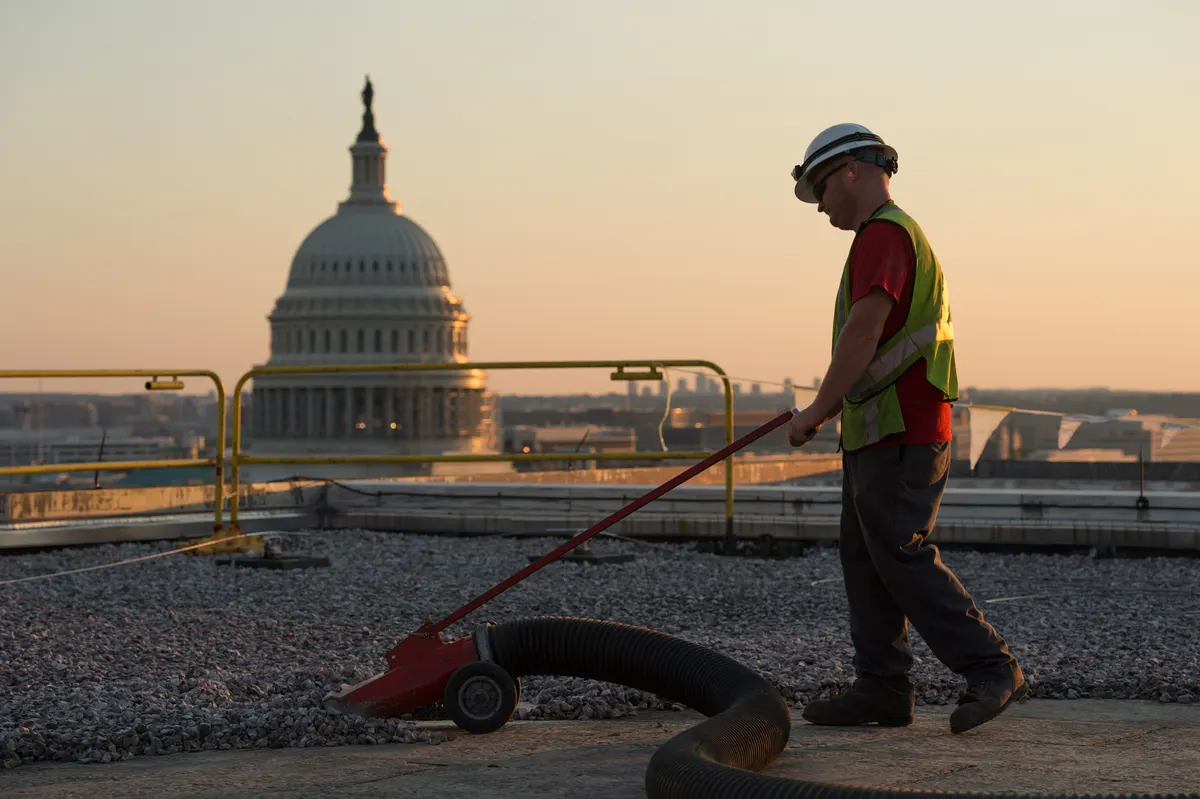
Roofer in a hard hat and safety vest vacuuming loose gravel ballast off a flat roof, with the US Capitol dome in the background at sunrise
Ballast being vacuumed off a flat roof before roof work on the Hart Senate Office Building, Washington, D.C., 2014. Gravel and ballast have to come off, or the surface be specially prepared, before a coating can go down. Photo: Architect of the Capitol, public domain. Not a WeatherShield job.

Roof by roof

What restoration means on each kind of commercial roof

The coating is the last step. Most of the work is the repair before it, and that work is different on every roof type.

TPO and PVC single-ply

Single-ply membranes are common on retail, office and hospitality buildings. Restoration starts with the seams, flashings and penetrations. Then the surface is cleaned, any primer the coating maker requires goes on, and the coating goes over it.

EPDM (black rubber)

Seams, edges and flashings are checked and repaired first. The coating maker decides whether EPDM needs a primer. A white reflective coating also changes how much of the sun's heat the black membrane takes in.

Modified bitumen and built-up roofs

Blisters are cut out and patched, laps re-sealed and wall flashings rebuilt. Built-up roofs with loose gravel or ballast need the gravel removed or the surface specially prepared before any coating, per the coating makers' association.

Metal roofs (warehouses, shops, churches)

Loose or rusted fasteners are treated or replaced, laps and ridge caps sealed, and rust dealt with first. The association says red rust must be removed or treated with a corrosion-inhibiting primer before coating; white rust can be coated after cleaning.

Spray polyurethane foam (SPF)

On a foam roof, the coating over the foam is the part that wears. The ASTM specifications for silicone and polyurethane roof coatings (D6694 and D6947) are written for coatings used on spray foam roofs.

Commercial roof coatings, in plain words

Four coating families and the questions to ask about each

The coating makers' association lists acrylics, urethanes, silicones and other types among the white reflective coatings, and aluminum coatings for asphalt roofs. It also says not every coating can sit in ponding water. So the right question is not "which is best" but "what does the maker rate it for, in writing?"

Aluminum (asphalt-based)

Specification to ask for
Ask the maker for its specification
Ask the maker
Is the existing roof asphalt-based? Is the goal reflectivity or simple weathering protection?
Worth knowing
The association says aluminum coatings are typically used with asphalt roofs.

The association also says a primer is no substitute for thorough cleaning, and that how much coating goes on depends on the maker and the project specification. Coating a home or a smaller roof?

Roof coating for all roof types

Hotels, condos and HOA boards

Restoring the roof on an occupied Grand Strand building

Many hotels, condo towers and HOA buildings have to stay open while the roof is worked on. Restoration keeps the existing roof in place, so there is no open deck and no tear-off debris to haul through a building full of guests or residents.

What to bring to the board or owner

  • The roof's moisture findings: where it is dry, where it is wet, and how that was checked.
  • A written scope that says repair, restore or replace, and why the other two were ruled out.
  • The coating system named by maker and product, with its specification and how thick it goes on.
  • The coating maker's warranty terms in writing: what is covered, for how long, and the inspections it requires.
  • How the work is staged around guests, tenants or residents: access, rooftop equipment, noise, parking.
  • What happens if rain is forecast during the job, since water-borne coatings need a dry window to cure.
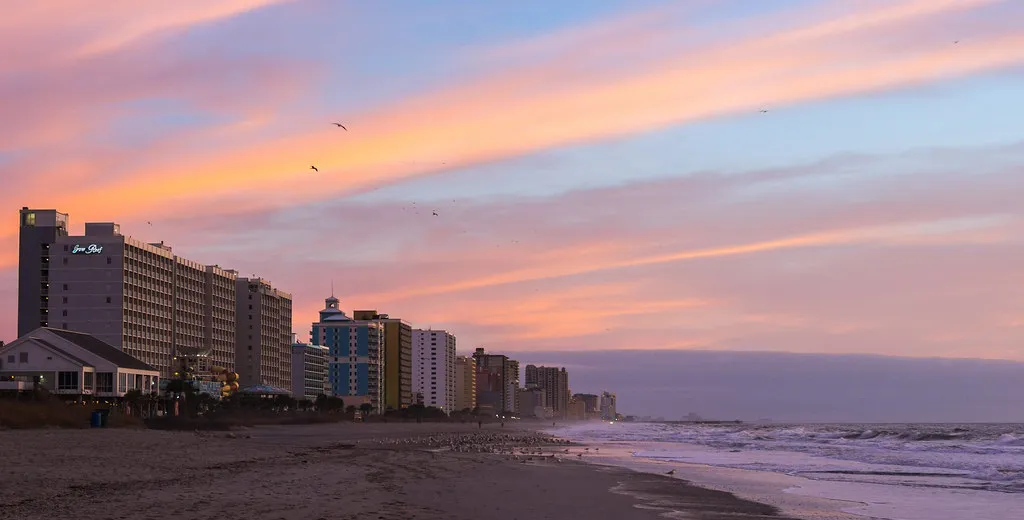
Row of oceanfront hotel and condo towers along the beach in Myrtle Beach at sunrise, with waves on the right
Oceanfront hotels and condos along the beach in Myrtle Beach. Photo: Matthew Trudeau, CC0 (Flickr), cropped. Not a WeatherShield job.

Coastal weather

Hurricane season, wind and the weather window to cure

Grand Strand roofs face salt air, summer heat and a hurricane season every year. Hurricane Ian made its final landfall near Georgetown, South Carolina, on September 30, 2022, at 70 knots (about 80 mph), according to the National Hurricane Center.

A coating does not hold the roof down

A coating is a surface layer. Loose edges, flashings and fasteners are repaired or re-secured before it goes on. Ask the maker what wind testing the coated system has.

Inspect after every big storm

The coating makers' association recommends inspecting a coated roof twice a year and after a major storm or high-wind event.

Cure needs the right weather

For water-borne coatings, the association gives 50°F and rising with no rain for the next 24 hours. Drying time also depends on wind, roof temperature and humidity.

Plan it before the season

The Atlantic hurricane season runs June 1 to November 30. A roof restored and checked before it starts has its edges and seams secured going in.

Storm damage roof repair in Myrtle Beach

Warranty and money

Six warranty questions to ask before you sign

The coating makers' association says coating makers offer different types of warranties for different needs. It also warns that a coating can conflict with a warranty still in force on a newer roof. Get the terms in writing.

  1. 1Who issues the warranty: the coating maker, the contractor, or both?
  2. 2Does it cover the coating material only, or labor and leaks too?
  3. 3What inspections and maintenance does it require, and how often?
  4. 4Does the existing roof still have a warranty, and would a coating void it?
  5. 5Can the coating be recoated at the end of its term, and does that renew any coverage?
  6. 6What documentation do you get at the end: product data, thickness checks, photos?

What moves the price (we do not publish one)

  • Roof size and the existing roof system
  • How much repair is needed before coating
  • Wet insulation that has to be cut out and replaced
  • Roof access, rooftop equipment and building hours
  • The coating system and how thick it goes on
  • Restoration skips tear-off and disposal; replacement does not

On taxes, the association says roof coatings are typically classified as maintenance. IRS Publication 946 says that, if you elect it, section 179 property can include roofs added to nonresidential property after the building was first placed in service. Ask your tax adviser which applies to your building.

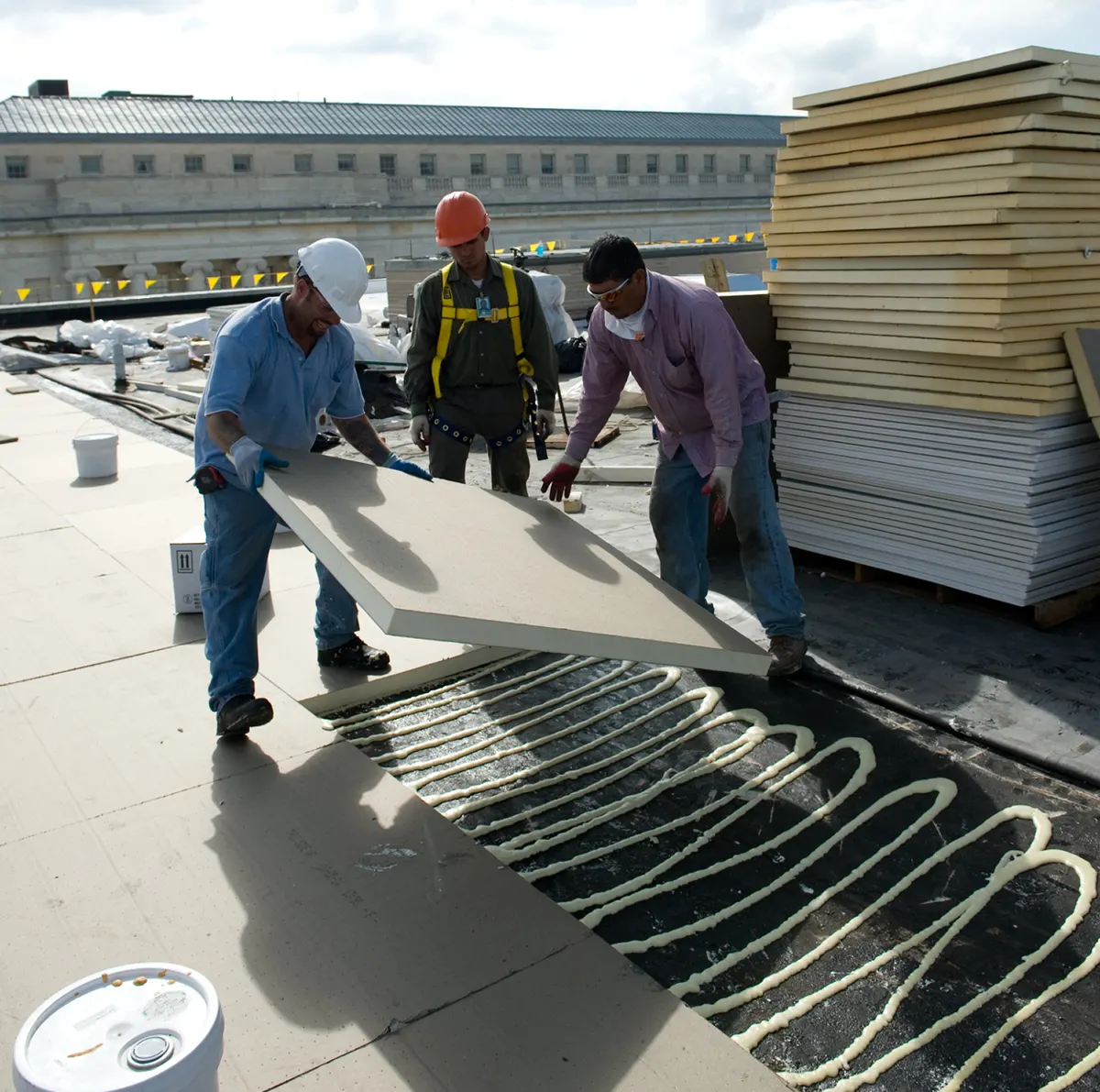
Three roofers in hard hats setting a new rigid insulation board into beads of adhesive on a flat roof, with stacked insulation boards beside them
When restoration is ruled out: new insulation boards going down in adhesive during a full roof replacement on the Rayburn House Office Building, Washington, D.C. Photo: Architect of the Capitol, public domain, cropped. Not a WeatherShield job.

The process

From a worn roof to a decision you can defend

  1. 01

    Tell us about the building

    Roof type if you know it, rough size, how old it is, where it leaks, and whether the building stays open during work. Photos of the roof and any ceiling stains help.

  2. 02

    Free on-site assessment

    We look at the roof's condition, leak points, drainage and the existing system. If a visual check cannot rule out wet insulation, we tell you a moisture survey is needed before anyone talks coating.

  3. 03

    Restore, repair or replace, in writing

    You get what we found and the option we recommend, with the reasons the other options were ruled out. If replacement is the honest answer, we say so.

  4. 04

    A schedule that fits the building

    Work is planned around occupants, rooftop equipment and the weather window the coating needs to cure.

  5. 05

    Inspect it after storms

    The coating makers' association recommends inspecting a coated roof twice a year and after a major storm or high-wind event. We tell you what to look at.

Commercial roof maintenance after the work

Owner and manager questions

Commercial roof restoration FAQ

Do roof restorations actually work?

They work on the right roof. The Roof Coatings Manufacturers Association says a properly applied coating can extend a roof's life by up to 10 years or more, based on long-term histories, with type, conditions and thickness changing the result. They fail when a coating goes over wet insulation, failing seams or a surface the coating cannot bond to. That is why the roof is checked before anyone recommends a coating.

What is commercial roof restoration?

It is cleaning the whole roof, repairing every defect (seams, flashings, drains, fasteners, small wet areas), and then applying a fluid-applied coating over the entire surface. The existing roof stays on the building and becomes the base for the coating. It sits between a spot repair and a full tear-off replacement.

Can you put a coating over wet insulation?

No. Coating over wet insulation seals the water in, and the roof keeps rotting under a surface that looks new. Small wet areas can be cut out and replaced before coating. If wet insulation runs across large parts of the roof, replacement is the better answer. ASTM C1153 describes how infrared imaging is used to locate wet insulation in roofs.

Will a roof coating stop my leaks?

Do not count on it. The coating makers' association says coatings may stop minor leaks and seal pinholes, but the roof should be properly repaired and dried before coating, and a coating will not find and seal the leaks for you. Leaks are traced and repaired first.

How long does a commercial roof coating last?

It depends on the coating type, the conditions it faces and how thick it is applied. The coating makers' association says that, based on long-term histories, a properly applied coating can extend a roof's life by up to 10 years or more, and that most coating systems can be recoated as they wear. Ask the coating maker what its warranty term is for the thickness being applied.

What are the disadvantages of roof coatings?

A coating cannot fix wet insulation, a damaged deck or failing seams; those must be repaired first. Not every coating can sit in ponding water. Water-borne coatings need the right weather to cure, and gravel or ballasted roofs need special preparation. A coating on a newer roof can also affect that roof's existing warranty, so read it first.

What is the best coating for a flat commercial roof?

There is no single best one. The right coating depends on the existing surface, how well the roof drains, how much foot traffic it gets, and what the maker's warranty requires. The coating makers' association says some coatings are designed to withstand ponding water and some are not, so ask for the maker's written rating before you choose.

How much does commercial roof restoration cost?

WeatherShield does not publish prices. What moves the number is roof size, the existing system, how much repair is needed before coating, whether wet insulation has to be cut out, access to the roof, and the coating system and thickness. A restoration also skips tear-off and disposal. You get a written scope after the free on-site assessment.

Is a roof coating a repair or an improvement for taxes?

Ask your tax adviser. The coating makers' association says roof coatings are typically classified as maintenance and in many cases can be written off in the year the coating is applied. Separately, IRS Publication 946 says that, if you make the election, section 179 property can include roofs that are improvements to nonresidential real property placed in service after the building was first placed in service. Your building and your books decide which applies.

Can a metal warehouse or church roof be restored?

Often, if the panels are still sound. Fasteners are tightened, treated or replaced, laps and ridge caps are sealed, and rust is dealt with first. The coating makers' association says red rust must be removed or treated with a corrosion-inhibiting primer, and white rust can be coated after cleaning. Metal that has rusted through needs replacement panels.

Which areas do you cover for commercial roofs?

Myrtle Beach, North Myrtle Beach, Surfside Beach, Garden City, Murrells Inlet, Conway, Carolina Forest, Socastee and Little River, plus the nearby Grand Strand ZIP codes the request form accepts. Our office is at 215 Ronnie Ct. Unit F in Myrtle Beach.

Find out if your roof can be restored before you replace it

Call about a commercial roof, or send the building details through the assessment form at the top of this page.

Go to the assessment form
(843) 877-5539