Flat, low-slope + metal commercial roofs

Commercial Roof Replacement in Myrtle Beach, SC

When a business roof is past repair, the first question is whether the old roof has to come off. South Carolina's building code (the 2021 edition now, the 2024 edition from January 1, 2027) decides whether a new roof may go over it, not the lowest bid. WeatherShield checks the roof, the layers and the insulation, then puts replace, re-cover or repair in writing.

  • Myrtle Beach office, Grand Strand crews
  • Free on-site commercial assessment
  • Replace, re-cover or repair in writing

Commercial roof assessment

Tell us about the building and the roof.

Building type, roof type if you know it, rough size and age, where it leaks, and whether the building stays open. Choose Roof Replacement and say it is a commercial roof.

Online requests are limited to WeatherShield's Grand Strand service area.

Water coming through the ceiling right now?

Stop the damage first; the replacement decision can wait a few days. See what to do in the first hours on our commercial roofing page, or call us.

Commercial roof repair in Myrtle Beach
(843) 877-5539

The short answers

Commercial roof replacement on the Grand Strand, in four answers

If you searched for commercial roof replacement near me from Myrtle Beach, these are the rules every bid you get should be working from, under today's 2021 code and the 2024 code that takes over on January 1, 2027. Each one links to where it comes from.

What counts as a commercial roof replacement?

Under South Carolina's building code, both the 2021 edition in force now and the 2024 edition that takes over on January 1, 2027, a roof replacement removes all existing layers of the roof assembly down to the roof deck. Putting a new roof over the old one is a re-cover, a different thing with its own limits.

Which code applies in Myrtle Beach?

Today, the 2021 International Building Code with South Carolina's changes, enforced in every city and county since January 1, 2023. On August 26, 2025, the state adopted the 2024 edition with state changes, which local building departments enforce from January 1, 2027. The 2009 International Energy Conservation Code stays the energy standard by state law.

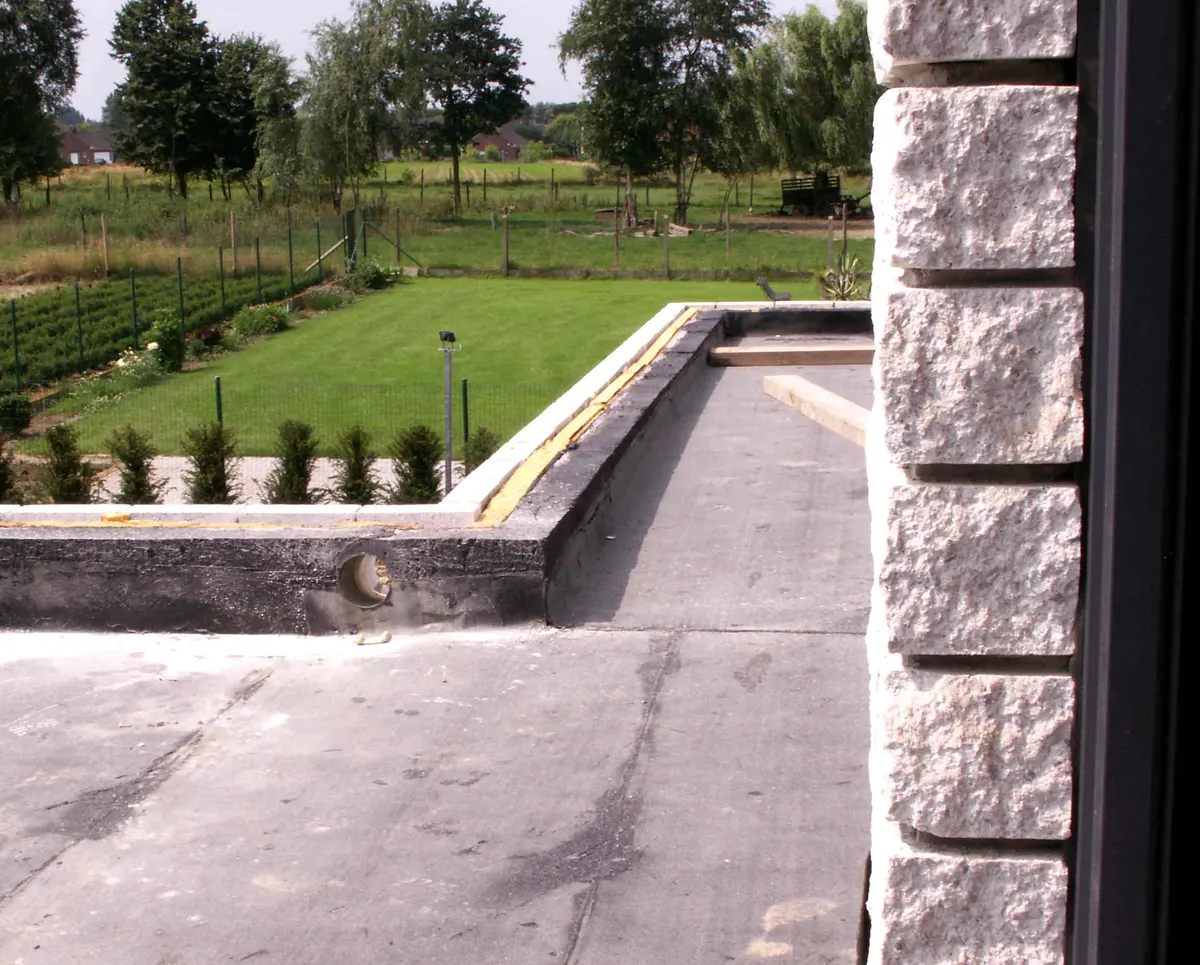
A flat roof partway through a new roof: the first bitumen layer is down over the deck, running up a parapet wall with an outlet through it
A flat roof partway through: the old covering is gone and the first new layer is down, with the top membrane still to come. Parapets and wall outlets like this one are details every replacement bid should spell out. Photo: KVDP, public domain, via Wikimedia Commons. Not a WeatherShield job.

Is it time?

Signs a commercial roof needs replacing, and signs it does not yet

Replacement is usually the better spend when

  • Wet insulation across large parts of the roof, not just around one leak.
  • Leaks that keep moving to new spots after each repair.
  • A membrane that is split, shrunk, blistered or brittle across the field, not only at the seams.
  • A soft, rusted or damaged deck under the roof.
  • Two or more roof coverings already on the building, so the code no longer allows another layer on top.
  • A coating or restoration that was done before and has already failed.

Price a repair or restoration first when

  • Leaks come from a few details: a seam, a curb, a drain or a pipe boot.
  • The insulation under the membrane is dry, or wet only in small areas that can be cut out.
  • The membrane or metal is worn on the surface but still holds together across the roof.

A worn but dry roof can often be restored with a coating instead of torn off. See commercial roof restoration in Myrtle Beach for when that works and when it does not.

What South Carolina's code says

Tear-off or re-cover: the reroofing rules in plain words

South Carolina enforces the 2021 International Building Code with state changes today. On August 26, 2025, the state adopted the 2024 edition with state changes, enforced by local building departments from January 1, 2027. In both, section 1512 covers reroofing, and the points below read the same in the 2024 South Carolina code, except where the low-slope card notes a change. The city or county inspector who reviews your permit has the final word.

Replacement goes to the deck

A roof replacement removes all existing layers of roof assembly materials down to the roof deck. That is when wet insulation and deck damage come to light, so a good bid says how those are handled.

Three cases where re-cover is not allowed

  • The existing roof is water-soaked or too deteriorated to be a base for new roofing.
  • It is slate, clay, cement or asbestos-cement tile.
  • It already has two or more roof coverings.

What a low-slope reroof does not have to change

On a low-slope roof that drains, replacing or re-covering does not have to meet the new-roof minimum slope of 1/4 inch per foot, or add secondary overflow drains. Existing secondary drains or scuppers cannot be removed unless they are replaced with ones that meet the code. The 2024 edition adds that the roof must also meet its ponding and rain-load sections (1608.3 and 1611.2).

The insulation rule is the 2009 one

South Carolina did not move its energy code with the building code. The state's Energy Standard Act makes the 2009 International Energy Conservation Code the energy standard, and the 2024 code adoption leaves it in place. Section 101.4.3 exempts reroofing where neither the sheathing nor the insulation is exposed, as long as the building's energy use does not go up. If the roof has no insulation in the cavity and the sheathing or insulation is exposed during reroofing, it has to be insulated above or below the sheathing.

Ask every bidder which case your roof falls into, because it changes what goes back on the deck.

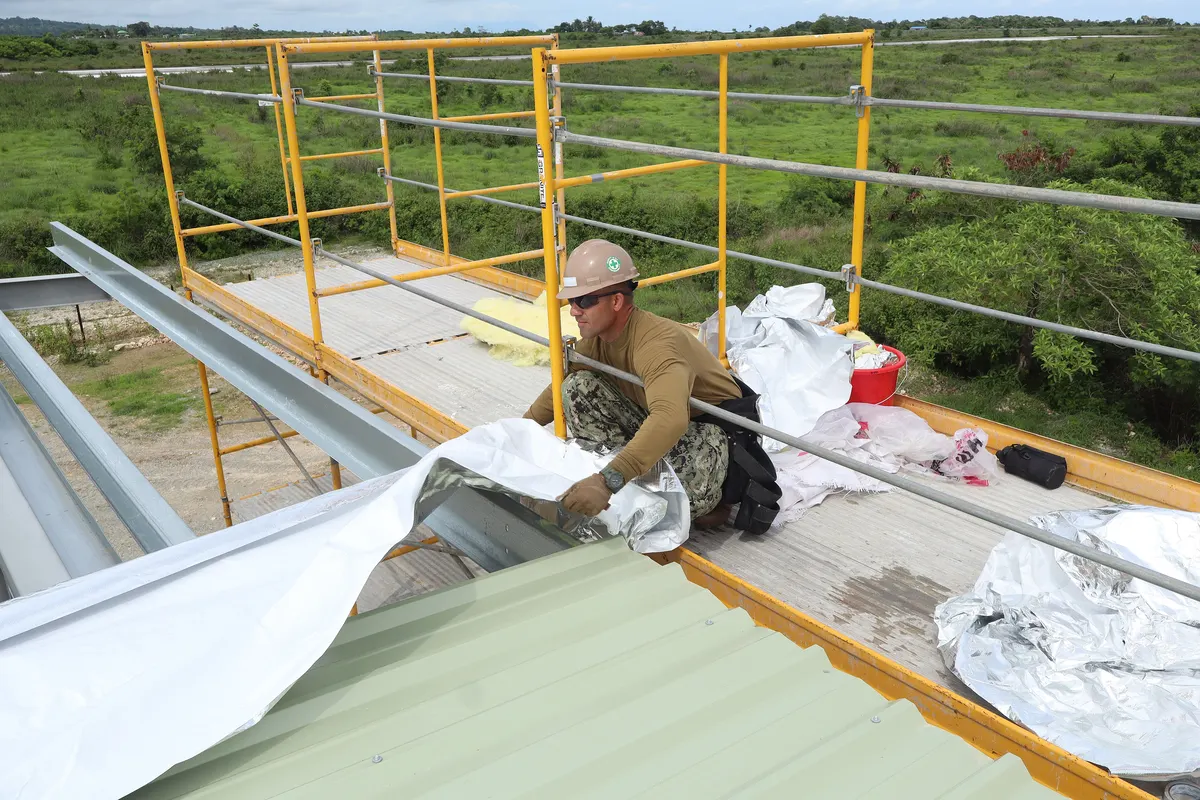
Worker in a hard hat on scaffolding laying a reflective heat barrier over roof framing beside green metal roof panels, with insulation rolls behind him
A heat barrier going down before insulation and metal roof panels, Bacau, Timor-Leste, January 2025. Photo: Petty Officer 3rd Class Matthew Noles, U.S. Navy, public domain, via Wikimedia Commons. Not a WeatherShield job.

Myrtle Beach permits

Permit, licenses and the Community Appearance Board

Permit. The City of Myrtle Beach says a building permit is generally needed and that exceptions exist. Its Construction Services Department answers that question for your project at 843-918-1111.

Licenses. Any contractor working inside the city needs a City of Myrtle Beach business license and an SC LLR license for the trade. Ask every bidder for both numbers.

Appearance review. On commercial and oceanfront property, the city's permit packet lists altering a building's exterior appearance, such as changing exterior colors or building materials, as work that needs Community Appearance Board approval before a building permit is issued. If the new roof will look different from the street, ask the city early; the board meets on a set schedule.

Outside city limits. The rules above are the City of Myrtle Beach's. For a building in another town or in unincorporated Horry County, ask that town's or the county's permit office.

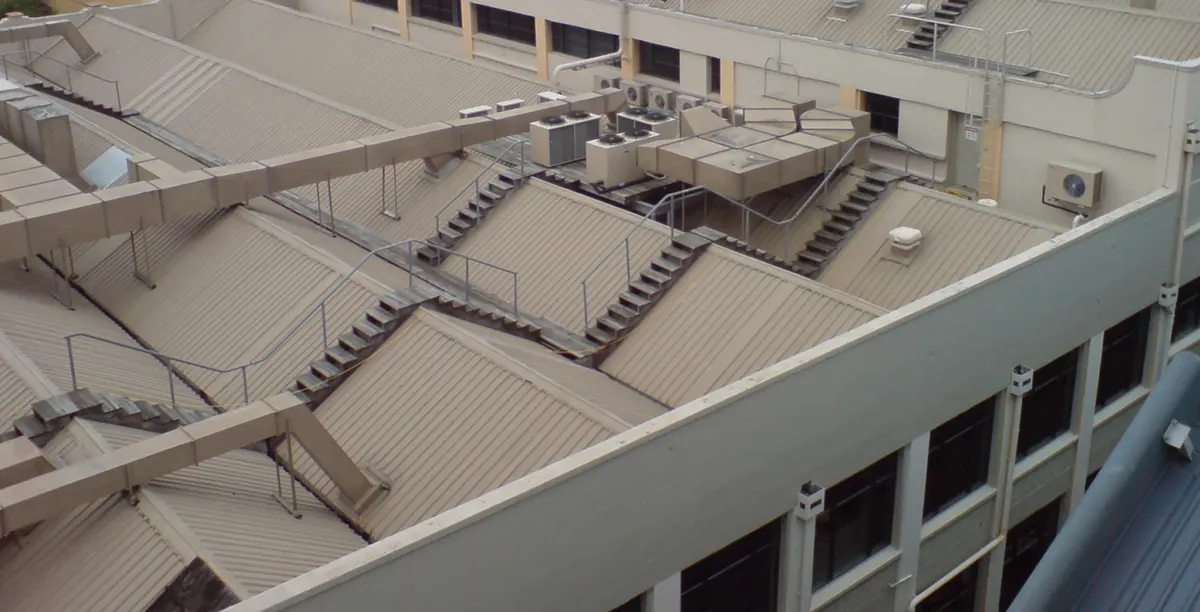
Commercial building roof crowded with ductwork, air conditioning condensers on a platform and metal access stairs over the roof slopes
Ducts, condensers and access stairs on a commercial roof in Auckland, New Zealand. Every unit, curb and duct support on a roof is a flashing detail the replacement has to get right. Photo: Ingolfson, public domain, via Wikimedia Commons, cropped. Not a WeatherShield job.

Open buildings

Replacing the roof on a hotel, condo, store or office that stays open

A commercial roof usually sits over people: guests, tenants, residents or staff. The roof work is only half the job; the other half is keeping the building running under it. Settle these before tear-off starts:

  • Which sections are opened each day, and how each one is dried in before rain.
  • Where the debris chute, dumpster and crane or lift go, and what that does to parking and entrances.
  • Which rooftop units are shut down or lifted, for how long, and who tells the tenants.
  • Noise and smell: which hours work is allowed, and which rooms or units sit under the noisiest sections.
  • Who on your side signs off each section, and how leaks during the job get reported.

Hotel managers and condo boards: our guide to commercial roof replacement for Myrtle Beach hotels and condos covers off-season timing, association votes and insurance.

What a written replacement bid should cover

Lay the bids side by side on these lines. A bid that skips one is usually the one that changes later.

  1. Tear-off or re-cover, and why. If it is a re-cover, how the roof meets the code's three limits (dry, not tile, fewer than two coverings).
  2. How much of the existing insulation and deck is expected to be wet or damaged, how that was checked, and how surprises found after tear-off get priced.
  3. The new roof system named by maker and product, how it is attached, and the edge metal and flashing details at walls, curbs and drains.
  4. Drainage: whether the roof drains today, and what happens to existing secondary (overflow) drains or scuppers.
  5. Insulation: what goes back on, and whether the code's reroofing insulation rule applies to this roof.
  6. Rooftop equipment: which units, ducts and curbs have to be lifted, disconnected or re-flashed, and who handles the HVAC side.
  7. Permits and approvals: who pulls the building permit, and whether the city's Community Appearance Board needs to see a color or material change first.
  8. How the work is staged around tenants, guests or residents: access, parking, noise, debris chute and daily dry-in before rain.
  9. Warranty terms in writing: who issues them, what they cover and what they require from you after the job.

The process

From a failing roof to a scope you can take to the owner

  1. 01

    Tell us about the building

    Building type, roof type if you know it, rough size and age, where it leaks, and whether the building stays open. Photos of the roof and any ceiling stains help.

  2. 02

    Free on-site assessment

    We look at the roof's condition, leak points, drainage, the existing system and how many layers are on it. If wet insulation cannot be ruled out by looking, we say a moisture survey is needed first.

  3. 03

    Replace, re-cover, restore or repair, in writing

    You get what we found and the option we recommend, with the reasons the others were ruled out. If a repair or restoration is the honest answer, we say so.

  4. 04

    Permits and a plan for the building

    Permit, any appearance review, rooftop equipment and the schedule around occupants are settled before tear-off starts.

WeatherShield does not publish prices and does not offer financing. The number comes after the assessment, in writing, with what drives it.

Grand Strand service area

Commercial roof assessments across Horry County

WeatherShield looks at commercial roofs in Myrtle Beach, North Myrtle Beach, Surfside Beach, Garden City, Murrells Inlet, Conway, Carolina Forest, Socastee and Little River. The request form accepts the Horry County and nearby Grand Strand ZIP codes we serve, and our office is at 215 Ronnie Ct. Unit F, Myrtle Beach, SC 29579.

Owner and manager questions

Commercial roof replacement FAQ

When does a commercial roof need replacement instead of repair?

Replacement is usually the better spend when wet insulation runs across large sections, leaks keep moving after each repair, the membrane is failing across the field rather than at a few details, the deck is damaged, or the roof already has two or more coverings. If the leaks come from a few seams, flashings or drains and the insulation is dry, a repair or restoration is usually worth pricing first.

Can a new commercial roof go over the old one in South Carolina?

Sometimes. South Carolina enforces the 2021 International Building Code with state changes today, and adopted the 2024 edition with state changes on August 26, 2025, for local enforcement from January 1, 2027. In both editions, the reroofing section (1512.3 in the 2024 South Carolina code) does not allow a re-cover when the existing roof is water-soaked or too deteriorated to be a base, when it is slate, clay, cement or asbestos-cement tile, or when the roof already has two or more coverings. Coatings and separate systems such as standing-seam metal that carry their own loads are treated differently. The local building inspector has the final word on your roof.

What does a commercial roof replacement include?

In South Carolina's 2021 code and in the 2024 edition that replaces it on January 1, 2027, section 1512.2 says a replacement removes all existing layers of the roof assembly down to the deck. The 2021 code defines replacement as removing the existing roof covering, repairing any damaged substrate and installing a new roof covering. In practice the scope also covers wet insulation, edge metal, flashings at walls and curbs, drains, and the rooftop equipment that has to be worked around.

Do I need a permit to replace a commercial roof in Myrtle Beach?

The City of Myrtle Beach says a building permit is generally needed and that exceptions exist, so call its Construction Services Department at 843-918-1111 for your project. Contractors working in the city need a city business license and an SC LLR license. On commercial and oceanfront property, the city's packet lists changing exterior colors or building materials as work that needs Community Appearance Board approval before a permit. Outside city limits, ask Horry County or your town.

Does a commercial roof replacement have to add insulation in South Carolina?

Yes in some cases. South Carolina's Energy Standard Act makes the 2009 International Energy Conservation Code the energy standard, and the 2024 code adoption leaves that in place. Its section 101.4.3 exempts reroofing where neither the sheathing nor the insulation is exposed, as long as the building's energy use does not go up. If the roof has no insulation in the cavity and the sheathing or insulation is exposed during reroofing, it has to be insulated above or below the sheathing.

Can a hotel, condo or store stay open during a roof replacement?

It can, with a plan: which sections are opened each day, how they are dried in before rain, where the debris chute and dumpster go, how rooftop equipment is handled, and what guests, tenants or residents are told. We go through those questions with you at the free on-site assessment. Our hotels and condos guide covers off-season timing and association votes.

How much does commercial roof replacement cost in Myrtle Beach?

WeatherShield does not publish prices. What moves the number is roof size, how many layers come off, how much insulation and deck is wet or damaged, the new system and how it is attached, drainage and edge work, rooftop equipment, access, and staging around occupants. You get a written scope after a free on-site assessment. WeatherShield does not offer financing.

Which areas do you cover for commercial roof replacement?

Myrtle Beach, North Myrtle Beach, Surfside Beach, Garden City, Murrells Inlet, Conway, Carolina Forest, Socastee and Little River, plus the nearby Grand Strand ZIP codes the request form accepts. Our office is at 215 Ronnie Ct. Unit F in Myrtle Beach.

Find out whether your roof has to come off

Call about a commercial roof, or send the building details through the assessment form at the top of this page.

Go to the assessment form
(843) 877-5539