Flat, low-slope + metal commercial roofs

Commercial Roof Inspection in Myrtle Beach, SC

A commercial roof inspection should walk the whole roof, check every drain, seam, flashing and rooftop unit, and end in a written report with photos that ranks the repairs. On the Grand Strand, book it in spring before hurricane season and again in fall. WeatherShield's on-site assessment for a commercial repair, replacement or installation estimate is free.

  • Myrtle Beach office, Grand Strand crews
  • Free on-site commercial assessment
  • Photo report with repair recommendations

Commercial roof inspection

Tell us about the building and why you need the inspection.

Building type, roof type if you know it, rough size, where it leaks, and the reason: routine check, storm, sale, insurance or a maintenance plan. Choose Free Inspection and say it is a commercial roof.

Online requests are limited to WeatherShield's Grand Strand service area.

Water coming through the ceiling right now?

An active leak comes before a scheduled inspection. See what to do in the first hours on our commercial roofing page, or call us.

Commercial roof repair in Myrtle Beach
(843) 877-5539

The short answers

Commercial roof inspections, in four answers

What property managers, owners and boards ask first, each answered from the page it comes from.

How much does a commercial roof inspection cost?

It depends on how much you need. General Roofing Co. lists what moves the price: roof size, height, access, slope and type, how detailed the report is, travel, safety needs and any specialty testing. It sorts paid inspections into four steps that cost more as they go: a basic visual check, an inspection with photos and a written report, a due-diligence report, and one with moisture or infrared testing. WeatherShield's own site says its on-site assessment for a commercial repair, replacement or installation estimate is free.

What does the inspection cover?

Travelers lists supporting structures, the roof covering, flashing, roof edging and fascia, penetrations, expansion joint covers, pitch pans, roof drains, lightning protection systems and evidence of standing water, and it starts the inspection inside the building, looking for stains and cracks.

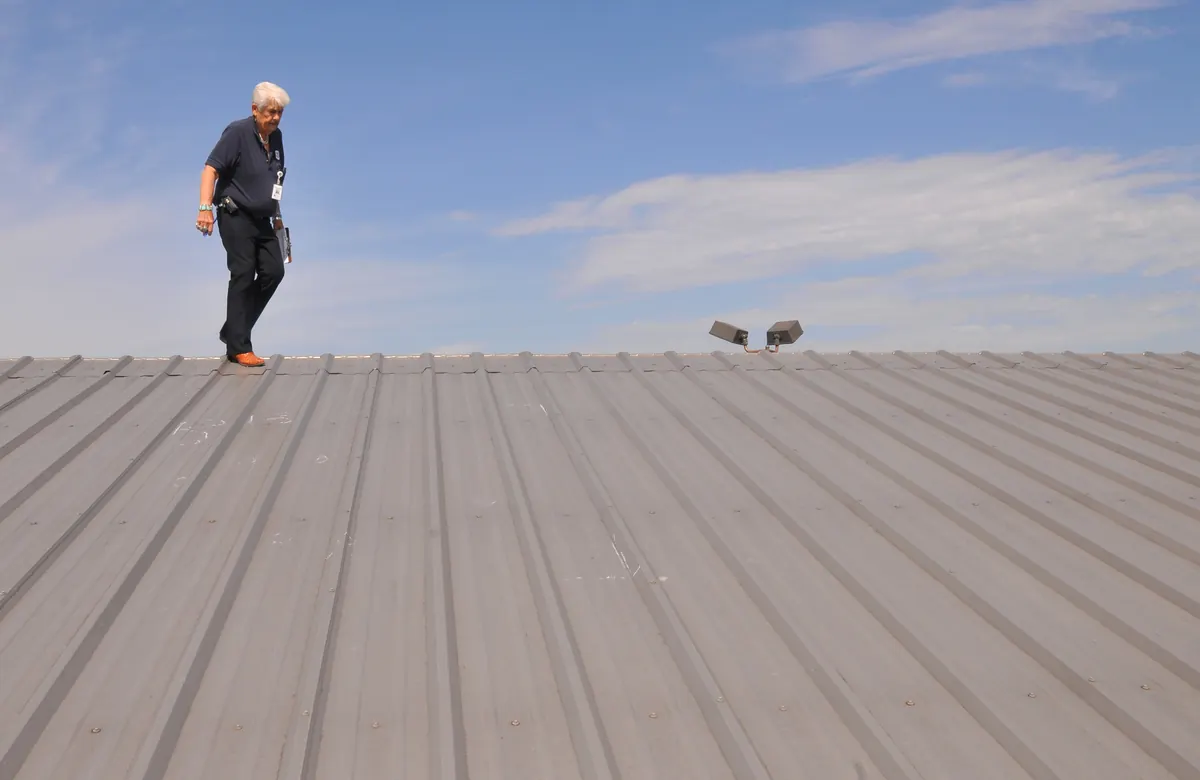
An inspector with a clipboard walks along the ridge of a standing-seam metal roof on a municipal building, looking down at the panels
An inspector walks the metal roof of a municipal building in Moore, Oklahoma, checking it for hail damage, May 25, 2010. A real inspection covers the roof on foot, not from the hatch. Photo: Win Henderson, FEMA, public domain, via Wikimedia Commons. Not a WeatherShield job.

When to book it on a hurricane coast

Spring before June 1, fall after November 30, and after every storm

The usual advice is two inspections a year, spring and fall. On the Grand Strand, the hurricane season sets the dates for you.

  1. 1

    Spring, before the season opens

    The Atlantic hurricane season runs from June 1 to November 30. Travelers' spring check looks for damage from the winter and sets the repairs; on this coast, that visit lands before the season opens.

  2. 2

    Late summer is the peak

    The National Hurricane Center puts the peak of the season on September 10, with most activity between mid-August and mid-October.

  3. 3

    Fall, after the season

    Travelers' fall check looks for any preventive work needed before winter. Here it can come after the season ends on November 30, so it also covers whatever the storms did.

  4. 4

    After any major storm or rooftop work

    Travelers adds an inspection after any major storm or construction activity that might have damaged the roof, starting inside the building.

The checklist

Commercial roof inspection checklist: what gets checked and why

Use this to judge any inspection you pay for. It combines Travelers' list of inspection elements with what Rimkus and General Roofing say inspectors look at.

Commercial roof inspection checklist by roof area
Inside the building firstCeiling stains, cracks, damp smells, peeling paint and the spots where leaks keep coming back.Leaks travel. The stain is not always under the opening, so the inside tells the inspector where to look on top.
Roof covering (membrane, metal, built-up)Splits, holes, open or separating seams, blisters, soft spots and sun damage across the whole field, not only where it leaked.The covering is the main barrier that keeps water out.
Flashing and edgesWhere the roof meets walls and parapets, curbs, skylights, vents and pipes; edge metal, coping, fascia and roof edging.Rimkus says flashing breakdown is frequently cited as a top leak source.
DrainageRoof drains, scuppers, gutters and downspouts, debris in them, and any standing water (ponding).On a flat or low-slope roof, a clogged drain or a low spot can hold water for months before anyone inside notices.
Penetrations and rooftop equipmentSeals, rubber boots and clamps at pipes and vents; HVAC curbs, duct supports, cable runs, pitch pans and foot-traffic wear around units.Every opening through the roof is a possible leak point, and other trades working on equipment can damage the roof without knowing it.
Expansion joints, structure and lightning protectionExpansion joint covers, the supporting structure, and the lightning protection system's rods and cables.All three are on Travelers' list of elements an inspection should include.
Debris and plant growthLeaves, loose material, and anything growing on the roof.Debris blocks drainage and holds moisture against the roof; roots can weaken the membrane.
Old repairs and recordsFailed sealant, patches, coated areas that keep reopening, and any maintenance and repair records the owner has.A roof patched again and again raises the bigger question of whether repairs are still worth it.
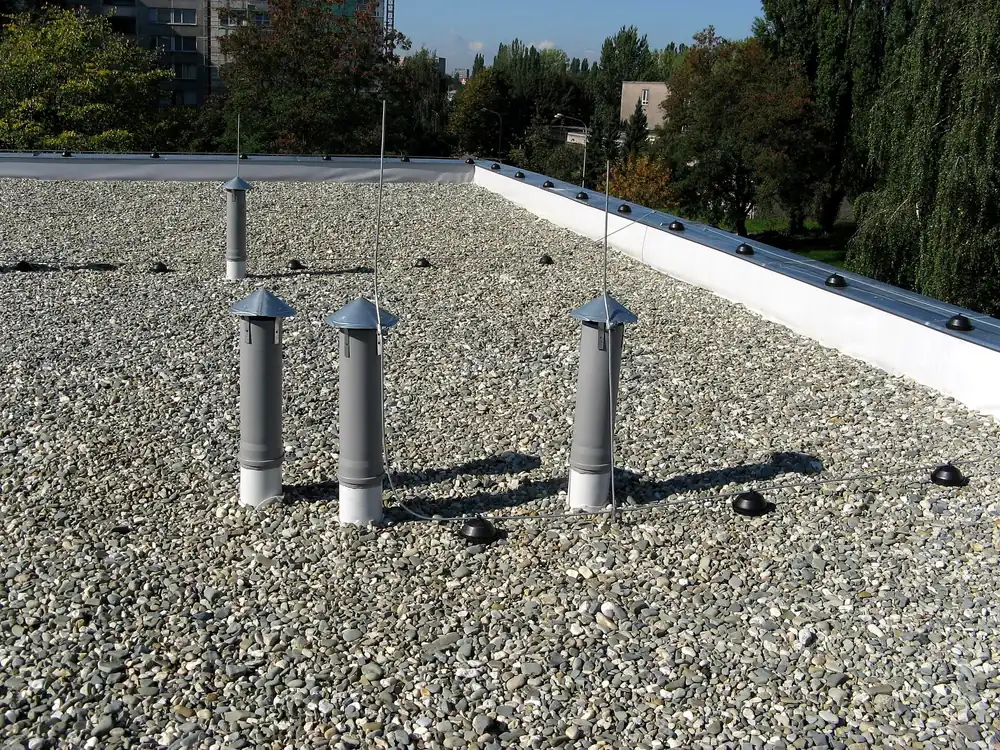
A gravel-covered flat roof with vent pipes, a white parapet edge and thin lightning protection rods and cables
A gravel-ballasted flat roof with vent pipes, a parapet edge and lightning protection rods: penetrations, edges and the lightning system are all on the checklist. Photo: Paolo Neo, public domain, via Wikimedia Commons. Not a WeatherShield job.
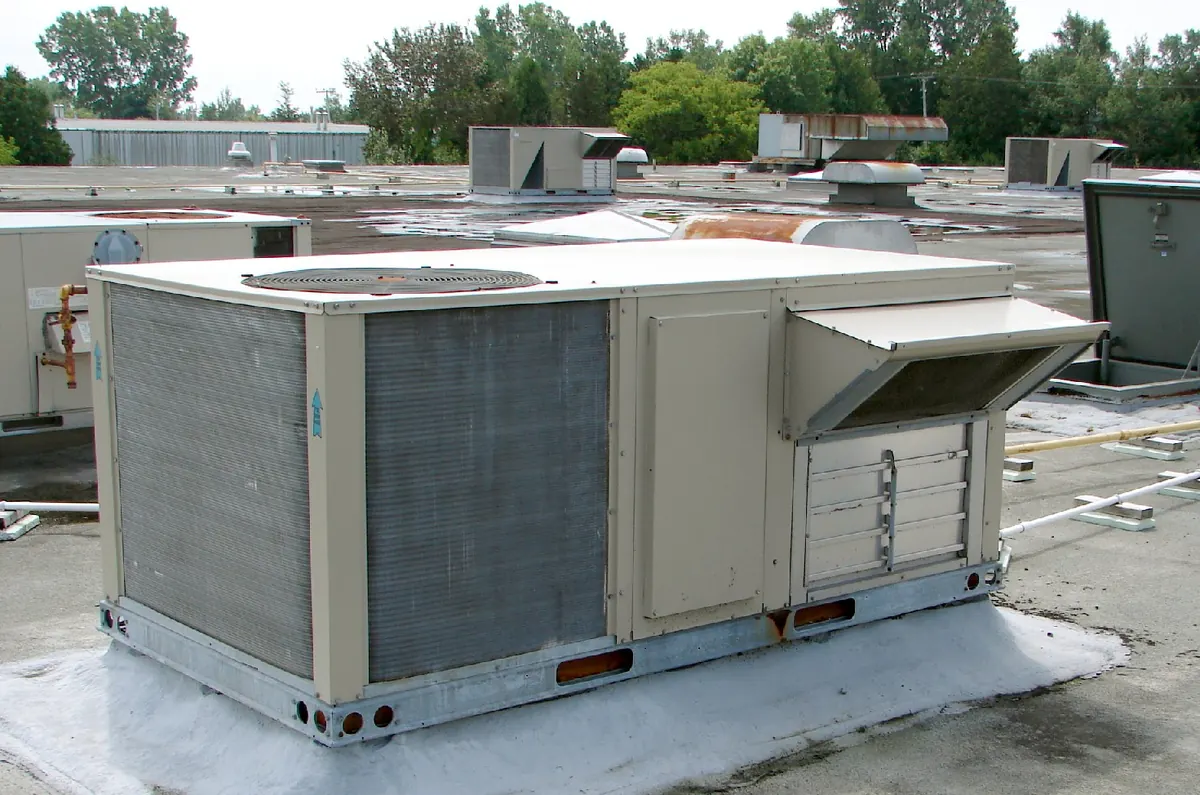
A packaged air-conditioning unit on a curb on a flat commercial roof, with more units and a roof hatch behind it
Packaged heating and cooling units on a flat roof. Each curb and every pipe or duct through the roof is a flashing detail to check, and HVAC service visits are a reason to inspect again. Photo: P199, public domain, via Wikimedia Commons. Not a WeatherShield job.

Beyond looking

Inspection methods, and when each one earns its cost

Rimkus says most commercial roof evaluations start with a visual walkthrough and add other methods depending on the property's needs: wet insulation you cannot see, layers nobody has records for, or a roof too large or tall to reach easily. It sorts the methods like this.

Commercial roof inspection methods, what they find and when they are used
Visual inspectionSurface damage, standing water, membrane wear, flashing problemsEvery scheduled inspection
Thermal imagingHidden moisture trapped under the roof surfaceLeak investigation, property sale review
Moisture scanningWet insulation and hidden water damage inside the roof layersSuspected moisture problems, pre-purchase review
Core samplingWhat layers the roof has, how well they are stuck together, their conditionNo construction records, verifying roof age
Drone surveyAerial visual and thermal data across large roof areasTall buildings, large footprints, hard-to-reach areas
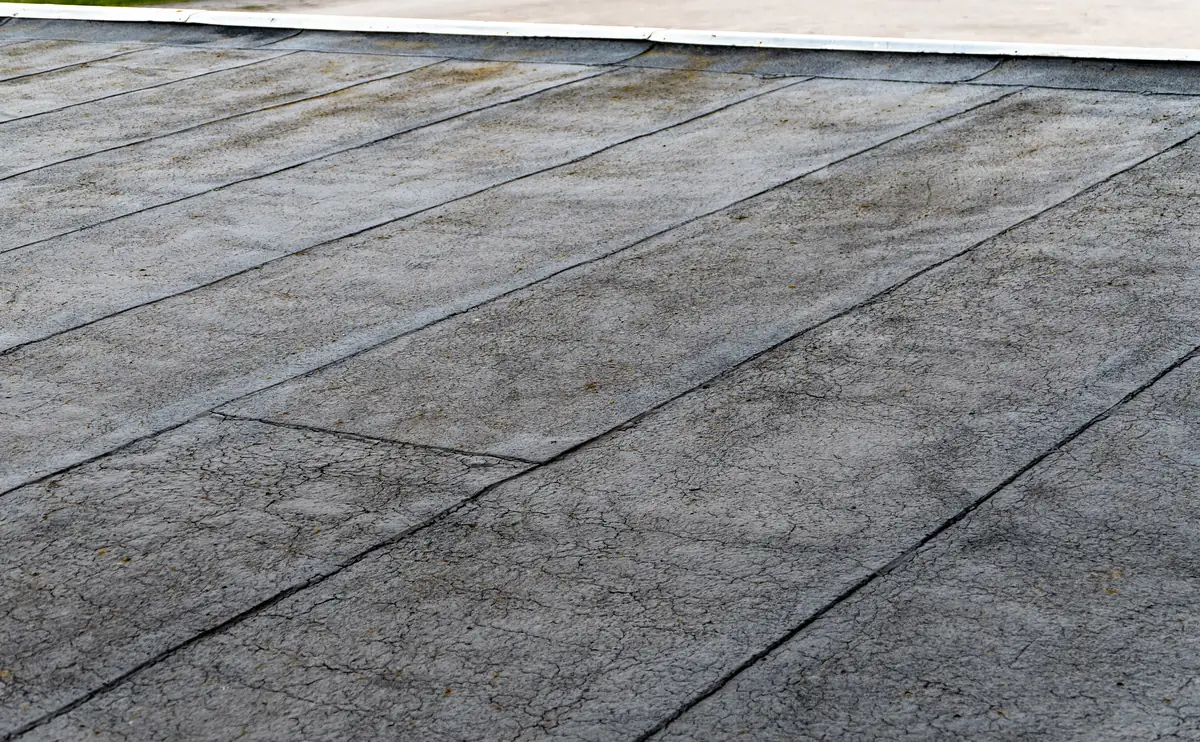
Close view of a bitumen flat roof with overlapping sheet seams running across it and a light metal edge at the top
Bitumen sheets on a flat roof in Lysekil, Sweden. The laps where sheets overlap are what a seam check walks along; wet insulation underneath does not show from above, which is what thermal and moisture scans are for. Photo: W.carter, CC0, via Wikimedia Commons. Not a WeatherShield job.

Why you are booking it

Five reasons to inspect a commercial roof, and what each one needs

Routine spring and fall inspection

Catches clogged drains, open seams, cracked sealant and loose flashing while they are still small repairs. In spring Travelers checks for damage from the winter; in fall, for anything to fix before the next season.

After a storm or rooftop work

Travelers adds an inspection after any major storm or construction activity that might have damaged the roof. General Roofing adds rooftop HVAC or solar work and any leak report to that list.

Buying or selling a building

When the inspection is part of a property sale, Rimkus says it often follows the ASTM E2018 framework for commercial property condition assessments. Buyers, sellers and lenders usually need the detailed written report, not a quick look.

Insurance renewal or a claim

Rimkus describes carriers asking for a current roof condition report before renewing coverage, and cites the Insurance Information Institute: more than one-third of commercial property insurance claims stem from wind or hail damage, most of it involving the roof.

Capital planning and HOA reserves

Owners use the report to set repair priorities and budget a replacement. Rimkus notes that HOA and condo boards rely on inspection findings for reserve studies.

What the inspection report should show

A report is what you budget, negotiate and file claims with. Rimkus lists what a roof condition report typically includes:

  • A roof system overview: the type of roof, its approximate age and its layout.
  • Conditions written up by area and tied to a roof map, so the crew can find each problem again.
  • Labeled photos of the overall roof and of each problem spot.
  • Recommendations sorted by urgency: active leak sources first, routine maintenance after.
  • An estimate of how much service life the roof has left.

Six questions to ask before you book

  1. Is this a quick visual check or a written condition report with photos? General Roofing warns they are not the same thing, even when both are called a free inspection.
  2. Will the whole roof be walked, or only the area over the leak?
  3. If wet insulation is suspected, which test will be used (thermal imaging, moisture scanning or core samples), and what does it add?
  4. Will the report tie each finding to a roof area and a photo, and list repairs by urgency?
  5. Who is the report for? A buyer, lender or insurer may want an outside consultant; a repair or maintenance decision usually starts with a roofing contractor.
  6. How will people get on the roof safely: hatch, ladder, fall protection near edges and skylights?

On the last point: Rimkus says independent consultants are generally considered more objective than repair contractors, which matters when a buyer or lender relies on the report. General Roofing describes a roofing contractor's inspection as being about roof condition, leak risk, repair needs and maintenance planning.

Between inspections

What your own staff can do, safely

Travelers' roof maintenance basics: keep the roof clean and free of debris, keep drains working, fix areas that pond water, train maintenance staff on how the roof is built, allow only authorized people on the roof, and limit new penetrations.

Edges and skylights. OSHA's general industry rule requires fall protection for workers on an unprotected side or edge 4 feet or more above a lower level (guardrails, safety nets or personal fall protection), and treats skylights as holes workers must be protected from falling through.

What WeatherShield's commercial inspection covers

From our commercial roofing page: whether you are buying a commercial property, checking existing conditions or documenting storm damage for an insurance claim, our commercial roof inspection reports include photographic documentation, condition assessments, repair recommendations and life expectancy estimates.

The on-site assessment for a commercial installation, replacement or repair estimate is free. It documents visible roof condition, leak points, drainage concerns, the existing system and the recommended next steps. More specialized inspection reports, moisture scans or engineering documentation for a sale, insurance claim or warranty dispute may need a custom scope.

WeatherShield does not publish prices and does not offer financing.

Grand Strand service area

Commercial roof inspections across Horry County

WeatherShield looks at commercial roofs in Myrtle Beach, North Myrtle Beach, Surfside Beach, Garden City, Murrells Inlet, Conway, Carolina Forest, Socastee and Little River. The request form accepts the Horry County and nearby Grand Strand ZIP codes we serve, and our office is at 215 Ronnie Ct. Unit F, Myrtle Beach, SC 29579.

Owner and manager questions

Commercial roof inspection FAQ

How much does a commercial roof inspection cost?

It depends on the roof's size, height, access, slope and type, how detailed the report is, travel time, safety requirements, and whether moisture or infrared testing is needed, according to General Roofing Co. It sorts paid inspections into four steps that cost more as they go: a basic visual inspection, an inspection with photos and a written report, a detailed or due-diligence report for buyers, sellers and lenders, and an inspection with moisture scans or specialty testing for older flat roofs, repeated leaks or suspected wet insulation. WeatherShield does not publish prices. Its commercial roofing page says its on-site assessment for a commercial repair, replacement or installation estimate is free, and that specialized reports, moisture scans or engineering documentation for a sale, insurance claim or warranty dispute may need a custom scope.

How often should a commercial roof be inspected?

At least twice a year, in spring and fall, and again after any major storm or construction activity that might have damaged the roof. That is Travelers' recommendation after an initial roof survey, and Rimkus calls two inspections a year the industry consensus. On the Grand Strand, a spring visit lands before the Atlantic hurricane season opens on June 1, and a fall visit after the season ends on November 30 shows what that year's storms did.

What should a commercial roof inspection include?

It should start inside the building, at ceilings and walls, then cover the roof covering, flashing, roof edging and fascia, penetrations, expansion joint covers, pitch pans, roof drains, lightning protection and any standing water, as Travelers lists. The result should be a written report with photos tied to roof areas, recommendations sorted by urgency, and an estimate of the roof's remaining service life.

What will fail a commercial roof inspection?

A condition inspection is not a pass or fail test. Rimkus describes condition ratings for each area and repairs listed in order of priority. The problems an inspection exists to catch are the ones General Roofing lists: clogged drains, open seams, cracked sealant, loose flashing, punctured membrane, ponding water and old repairs that are starting to fail. Rimkus also describes an insurer flagging a gap in maintenance records before it would renew coverage.

Is a commercial roof inspection free?

Sometimes. WeatherShield's commercial roofing page says its on-site assessment for a commercial installation, replacement or repair estimate is free, and that it documents visible roof condition, leak points, drainage, the existing system and next steps. More specialized reports, moisture scans or engineering documentation for a sale, insurance claim or warranty dispute may need a custom scope. General Roofing advises asking what a free inspection includes, because a quick visual check is not a written condition report.

Can our maintenance staff inspect the roof themselves?

They can watch for problems between professional inspections, but only with the right access and training. OSHA's general industry rule requires fall protection for workers on an unprotected side or edge 4 feet or more above a lower level, and treats skylights as holes workers must be protected from falling through. Travelers recommends training maintenance staff on the roof's construction and limiting roof access to authorized people.

Do I need moisture testing or thermal imaging?

Not on every visit. Rimkus lists thermal imaging and moisture scanning for leak investigations, suspected wet insulation and pre-purchase reviews, and core sampling when there are no construction records. For a property sale, it says combining a visual walkthrough with thermal imaging and moisture scanning gives a more complete picture, especially when leaks inside do not match what is visible on the roof.

Which areas do you cover for commercial roof inspections?

Myrtle Beach, North Myrtle Beach, Surfside Beach, Garden City, Murrells Inlet, Conway, Carolina Forest, Socastee and Little River, plus the nearby Grand Strand ZIP codes the request form accepts. Our office is at 215 Ronnie Ct. Unit F in Myrtle Beach.

Get the roof looked at before the next storm finds the weak spot

Call about a commercial roof, or send the building details through the request form at the top of this page.

Go to the request form
(843) 877-5539