Where metal roofs leak
Six repairs that cover most metal roof leaks on the Grand Strand
A metal panel rarely fails on its own. The screws, washers, sealant, boots and flashings around it age first, and salt air and summer heat speed that up here. For each one, this is what you see from the ground or the ceiling, why it happens, and what the repair is.
Leaking screws and dried-out washers
What you see: A drip in line with a row of screws, rust rings around screw heads, or screws sitting proud of the panel.
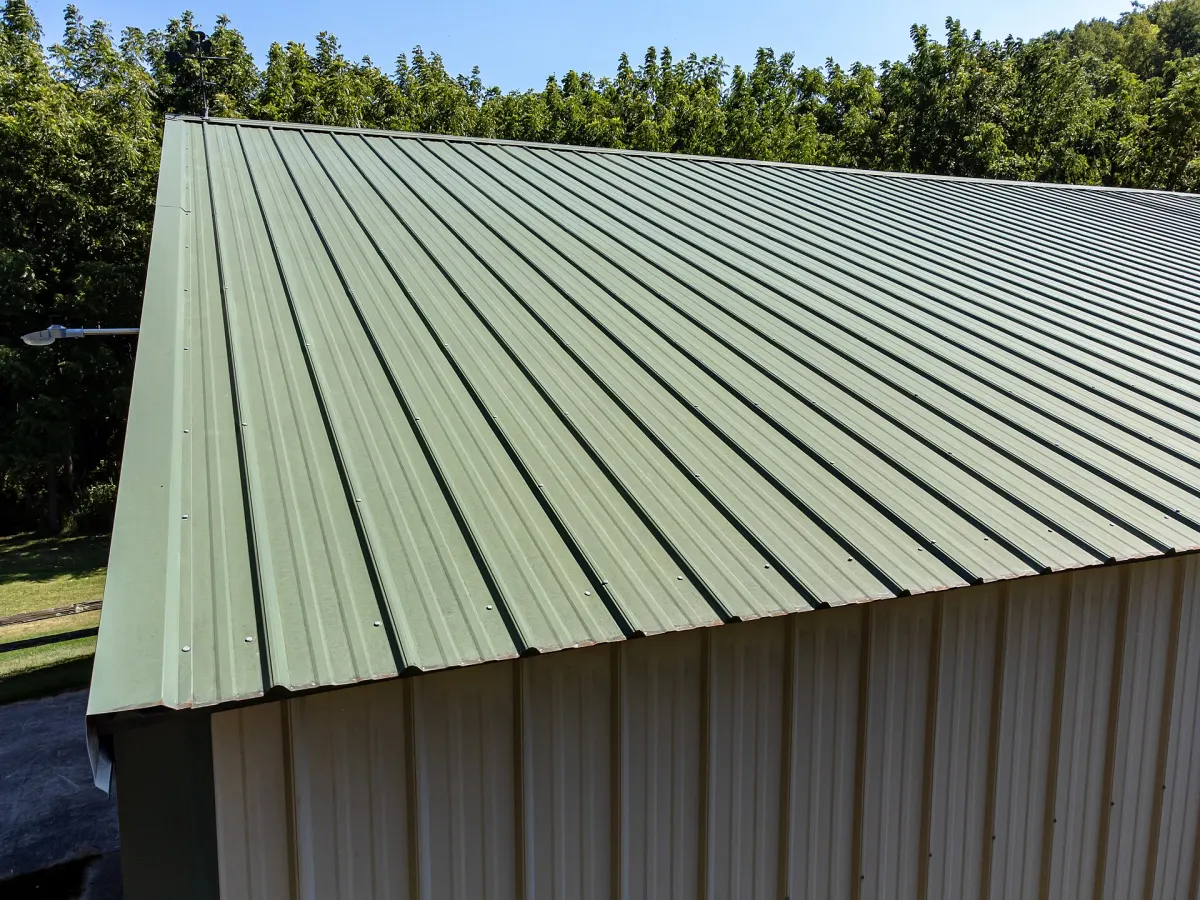
Why: Exposed-fastener roofs (5V, corrugated, R-panel) rely on a rubber washer under each screw. The washer ages in sun and heat, and the panel moves with every temperature swing. Screws can loosen, back out, or be driven too deep so the washer bulges and lets water in.
The repair: Each failed screw comes out and a wider replacement goes into the same hole so it cuts fresh threads. The fastener maker SFS gives the example of a #14 screw replaced with a #17. Where many screws have failed on a roof of the same age, a full fastener replacement is worth comparing with screw-by-screw fixes.
Seam and end-lap leaks
What you see: A stain that follows a panel joint, or water appearing only in heavy, wind-driven rain.
Why: Side laps and end laps depend on panel overlap plus a butyl sealant tape or bead. Movement, debris and sun break down exposed sealant. The MCA's seaming guide is blunt about the limits: sealants cannot fix poor panel installation.
The repair: Open the lap, clean the metal, lay new non-curing butyl tape sized to the seam, and stitch it back down with compatible fasteners. On a mechanically seamed standing seam roof, an opened seam is re-seamed; smearing caulk over it is not a repair.
Pipe boots and vent flashings
What you see: A leak at a bathroom or kitchen ceiling under a plumbing vent, or a cracked rubber collar you can see from the ground.
Why: The rubber (EPDM) boot around each pipe takes full sun. SFS lists cracking, separation from the panel and UV damage as the things to look for on these boots.
The repair: Remove the old boot without damaging the panel finish, mark the fastener locations, bed the new boot in butyl tape and fasten it with upsized self-sealing fasteners and a hose clamp. Sheffield Metals, a metal roofing supplier, shows these steps in its pipe boot replacement video.
Chimney, sidewall and valley flashing
What you see: Water at the chimney, where a roof meets a wall, or at the bottom of a valley after a storm.
Why: These are the busiest water paths on the roof. Flashing that is too short, sealed with the wrong product, or fastened through the flat of the panel will leak long before the panels do.
The repair: Replace the flashing with a piece formed for the panel profile and seal it with tape or sealant made for metal roofing; the MCA seaming guide calls for sealant meant for metal roofing at panel seams. Fasteners go where the manufacturer's details put them, not where it is easy.
Rust at cut edges, scratches and trim
What you see: Orange staining at panel ends, at drip edges and ridge caps, or along a scratch left by a ladder or a branch.
Why: A painted steel panel is protected by its coating. Where the coating is cut or scratched through, the MCA warns of increased potential for premature corrosion. Salt air speeds this up: McElroy Metal's Galvalume warranty is void within 1,500 feet of salt water and excludes rust on panel edges outright.
The repair: Light surface rust is cleaned, primed and touched up with the panel maker's paint. Edges that have lost metal are trimmed back under new flashing or the panel section is replaced. Rinsing salt off a coastal roof is part of the care plan, not a repair.
Storm-lifted panels, ridge caps and trim
What you see: A panel edge lifted after a tropical storm, a missing ridge cap, rake trim flapping in the wind, or a dent from a branch.
Why: Wind gets under a panel edge wherever a fastener has let go. Once a panel lifts, the fasteners beside it carry extra load and the next gust takes more. Horry County sits in South Carolina's coastal Wind Zone III, so edge fastening matters here more than inland.
The repair: Re-seat the panel, replace the fastener row with wider screws, and renew the closures and sealant under the ridge cap or trim. Creased or torn panels are replaced as a section rather than bent back into place.