
By the Weather Shield Roofing team · Published October 30, 2026
The short answer
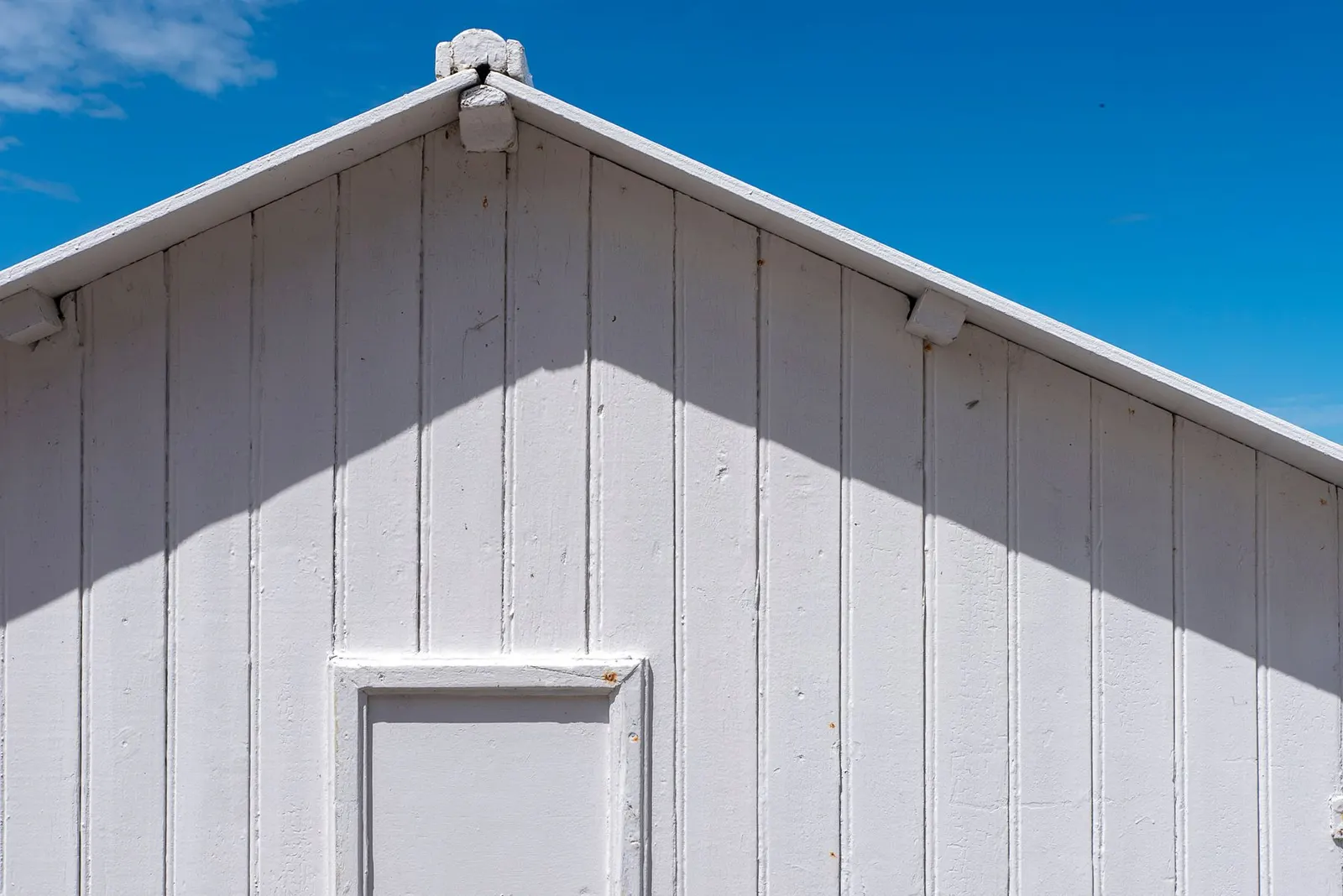
- Board and batten is a vertical siding style. Wide boards or panels run up the wall, and narrow strips called battens cover the seams.
- It comes in five main materials: vinyl, fiber cement, engineered wood, steel and natural wood such as cedar.
- In vinyl and steel, the batten is formed into the panel, so the spacing is fixed. Hardie fiber cement and LP engineered wood use separate trim battens over 4-foot panels.
- Sizes vary by maker. In cedar, 1x3 battens over 1x10 boards is a frequent pairing. Georgia-Pacific and Alside both list a 5.5-inch vinyl face with a 1.5-inch batten.
- Horry County's design wind speed lines run from 140 to 150 mph. Where the design speed tops 139 mph, FEMA says to choose vinyl siding rated for it.
- Salt spray drops off fastest in the first 300 to 3,000 feet from the shore. FEMA recommends stainless steel siding fasteners within 3,000 feet of the ocean.
- Vertical siding needs something solid to nail into, such as sheathing, blocking or furring. Ask what goes behind it before you sign.
Board and batten siding by the numbers
1x3 over 1x10
A frequent cedar board and batten pairing
Battens over boards. Stock runs from 1x2 to 1x12. Western Red Cedar Lumber Association.
5.5 + 1.5 in
Vinyl board face and batten width
Georgia-Pacific's board and batten, .048 inch thick. Alside lists the same sizes.
12 or 16 in
Batten spacing on Diamond Kote panels
12 inches for compact walls, 16 inches for larger walls, per the maker.
3/4 in
Minimum batten overlap on each side of a HardiePanel joint
From James Hardie's HardiePanel product and install sheet.
140–150 mph
Design wind speed lines across Horry County
150 mph just off the beaches, 140 mph in the west. SC Building Codes Council map.
24% vs 21%
New Southern homes with fiber cement vs vinyl walls, 2025
Main exterior wall material of new single-family homes. US Census Bureau.
What board and batten siding is
Board and batten is a vertical siding pattern. Wide boards run up the wall, and narrow strips, the battens, cover the joints between them. The result is a wall of strong vertical lines and shadows (LP).
- Where it came from. Alside traces the style to Sweden and Norway and says it took off in North America in the mid-19th century, often on barns and sheds. That is why some places still call it “barn siding” (Alside). Hardie puts its age at nearly 200 years (James Hardie).
- What the battens did. They closed the gaps between the wide planks so the building was tighter against the weather (James Hardie).
- How it is built now. Hardie fiber cement and LP engineered wood use 4-foot panels with battens nailed on top. Vinyl and steel form the batten into the panel (Modern Mill; Metal America). Cedar is still set as separate boards and battens.
- Outside, not inside. This guide is about exterior siding. Indoor board and batten walls are trim over drywall, a different job with different rules.
Five board and batten materials compared
The top results for this search are a maker's guide, a store listing and a product page. Here are all five materials side by side instead, in each maker's own figures. We have not lab-tested any of these products, and listing one is not a claim that we install it.
| Material | How the look is made | Makers' sizes | Batten spacing | Coast and wind | Upkeep |
|---|---|---|---|---|---|
| Vinyl | One molded panel with the batten formed in (Modern Mill). Georgia-Pacific, Alside and Westlake Royal all make one. | Georgia-Pacific: 5.5-inch face, 1.5-inch batten, .048 inch thick. Alside: 5-1/2-inch face, 1-1/2-inch batten raised 1/2 inch. Westlake Royal: .046-inch panel in 10- and 12-foot lengths. | Fixed by the panel, says Modern Mill. You choose the profile, not the spacing. | Must meet ASTM D3679. Where the design wind speed tops 139 mph, FEMA says to pick a product rated for it. FEMA puts the best thickness at 0.040 to 0.048 inch. | Westlake Royal says its board and batten needs no painting. The color is in the vinyl. |
| Fiber cement (James Hardie) | Flat 4-foot HardiePanel sheets, with HardieTrim battens nailed over the joints and anywhere else you want a line. | HardiePanel is 5/16 inch thick in 4x8, 4x9 and 4x10-foot sheets. Hardie's trim battens are 3/4 inch thick. | Where a batten covers a panel joint, Hardie says it should span the joint by at least 3/4 inch on each side. Extra battens between joints set the rhythm. | Hardie says its HZ10 line is made for hurricane-force winds, salty sea air and humid southern heat. | Sold primed for paint or with Hardie's factory-baked ColorPlus finish. FEMA says to seal field-cut ends. |
| Engineered wood (LP SmartSide, Diamond Kote) | 4-foot panels with trim battens on top, or LP's narrower vertical siding with battens over the seams. | LP panel siding is 4 feet wide, in lengths from 8 feet. LP vertical siding is 16 inches wide and 16 feet long. | Diamond Kote: battens every 12 inches (narrow) or 16 inches (wide). On LP vertical siding, LP says battens go at least 16 inches apart to cover the seams, and more can be added. | LP calls for hot-dipped galvanized fasteners and at least 6 inches of clearance above finished grade. | Paint or a factory finish. Diamond Kote says waxes, resins and zinc borate help it resist moisture, termites and decay. |
| Steel (metal) | A roll-formed steel panel with the batten ridge formed in, so there are no separate strips. | Set by each maker's panel profile. Ask for the panel's cover width and steel thickness. | Fixed by the panel profile. | FEMA: salt spray is heaviest in the first 300 to 3,000 feet from the shore, and corrosion speeds up as far as 5 to 10 miles inland. Avoid mixing metals. | Ask which paint system it carries. Metal America, for one, uses Sherwin-Williams WeatherXL SMP paint. |
| Cedar and other wood | Separate boards set with a gap, with battens nailed over the gaps. This is the original version. | Cedar stock from 1x2 to 1x12. A frequent pairing is 1x3 battens over 1x10 boards (WRCLA). | Set by the board width. On 6-inch boards spaced 1/2 inch apart, battens overlap each board by at least 1/2 inch. | FEMA: use decay-resistant wood such as redwood, cedar or cypress, back-prime it, and add a rain screen gap behind it. | A finish to keep up, paint or stain, starting with back-priming before it goes on. |
Vinyl
- How the look is made
- One molded panel with the batten formed in (Modern Mill). Georgia-Pacific, Alside and Westlake Royal all make one.
- Makers' sizes
- Georgia-Pacific: 5.5-inch face, 1.5-inch batten, .048 inch thick. Alside: 5-1/2-inch face, 1-1/2-inch batten raised 1/2 inch. Westlake Royal: .046-inch panel in 10- and 12-foot lengths.
- Batten spacing
- Fixed by the panel, says Modern Mill. You choose the profile, not the spacing.
- Coast and wind
- Must meet ASTM D3679. Where the design wind speed tops 139 mph, FEMA says to pick a product rated for it. FEMA puts the best thickness at 0.040 to 0.048 inch.
- Upkeep
- Westlake Royal says its board and batten needs no painting. The color is in the vinyl.
Fiber cement (James Hardie)
- How the look is made
- Flat 4-foot HardiePanel sheets, with HardieTrim battens nailed over the joints and anywhere else you want a line.
- Makers' sizes
- HardiePanel is 5/16 inch thick in 4x8, 4x9 and 4x10-foot sheets. Hardie's trim battens are 3/4 inch thick.
- Batten spacing
- Where a batten covers a panel joint, Hardie says it should span the joint by at least 3/4 inch on each side. Extra battens between joints set the rhythm.
- Coast and wind
- Hardie says its HZ10 line is made for hurricane-force winds, salty sea air and humid southern heat.
- Upkeep
- Sold primed for paint or with Hardie's factory-baked ColorPlus finish. FEMA says to seal field-cut ends.
Engineered wood (LP SmartSide, Diamond Kote)
- How the look is made
- 4-foot panels with trim battens on top, or LP's narrower vertical siding with battens over the seams.
- Makers' sizes
- LP panel siding is 4 feet wide, in lengths from 8 feet. LP vertical siding is 16 inches wide and 16 feet long.
- Batten spacing
- Diamond Kote: battens every 12 inches (narrow) or 16 inches (wide). On LP vertical siding, LP says battens go at least 16 inches apart to cover the seams, and more can be added.
- Coast and wind
- LP calls for hot-dipped galvanized fasteners and at least 6 inches of clearance above finished grade.
- Upkeep
- Paint or a factory finish. Diamond Kote says waxes, resins and zinc borate help it resist moisture, termites and decay.
Steel (metal)
- How the look is made
- A roll-formed steel panel with the batten ridge formed in, so there are no separate strips.
- Makers' sizes
- Set by each maker's panel profile. Ask for the panel's cover width and steel thickness.
- Batten spacing
- Fixed by the panel profile.
- Coast and wind
- FEMA: salt spray is heaviest in the first 300 to 3,000 feet from the shore, and corrosion speeds up as far as 5 to 10 miles inland. Avoid mixing metals.
- Upkeep
- Ask which paint system it carries. Metal America, for one, uses Sherwin-Williams WeatherXL SMP paint.
Cedar and other wood
- How the look is made
- Separate boards set with a gap, with battens nailed over the gaps. This is the original version.
- Makers' sizes
- Cedar stock from 1x2 to 1x12. A frequent pairing is 1x3 battens over 1x10 boards (WRCLA).
- Batten spacing
- Set by the board width. On 6-inch boards spaced 1/2 inch apart, battens overlap each board by at least 1/2 inch.
- Coast and wind
- FEMA: use decay-resistant wood such as redwood, cedar or cypress, back-prime it, and add a rain screen gap behind it.
- Upkeep
- A finish to keep up, paint or stain, starting with back-priming before it goes on.
Sources for the table: Georgia-Pacific, Alside, Westlake Royal, HardiePanel sheet, Hardie Zone System, LP, Diamond Kote, Metal America, Modern Mill, WRCLA, FEMA P-499 and FEMA Technical Bulletin 8. Weighing just the two most common choices? Our Hardie board vs vinyl siding guide goes deeper.
On new homes in the South, fiber cement and vinyl are close. In 2025, 24% of new single-family homes completed in the region had fiber cement as the main wall material, 21% had vinyl and 3% had wood (US Census Bureau). Those figures cover all siding styles, not only board and batten.
Board and batten sizes and spacing, maker by maker
There is no single standard size. A common question is whether battens go 12, 16 or 24 inches apart. The answer depends on whether you are building from separate boards or from panels, and on the maker's rules.
Vinyl
Georgia-Pacific lists a 5.5-inch face with a 1.5-inch batten at .048 inch thick, tested to ASTM D3679. Alside's profile has a 5-1/2-inch face and a 1-1/2-inch batten that stands 1/2 inch proud. Westlake Royal's panel is .046 inch, in 10- and 12-foot lengths.
Fiber cement
HardiePanel vertical siding is 5/16 inch thick in 4x8, 4x9 and 4x10-foot sheets. Hardie's install sheet gives fastener options for studs at 16 or 24 inches on center. A batten over a panel joint should span it by at least 3/4 inch per side.
Engineered wood
LP's 38 and 76 Series panels may go straight onto studs at no more than 16 inches on center; its 190 Series allows 24 inches. LP calls its no-groove panel ideal for board and batten. Diamond Kote shows battens at 12 or 16 inches.
Steel
The batten is part of the roll-formed panel, so the profile you pick sets the look. Ask for the maker's spec sheet with cover width, thickness and fastening.
Cedar
WRCLA says there are no set widths. Stock runs 1x2 to 1x12, and 1x3 battens over 1x10 boards is a frequent combination. Wider boards need wider batten overlap.
Sources: Georgia-Pacific, Alside, Westlake Royal, HardiePanel sheet, LP application instructions, Diamond Kote, Metal America and WRCLA. On a panel system, Modern Mill notes, spacing is a design choice, but you are still tied to the panel joints, the framing and the maker's fastening schedule (Modern Mill).
Board and batten in hurricane wind on the Grand Strand
Horry County's approved wind speed map draws a 150 mph line just off the beaches and a 140 mph line through the western part of the county. The map says the local building authority decides values between the lines (SC Building Codes Council). FEMA's coastal guide says siding is often blown off walls in hurricanes, and wind-driven rain often gets into the wall even when the siding stays on (FEMA P-499, Fact Sheet 5.3). What that means for board and batten:
- Vinyl siding must meet ASTM D3679, FEMA says. That test approximates a 110 mph wind under ASCE 7-05, equal to 139 mph under ASCE 7-10, on a building up to 30 feet tall in Exposure B.
- Above that speed, above 30 feet, or in the more open Exposure C, FEMA says to choose a siding product rated for those conditions. Horry County's lines are 140 and 150 mph.
- High-wind vinyl usually has an enhanced nailing hem and is sometimes thicker. FEMA puts the best thickness at 0.040 to 0.048 inch.
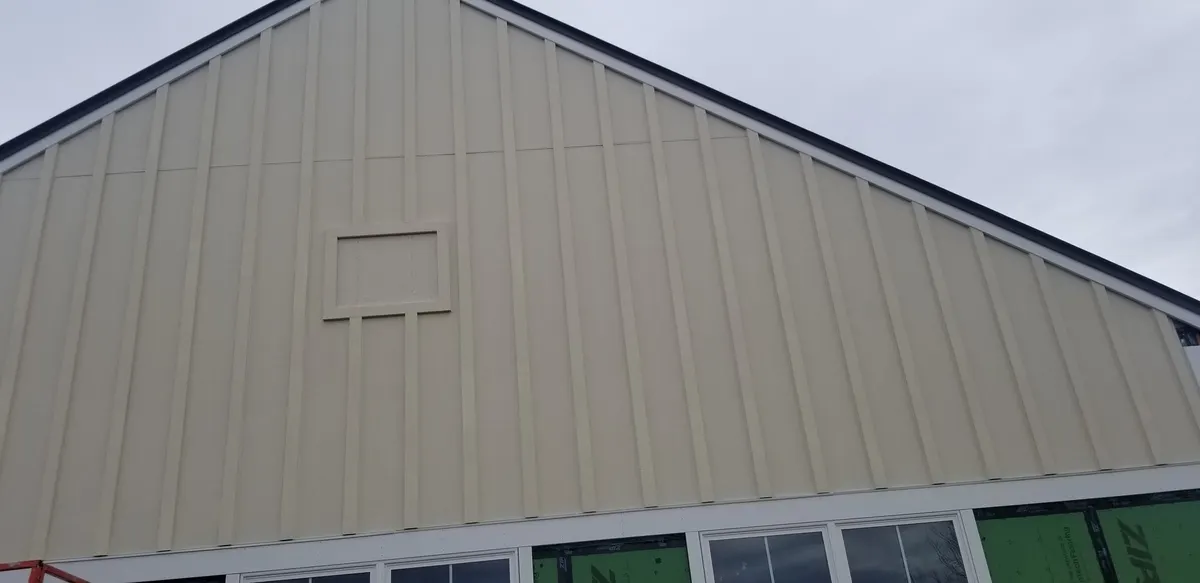
- At gable end walls, FEMA recommends vinyl over sheathing that can resist the full wind pressure on its own, not over plastic foam. For fiber cement at gables, it recommends wood sheathing over foam.
- For fiber cement, FEMA says to follow the maker's evaluation report for the wind rating. Hardie's is ICC-ES ESR-1844; LP's panel sheet points to ESR-1301 and PR-N124.
Get the wind rating in writing, from the installation instructions or the evaluation report, not from a headline. Westlake Royal's own board and batten page says “up to 155 mph” in one place and “up to 170 mph” in another (Westlake Royal, read October 30, 2026). The rating that counts is the one for your wall, your exposure and the fastening the installer will use.
Our guide to South Carolina wind zone requirements covers the same wind lines from the roof's side.
Salt air, rain and what goes behind the siding
National guides are written for inland homes. On the coast, what holds the siding on and what sits behind it matter as much as the face you see.
- Distance from the ocean. FEMA's coastal corrosion bulletin says salt spray falls off fastest in the first 300 to 3,000 feet from the shoreline, and that faster corrosion has been measured as far as 5 to 10 miles inland.
- Fasteners. FEMA's siding fact sheet recommends stainless steel fasteners for buildings within 3,000 feet of the ocean. It says to avoid mixing different metals, and that aluminum trim needs aluminum or stainless fasteners.
- Wind-driven rain. FEMA says wind-driven rain often gets into wall cavities in hurricanes, even when the siding stays on. Its fix is an effective moisture barrier, housewrap or building paper, behind the siding.
- A drainage gap. For wood siding, FEMA recommends an air gap between the moisture barrier and the siding, called a rain screen, so the wall can drain and dry.
- Something to nail into. Vertical boards need horizontal nailing. WRCLA says cedar board and batten should be nailed to horizontal blocking or furring strips. LP says its vertical siding must go over wood structural panels at least 7/16 inch thick.
- Ground clearance. LP requires at least 6 inches between its siding and the finished grade. Ask how splashback and sprinkler water will be kept off the bottom edge.
Sources: FEMA Technical Bulletin 8, FEMA P-499, WRCLA and LP. FEMA also notes that coastal homes need more upkeep than inland ones, and that you should only use siding whose maker can give you performance data for coastal or high-wind use. Our guide to salt spray and roofing fasteners covers the same corrosion problem on the roof.
Reverse board and batten, gables and accent walls
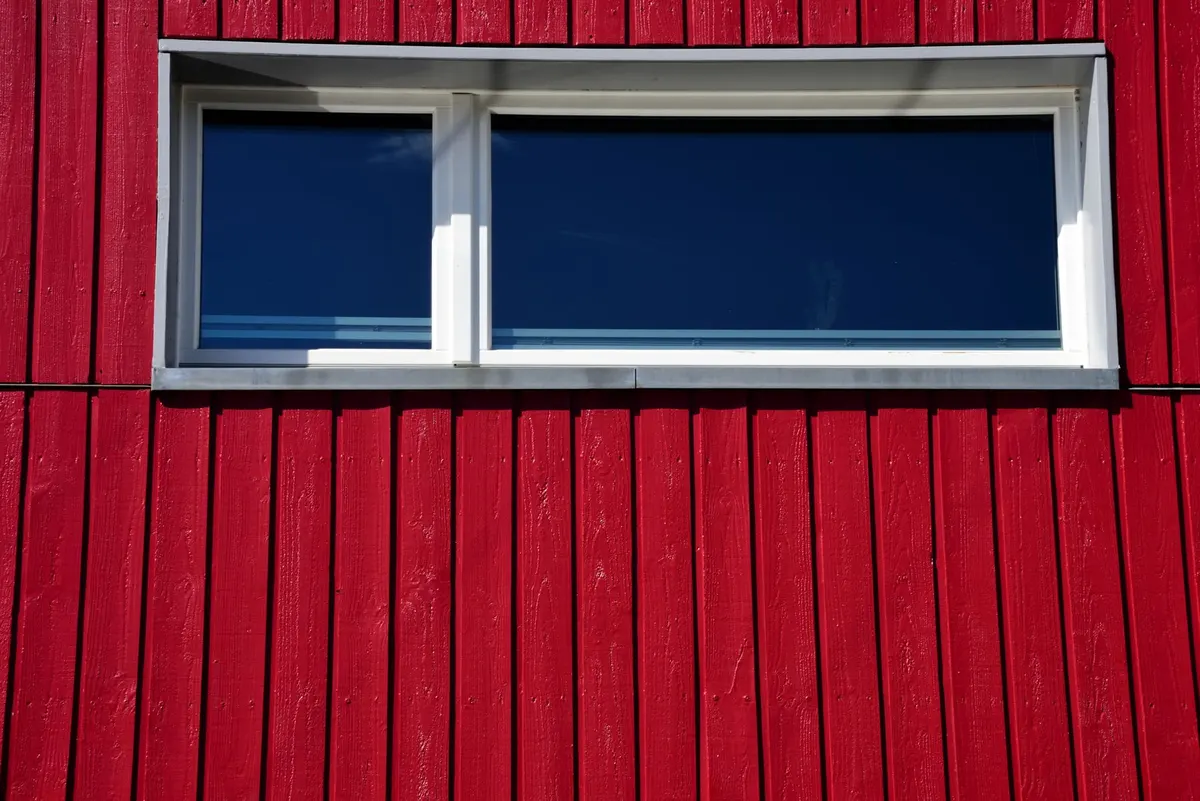
Board and batten does not have to cover the whole house, and the battens do not have to be even. Ideas from the makers' own guides:
- Use it on the whole house, or only on gables, entryways or a second story. Style Crest says it is especially popular as an accent on gable ends and entryways against lap siding.
- Change the batten spacing. A designer quoted in Hardie's guide suggests wider spacing for an elegant modern farmhouse, and very tight spacing in a dark color for a textured modern wall.
- Put tighter spacing up in a gable peak. The same designer says it gives the look of an applied grate.
- Mix battens. LP lists thin battens, wider battens, thin battens on top of wide ones, and alternating widths.
- Pair it with other materials. LP names brick veneer and metal roofing as partners.
- Reverse it. WRCLA says the boards can go over the battens to make a deep channel instead of a raised strip.
Sources: Style Crest, James Hardie, LP and WRCLA. A gable is often the easiest place to start, and it is also the wall FEMA singles out for wind, so ask how it will be sheathed.
Board and batten colors and finishes
White is on the color lists we read, and so are dark shades. What changes from one material to the next is how the color gets there and who keeps it up:
- Vinyl: The color is molded in. Georgia-Pacific describes colors that look like freshly painted wood, and Westlake Royal says no painting is needed.
- Fiber cement: HardiePanel comes factory-primed for paint or with ColorPlus, a factory-applied, oven-baked finish. Hardie recommends battens or exposed fasteners for ColorPlus panels, not caulked joints.
- Engineered wood: Painted on site or bought prefinished. LP sells a prefinished ExpertFinish line, and Diamond Kote's color list runs from Solid White to Onyx.
- Cedar: Paint or stain. FEMA says to back-prime wood siding before it goes on so the paint lasts longer.
Sources: Georgia-Pacific, Westlake Royal, HardiePanel sheet, LP, Modern Mill, Diamond Kote and FEMA P-499.
What drives the cost of board and batten siding
This page has no prices. Modern Mill says board and batten costs more to install than horizontal siding in the same material, because of layout, blocking, fastening and trim. These are the things that move the number:
- The material you choose. Hardie's cost section says materials make up a large share of the total.
- How much wall you cover. LP points out that doing only the front of the house costs less than re-siding all of it.
- Layout time. Modern Mill, a composite siding maker, says the whole wall has to be laid out before the first piece goes up.
- Blocking or furring behind vertical siding, when the product needs it.
- More fastening and more trim. Every board and batten is its own run, and corners and windows need trim and flashing.
- Tearing off the old siding. Hardie lists removing or replacing existing siding as added labor.
Sources: James Hardie, LP and Modern Mill. When you compare quotes, compare the same material, the same wall area and the same work behind the siding.
HOA approval on the Grand Strand
If your home is in a community with a homeowners association, a change from lap siding to board and batten is a visible change. Plan for review:
- Read your covenants and design guidelines for rules on exterior materials and colors before you pick a profile.
- Submit the profile, material and color to the architectural review committee, with samples or brochure pages.
- Wait for written approval before you order material.
- Ask your installer whether your town or county needs a permit for the job.
We can't tell you what any one HOA allows. Your covenants and your review committee are the only answer that counts.
Installing board and batten siding: what a good job includes
You don't have to install it yourself to know what to look for. Every maker's instructions differ, so these come with their source:
Moisture barrier and flashing
Housewrap or building paper behind the siding, which FEMA says is needed against wind-driven rain. LP's instructions require every opening to be sealed or flashed, and kick-out flashing where a roof edge meets a wall.
A solid nailing base
Sheathing, blocking or furring that suits the product. Check the maker's sheet: LP panels may go on studs at up to 16 or 24 inches, depending on the series.
Joints handled the maker's way
Hardie lists four ways to treat HardiePanel joints: a light butt joint, a caulked gap (1/8 inch is most common), a batten or an H-channel. LP's shiplap panels keep a 1/8-inch expansion gap behind the seam.
Battens over the joints
On HardiePanel, a batten over a joint should span it by at least 3/4 inch per side. On cedar, the batten nail passes between the boards, not through them (WRCLA).
The right nails, in the right place
WRCLA nails cedar boards up to 6 inches once per bearing through the center, and boards 8 inches and wider twice, 2-1/2 to 3 inches apart. Near the ocean, ask for stainless.
Sealed cut edges
FEMA says to seal field-cut ends of fiber cement as the maker directs. Hardie says to paint or prime the cut edges of ripped battens.
Over old siding only with a flat base
If new siding goes over old, FEMA says to use shims or solid backing for a flat surface with no gaps that can catch the wind.
Sources: FEMA P-499, HardiePanel sheet, LP application instructions and WRCLA. If your current siding is cracked, loose or storm-damaged, start with our siding repair page; it has a request form at the top.
Questions to ask in your siding quote
- Which board and batten profiles and materials can you install on my house?
- What wind rating does the product carry, and does it cover my wind speed line? Can I see it in writing?
- What fasteners will you use? We are within 3,000 feet of the ocean: will they be stainless?
- What goes behind the siding: sheathing, housewrap, furring or blocking?
- How will you space the battens, and where will they land around windows and doors?
- How will gable ends be sheathed and flashed?
- Is it primed, prefinished or molded in color? Who paints, and when?
- Is the old siding coming off, and what happens if you find wet sheathing?
Want the board and batten look on a Grand Strand home? Ask for it by name in your siding quote and say which material you prefer. Our siding installation page covers siding in Myrtle Beach, or call (843) 877-5539.
Questions about board and batten siding
What is board and batten siding?
Board and batten is a vertical siding style. Wide boards or panels run up the wall, and narrow strips called battens cover the seams between them. It began with wood barns and houses; Hardie says the style dates back nearly 200 years and spread in America around the middle of the 19th century. Today it is made in vinyl, fiber cement, engineered wood, steel and natural wood such as cedar.
What is reverse board and batten siding?
It flips the layers. The Western Red Cedar Lumber Association says board and batten can be reversed, with the boards installed over the battens, to create a deep channel instead of a raised strip. The wall reads as vertical grooves rather than vertical ridges.
What size boards and battens are used for board and batten siding?
It depends on the material. In cedar, WRCLA says there are no set widths, stock runs from 1x2 to 1x12, and 1x3 battens over 1x10 boards is a frequent combination. Georgia-Pacific's vinyl profile has a 5.5-inch face with a 1.5-inch batten. HardiePanel fiber cement is 5/16 inch thick in 4x8, 4x9 and 4x10-foot sheets, with 3/4-inch-thick HardieTrim battens. LP vertical siding is 16 inches wide and 16 feet long.
How far apart should board and batten battens be: 12, 16 or 24 inches?
On individual boards, the board width sets the spacing. On panels, it is a design choice inside the maker's rules. Diamond Kote shows battens every 12 inches for compact walls and every 16 inches for larger walls. LP says battens on its vertical siding go at least 16 inches apart to cover the seams. LP's 38 and 76 Series panels go on studs at no more than 16 inches on center, and its 190 Series at up to 24 inches. Where a batten covers a HardiePanel joint, Hardie says it should span the joint by at least 3/4 inch per side.
Is vinyl board and batten siding good for hurricane areas?
It can be, if the product is rated for your wind speed and installed to that rating. FEMA's coastal guide says vinyl can work in a coastal setting when properly designed and installed. It says that above 139 mph (ASCE 7-10), over 30 feet tall, or in open exposure, you should choose a product rated for those conditions. Horry County's design wind speed lines run from 140 to 150 mph. Ask for the rating in writing, and check it against your line.
What board and batten material holds up best near the ocean?
None of the sources we read tests the materials against each other in salt air, so we won't rank them. What FEMA does say: pick products whose maker publishes performance data for coastal or high-wind use, use stainless fasteners within 3,000 feet of the ocean, don't mix metals, and expect more upkeep than inland. Hardie sells an HZ10 line it says is made for salty sea air and hurricane winds. With steel, ask about the paint system and the fasteners.
Can board and batten siding go over existing siding?
Sometimes, but the base has to be flat and solid. FEMA says that when new siding goes over existing siding, use shims or solid backing to create a flat surface and avoid gaps or bumps that could catch the wind. Vertical siding also needs something to nail into, such as sheathing, blocking or furring. Taking the old siding off lets you see the sheathing and the moisture barrier.
Does Weather Shield Roofing install board and batten siding?
Weather Shield Roofing installs and repairs siding in Myrtle Beach, Horry County and Georgetown County. If you want the board and batten look, ask for it by name when you request your siding quote, and say which material you prefer. Call (843) 877-5539.