
By the Weather Shield Roofing team · Published October 21, 2026

The short answer
- Stainless steel micro-mesh, fastened to the gutter, is the best match for a roof under pines. LeafFilter rates its mesh at 275 microns and Gutterglove at 540 microns, and both makers list pine needles among the debris it keeps out.
- Perforated aluminum guards stop leaves well but have bigger holes. Gutterglove says its own stainless mesh filters fine debris that its aluminum guards let through.
- Reverse-curve covers are disputed for needles. Gutter Helmet says needles can't follow its curve; the page ranking first on Google for this search, a gutter company that recommends a different design, rates the type poor.
- Screens, foam and brush inserts are the cheapest and easiest to fit. Needles either pass through them or stay in the gutter with them, so they still need regular cleaning.
- On the coast, the metal matters as much as the mesh. FEMA advises Type 304 or 316 stainless near salt water, with screws that match.
- In hurricane country, how the guard is held matters. A guard screwed to the gutter, or hung on hangers fastened to the fascia, has a mechanical hold; a drop-in insert is held only by the gutter.
- No guard is maintenance free under pines. Needles fall all year and pile up heaviest in September and October, so plan a look at your gutters after the fall drop.
Pine needles and gutters on the Grand Strand, by the numbers
Sept. & Oct.
When pines shed the most needles
Needles fall all year, but the heaviest shedding is in these two months. NC State Extension.
6–10 in
Length of a loblolly pine needle
Longleaf needles run about 9 inches on mature trees and over a foot on young ones. Clemson HGIC.
10,427 acres
Lewis Ocean Bay Heritage Preserve, Horry County
Pine flatwoods with longleaf and pond pine, minutes from Myrtle Beach. SC DNR.
9.13 in/hr
Five-minute rain rate in a 10-year storm at Myrtle Beach
7.01 in/hr in a storm expected about every 2 years. NOAA Atlas 14.
300–3,000 ft
Where salt spray falls off fastest from the shoreline
Faster corrosion has been measured as far as 5 to 10 miles inland. FEMA.
150 mph
Design wind speed line just off the Horry County beaches
140 mph through the western part of the county. SC wind speed map.
Why pine needles get past most gutter guards
Most gutter guards were designed for leaves. Pine needles are a different problem: long, thin and arriving by the armful. A loblolly needle is 6 to 10 inches long, and a longleaf needle can run 8 to 18 inches (Clemson HGIC; NC State Extension). A needle is narrow enough to slip into a gap end first and long enough to lie across a guard and catch the next one. A guard can fail with needles in three ways:
Needles go through the guard
Openings big enough for water to rush in are often big enough for a needle to slide in end first. Bob Vila's testers and the top-ranking page for this search both say screens and larger perforations let needles into the gutter.
Needles mat on top of the guard
Long needles lie across the guard and catch more needles. Even fine mesh can end up under a mat that rain runs over instead of through. Bob Vila's testers advise brushing debris off the top from time to time.
Needles stay inside the gutter
Foam and brush inserts fill the gutter itself. GutterBrush's own FAQ says needles get caught in the bristles; its point is that they can't clump and flow into a clog. They still have to come out eventually.
The best guard for needles closes the first door, makes the second easy to deal with, and never opens the third. That points to fine mesh, held firmly, with a surface you can brush off.
Which pines drop needles here, and when
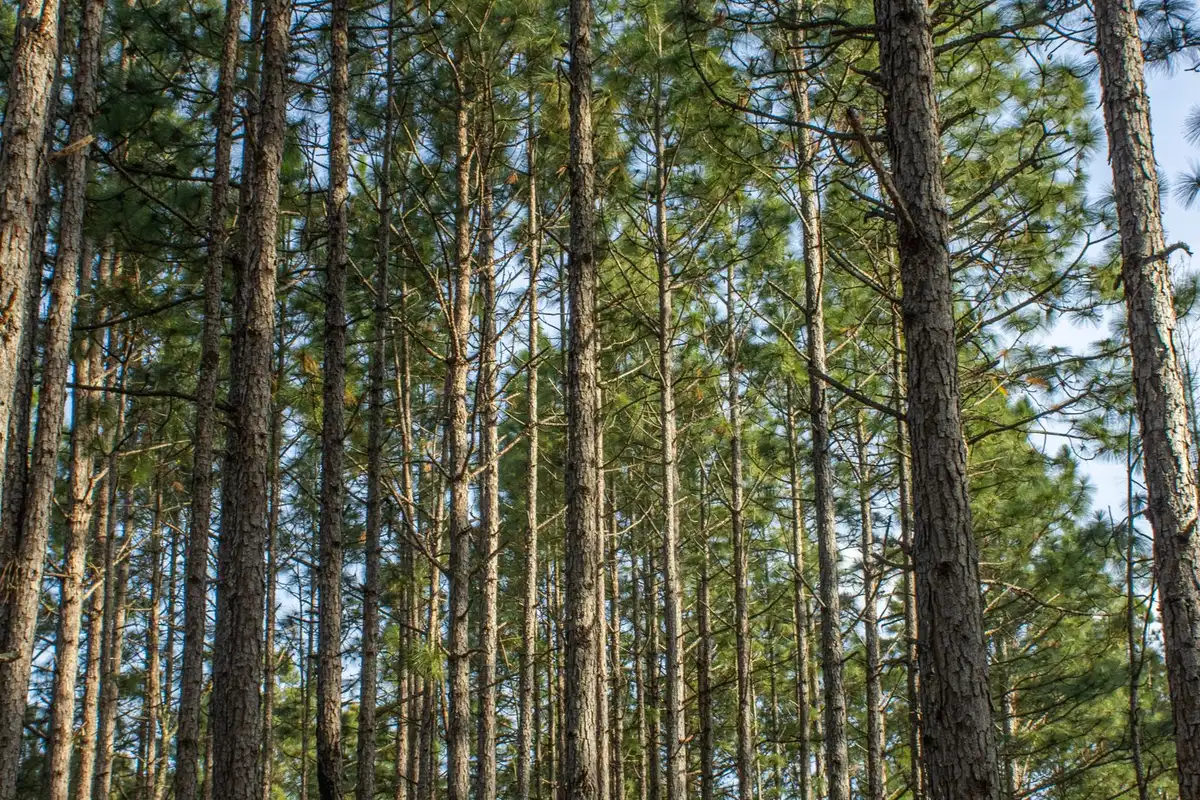
Loblolly and longleaf are two of the pines in Clemson's pine factsheet for South Carolina yards. Loblolly is one of the fastest-growing southern pines, and longleaf needles are the ones raked and sold as pine straw (NC State Extension). Inland from the beach, the state's Lewis Ocean Bay Heritage Preserve, 10,427 acres in Horry County, is pine flatwoods with longleaf and pond pine, and its newest tract sits just north of Carolina Forest.
- Needles fall all year. NC State Extension says so plainly, and a single needle stays on the tree for about two growing seasons, roughly a year and a half, before it drops (NC State Extension).
- The big drop is in the fall. The heaviest shedding comes in September and October in normal weather (NC State Extension), and Clemson notes that most pines drop their older, inner needles in the fall (Clemson HGIC).
- Yellowing inside the crown is normal. In the fall, the needles closest to the trunk yellow and drop while the tips stay green. Yellowing at the branch tips is a reason to have the tree looked at (Clemson HGIC).
For gutters, that means a steady trickle most of the year and a flood of needles in early fall. The best time to look at any guard is once the fall drop has eased, before winter storms.
Six gutter guard types compared for pine needles, salt air and storms
Each type below is rated on the four things that matter on this coast. The claims come from the makers' own pages, from Bob Vila's 2026 test of six retail guards, and from the page ranking first on Google for this search, a gutter company that recommends its own picks. We have not lab-tested any of these products.
| Guard type | Pine needles | Salt air | How it is held (wind) | Upkeep under pines |
|---|---|---|---|---|
| Stainless micro-mesh | Best match. Mesh openings are a fraction of a millimeter (275 microns for LeafFilter, 540 for Gutterglove's V-Bend mesh). Both makers list pine needles. | Stainless mesh. Ask for the grade: LeafFilter states 316L. Check the frame and the screws too. | Screwed to the gutter (Gutterglove: 3 screws per section) or hung on hangers fastened into the fascia (LeafFilter). | Needles can mat on top. Brush or blow them off after the fall drop. |
| Perforated aluminum | Good for leaves, weaker on needles. Gutterglove says its stainless mesh filters fine debris that its aluminum guards let through. | Aluminum panel. Ask what the screws are made of so the metals match. | Usually screwed down. Bob Vila says metal guards attach with self-tapping screws, and Gutterglove's aluminum line ships with them. | Some needles reach the gutter, so the gutter itself still needs cleaning. |
| Reverse-curve (surface tension) | Disputed. Gutter Helmet says needles can't follow the curve into its slot. The page ranking first for this search, a gutter company that recommends a different design, rates the type poor for needles. | Ask what the cover and the brackets are made of. | Gutter Helmet says it is installed over heavy-gauge brackets. | Ask how the slot is cleaned if needles lodge in it, and how the cover comes off. |
| Screen (plastic or wire) | Weak. Openings are large enough for needles to pass, per Bob Vila and the top-ranking page. | Plastic doesn't rust but can turn brittle in sun. Wire screens: check the metal. | Many snap onto the gutter lip with no tools. Check whether yours is screwed down. | Needles that pass through still have to be cleaned out of the gutter. |
| Foam insert | Needles rest on or work into the top. Bob Vila says foam may block needles for a while but tends to break down quickly. | Polyether foam, no metal (GutterFoam). | Slides in under the gutter spikes. The maker describes no fasteners. | GutterFoam recommends clearing it with a leaf blower or hose every 6 months. |
| Brush insert | Needles get caught in the bristles but can't clump into a clog, says GutterBrush. Bob Vila's testers saw most needles sit on top. | Plastic bristles on a twisted wire core. Near the ocean, ask what the wire is made of. | No tools or fasteners. The 3-foot sections are held by the gutter. | Pull the brushes and shake them out, then clean the gutter, per the maker. |
Stainless micro-mesh
- Pine needles
- Best match. Mesh openings are a fraction of a millimeter (275 microns for LeafFilter, 540 for Gutterglove's V-Bend mesh). Both makers list pine needles.
- Salt air
- Stainless mesh. Ask for the grade: LeafFilter states 316L. Check the frame and the screws too.
- How it is held (wind)
- Screwed to the gutter (Gutterglove: 3 screws per section) or hung on hangers fastened into the fascia (LeafFilter).
- Upkeep under pines
- Needles can mat on top. Brush or blow them off after the fall drop.
Perforated aluminum
- Pine needles
- Good for leaves, weaker on needles. Gutterglove says its stainless mesh filters fine debris that its aluminum guards let through.
- Salt air
- Aluminum panel. Ask what the screws are made of so the metals match.
- How it is held (wind)
- Usually screwed down. Bob Vila says metal guards attach with self-tapping screws, and Gutterglove's aluminum line ships with them.
- Upkeep under pines
- Some needles reach the gutter, so the gutter itself still needs cleaning.
Reverse-curve (surface tension)
- Pine needles
- Disputed. Gutter Helmet says needles can't follow the curve into its slot. The page ranking first for this search, a gutter company that recommends a different design, rates the type poor for needles.
- Salt air
- Ask what the cover and the brackets are made of.
- How it is held (wind)
- Gutter Helmet says it is installed over heavy-gauge brackets.
- Upkeep under pines
- Ask how the slot is cleaned if needles lodge in it, and how the cover comes off.
Screen (plastic or wire)
- Pine needles
- Weak. Openings are large enough for needles to pass, per Bob Vila and the top-ranking page.
- Salt air
- Plastic doesn't rust but can turn brittle in sun. Wire screens: check the metal.
- How it is held (wind)
- Many snap onto the gutter lip with no tools. Check whether yours is screwed down.
- Upkeep under pines
- Needles that pass through still have to be cleaned out of the gutter.
Foam insert
- Pine needles
- Needles rest on or work into the top. Bob Vila says foam may block needles for a while but tends to break down quickly.
- Salt air
- Polyether foam, no metal (GutterFoam).
- How it is held (wind)
- Slides in under the gutter spikes. The maker describes no fasteners.
- Upkeep under pines
- GutterFoam recommends clearing it with a leaf blower or hose every 6 months.
Brush insert
- Pine needles
- Needles get caught in the bristles but can't clump into a clog, says GutterBrush. Bob Vila's testers saw most needles sit on top.
- Salt air
- Plastic bristles on a twisted wire core. Near the ocean, ask what the wire is made of.
- How it is held (wind)
- No tools or fasteners. The 3-foot sections are held by the gutter.
- Upkeep under pines
- Pull the brushes and shake them out, then clean the gutter, per the maker.
The two sources that rank on page one disagree on the details. Bob Vila picks stainless micro-mesh as best overall and still found the plastic Amerimax screen and the GutterBrush insert worked on needles in its month-long test. The top-ranking page rates micro-mesh only “fair to good” and puts two double-layer Alu-Rex products first. Both agree that screens with large openings and foam inserts are weak against needles, and that every guard needs debris brushed off the top now and then.
Salt air: what the mesh and the screws are made of
The national reviews are written for inland homes. On the Grand Strand, the metal in the guard decides how long it lasts. FEMA's coastal corrosion bulletin says salt spray is greatest near breaking waves and falls off fastest in the first 300 to 3,000 feet from the shoreline, but that faster corrosion has been measured as far as 5 to 10 miles inland (FEMA Technical Bulletin 8). Oceanfront and first-row homes sit in the heaviest band.
- Stainless grade. For coastal work FEMA says stainless steel should be Type 304 or Type 316, and that 316 resists corrosion better. LeafFilter states 316L for its mesh (LeafFilter specs); Gutterglove says “stainless steel” without naming 304 or 316 on the pages we read.
- Matching metals. FEMA warns that pairing stainless with a less resistant metal speeds up corrosion of the weaker one, and that stainless connectors need stainless fasteners. Ask what the screws are, not only the mesh.
- Light galvanizing. FEMA says G60 and G90 galvanized connectors are not recommended in coastal areas.
One caveat: FEMA's bulletin is written for structural connectors and fasteners, not gutter guards. The salt and the metals are the same, so we use its advice as a rule of thumb for guard screws and frames. Questions worth asking any installer or store:
- What grade of stainless is the mesh: 304, 316 or 316L?
- What is the frame or body made of: stainless, aluminum or plastic?
- What are the screws made of, and are they the same family of metal as the frame and the gutter?
- Is anything on the guard galvanized steel? FEMA advises against light galvanizing near the ocean.
Our guide to salt spray and roofing fasteners covers the same problem on the roof itself.
Hurricane wind: how the guard is held
Horry County's approved wind map puts the design wind speed line just off the beaches at 150 mph and the line through the western part of the county at 140 mph (SC Building Codes Council). A gutter guard sits at the roof edge, which FEMA says is more often damaged by wind uplift than the rest of the roof. FEMA's hurricane guidance for sloped roofs says clogged or damaged gutters leave the roof exposed to wind and water damage, and recommends gutter materials and connectors designed to resist wind, water and ice loads under the ANSI/SPRI GD-1 standard (FEMA P-2181).
Here is how the makers we read say their guards are held on:
- LeafFilter: aluminum hangers fastened into the fascia board, with the guard set at a built-in pitch.
- Gutterglove stainless: three self-tapping screws per section, or 3M VHB tape that needs 65°F weather and 12 hours to cure.
- Gutter Helmet: installed over heavy-gauge brackets.
- GutterBrush and GutterFoam: no fasteners; the gutter holds them in place.
None of the maker pages we read gives a wind rating for the guard itself, so we can't rank them for hurricanes. What we can say: a guard screwed to the gutter or hung on hangers fastened to the fascia has a mechanical hold, a drop-in insert does not, and any guard is only as secure as the gutter under it. FEMA's advice is to inspect gutters, tighten loose connections and keep tree limbs trimmed back from the roof.
Our hurricane roof preparation guide covers the rest of the roof edge before a storm.
Downpours: will rain shoot past a guard full of needles?
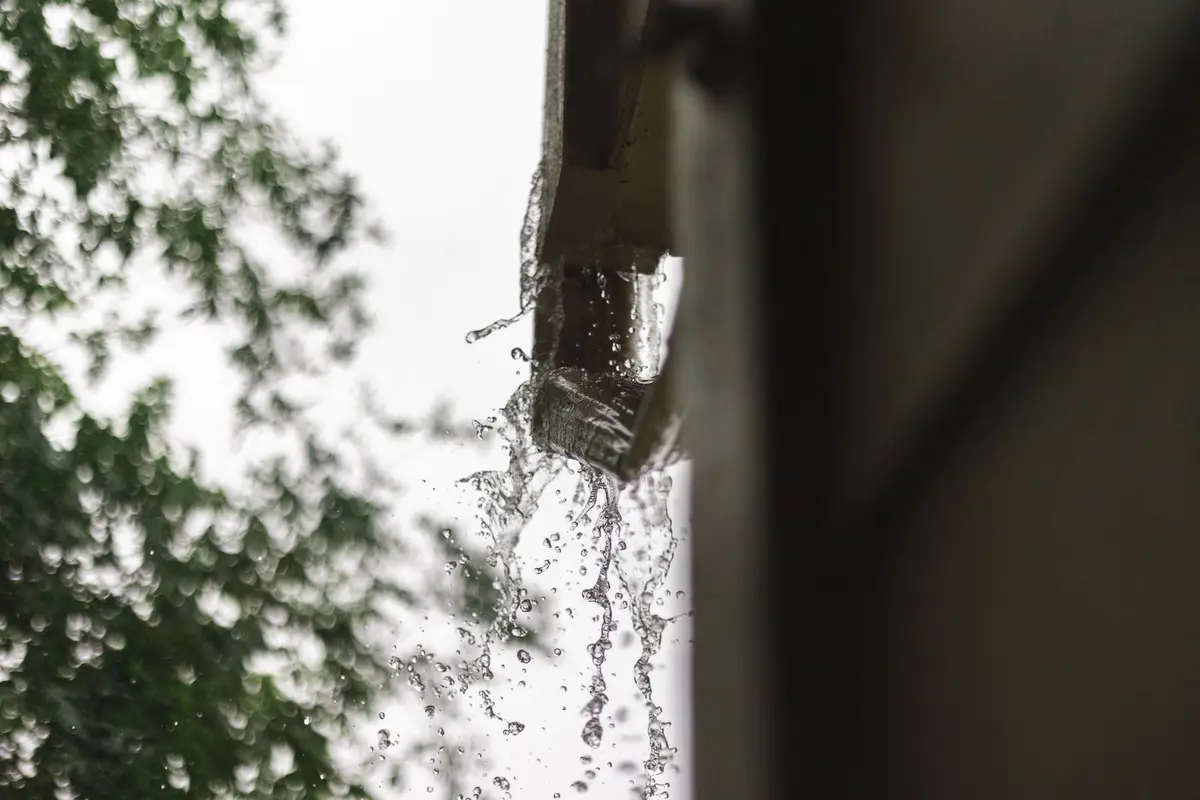
Coastal rain comes hard and fast. NOAA's precipitation frequency estimates for Myrtle Beach put the five-minute rain rate at 7.01 inches per hour in a storm expected about every 2 years, and 9.13 inches per hour in a 10-year storm. Over a full hour, those storms average 2.04 and 2.90 inches per hour (NOAA Atlas 14, Myrtle Beach point estimate).
A guard has to let that water in, and needles fight it in two ways:
- A mat on top acts like a ramp. GutterBrush's maker describes needles lying flat on a mesh cover and fast water riding over them; the top-ranking page says debris settling into mesh can send water over the top instead of in. Both favor other designs, but the point matches Bob Vila's advice to brush guards off.
- The angle matters. Gutterglove's install guide sets its guard at the roof's own slope on 1-to-6 pitch roofs (5 to 25 degrees) and bends it flatter, to 5 to 10 degrees, on steeper roofs (Gutterglove install guide). LeafFilter builds a fixed pitch into its frame.
If heavy rain is your bigger worry than needles, our gutter guards for heavy rain guide goes deeper on water intake.
The roof edge: under the shingles or on the gutter, and your warranty
Some guards slide their back edge under the first row of shingles; others fasten only to the gutter or to the fascia. LeafFilter says it does not go under the first row of shingles (LeafFilter), and Bob Vila notes its top pick can mount either way. GAF, the shingle maker, has a technical bulletin on this exact question. It says that in almost all cases, covers installed by professionals in line with good roofing practice do not affect the shingle warranty, and it says to avoid any install that calls for (GAF TAB-R-113):
- A fastener driven through a shingle to hold the cover in place
- Shingles removed and replaced to fit the cover
- The drip edge removed or left off
- Any part of the cover installed under the underlayment
The same bulletin says GAF's limited warranty covers manufacturing defects in the shingles only, not the gutter covers or damage caused by installing them. If your roof is under a manufacturer warranty, ask the installer how the guard meets the roof and keep that answer with your roof papers. Our drip edge vs gutter apron guide explains the metal at that edge.
Professional install or DIY?
Retail guards are built for homeowners, and Bob Vila tested six of them. Gutterglove lists tin snips, a drill, gloves, safety glasses and a 16 to 24 foot extension ladder for most homes (Gutterglove). GAF's bulletin is more cautious: it suggests homeowners not install gutter covers unless they have the cover maker's instructions, and says it may be best to use a professional installer familiar with good roofing practice.
- DIY makes sense on a one-story house with sound gutters, a low roof pitch and a guard whose maker publishes instructions for your roof type.
- A professional makes sense on two-story roofs, steep pitches, gutters that sag or leak, or any job where the guard meets the shingles. Gutters should be cleaned and repaired before any guard goes on; Gutterglove's own guide starts with that step.
- Cleaning doesn't go away. Plan to clear needles off the top after the fall drop. If the gutters underneath are already packed, start with a gutter cleaning, and read our guide to cleaning gutters safely before you climb.
Brands you will see, in their makers' words
These are the makers' own statements, read on October 21, 2026. We have not tested them, listing one is not a recommendation, and this list does not say which products Weather Shield Roofing installs. Ask any installer the questions in the next section.
LeafFilter
Micro-mesh over a uPVC body
- Made of
- 316L stainless steel mesh, rigid uPVC body, aluminum hangers
- Opening
- 275 microns
- How it attaches
- Hidden aluminum hangers fastened into the fascia board; the maker says it does not go under the first row of shingles
- On pine needles
- Lists pine needles among the debris it keeps out
Gutter Guard by Gutterglove, stainless
Micro-mesh, V-Bend
- Made of
- Stainless steel micro-mesh (30 mesh)
- Opening
- 540 microns
- How it attaches
- 3 self-tapping screws per section, or 3M VHB tape (install at 65°F or warmer, 12 hours to cure)
- On pine needles
- Says it filters pine needles and roof grit
Gutterglove all-aluminum (RiserStep)
Perforated aluminum
- Made of
- .019 gauge punched aluminum
- Opening
- Not stated
- How it attaches
- Drop in and secure with the included self-tapping screws
- On pine needles
- Maker points fine-debris buyers to its stainless mesh instead
Gutter Helmet
Reverse-curve cover
- Made of
- Solid cover with a nose-forward curve
- Opening
- Horizontal slit
- How it attaches
- Installed over heavy-gauge brackets
- On pine needles
- Says needles cannot follow the curve and fall off the roof
GutterBrush
Brush insert
- Made of
- UV-protected bristles in a cylindrical brush
- Opening
- None (fills the gutter)
- How it attaches
- No tools or fasteners; 3-foot sections slide in
- On pine needles
- Needles may catch in the bristles but can't clump into a clog
GutterFoam
Foam insert
- Made of
- Polyether foam with sun-protection additives
- Opening
- Open-cell foam
- How it attaches
- Slides under the gutter spikes
- On pine needles
- Recommends clearing debris every 6 months
Questions to ask before you choose a guard
- Which guard type do you recommend for my trees, and why that one over micro-mesh?
- What are the mesh, frame and screws made of? (Ask for the stainless grade.)
- How is it held on: screws into the gutter, hangers into the fascia, or by fit alone?
- Will any part go under my shingles, and will anything be fastened through a shingle?
- Will you check my gutter hangers and slope before the guards go on?
- How do I clear needles off the top, and how does the guard come off if the gutter needs cleaning?
- What does the warranty say about pine needles, and who backs it: the installer or the maker?
Our gutter guard installation page covers gutter guard installation in Myrtle Beach and how to reach us.
Questions about gutter guards and pine needles
Do any gutter guards work for pine needles?
Yes, fine stainless steel micro-mesh does the best job. Makers rate their mesh openings at a fraction of a millimeter: 275 microns for LeafFilter and 540 microns for Gutterglove's V-Bend mesh, and both list pine needles among what it keeps out. Screens and larger perforations let needles through, and foam and brush inserts hold them inside the gutter. No guard stops needles from piling up on top, so even a good mesh guard needs the needles brushed or blown off after the heavy fall drop.
What are the best gutter guards for preventing pine needles?
For a home under pines on the Grand Strand, a stainless steel micro-mesh guard that is screwed to the gutter or hung on hangers fastened to the fascia. Near the ocean, ask for Type 304 or 316 stainless, which FEMA advises for coastal metalwork, and screws that match the frame. A reverse-curve cover is the other professional option; its maker says needles can't follow the curve, but the page ranking first for this search rates the type poor for needles, so ask to see one that has been through a fall under pines.
How do I keep pine needles out of my gutters?
Cover the gutter with a fine stainless mesh guard, keep branches trimmed back from the roof (FEMA's advice for gutters in hurricane areas), and check the gutters once the heavy needle drop ends. NC State Extension puts the heaviest shedding in September and October, though needles fall all year. Without mesh guards, Bob Vila's guide suggests cleaning needles out about every 3 months. With a guard, clear the needles that mat on top so rain can still get through.
Will LeafFilter keep out pine needles?
LeafFilter says it does. Its own pages list pine needles among the debris its mesh keeps out, describe the mesh as 316L surgical-grade stainless steel at 275 microns, and say the guard sits on hangers fastened into the fascia rather than under the first row of shingles. Those are the maker's claims; we have not tested the product. As with any mesh guard, needles that land on top still have to be cleared.
When do pine trees drop their needles in South Carolina?
All year, with a peak in the fall. Clemson's Home and Garden Information Center says most pines drop their older, inner needles in the fall, and NC State Extension says the heaviest shedding is in September and October. A pine needle stays on the tree for about two growing seasons, roughly a year and a half, before it falls. Clemson profiles both loblolly and longleaf pine for South Carolina yards, and longleaf grows in the state's Lewis Ocean Bay preserve in Horry County.
Do gutter guards hold up to hurricane wind?
It depends on how they are held and what they are held to. None of the maker pages we read gives a wind rating for the guard itself. A guard screwed to the gutter or hung on hangers fastened into the fascia has a mechanical hold; foam and brush inserts are held only by the gutter. FEMA's hurricane guidance for roofs says gutters and their connectors should be designed for wind loads, and that gutters should be inspected and loose connections tightened. Horry County's design wind speed lines run from 140 to 150 mph.
Will gutter guards void my shingle warranty?
GAF's technical bulletin on gutter covers says that in almost all cases, covers installed by professionals in line with good roofing practice do not affect the shingle warranty. It says to avoid any install that drives a fastener through a shingle, removes and replaces shingles, removes the drip edge, or goes under the underlayment. GAF's warranty covers the shingles only, not the gutter covers or damage from installing them.
Do I still need gutter cleaning if I have gutter guards?
Yes, less often, but yes. Every type needs some upkeep under pines: mesh needs needles cleared off the top, aluminum and screens let some needles into the gutter, GutterFoam's maker recommends clearing the foam every 6 months, and GutterBrush's maker says to pull the brushes and shake them out when needed. Plan a check after the September and October drop.