
Loose-fill fiberglass
- R per inch
- 2.5
- To reach R49
- about 19.5 in
- To add R38
- about 15 in
FREE INSPECTION: Leak, storm damage, replacement, or commercial roofFree Roof InspectionRequest Inspection →
A Myrtle Beach attic with no insulation needs about R49. One that already has 3 to 4 inches needs about R38 added on top. Those are ENERGY STAR's levels for climate zone 3, where the Department of Energy places Horry County. Before any of it goes in, the roof above has to be dry and the soffit vents clear.
Call to ask whether we handle your attic insulation job, or book a free roof inspection that includes the attic.
Why fall and winter are the time to do it
For hot weather, ENERGY STAR's instructions say to start attic work early, because attics heat up as the day goes on. Done in the cooler months, the insulation is in place before the next cooling season. One thing has changed: the federal tax credit for insulation covered work done through December 31, 2025, so a 2026 job does not get it.
How much you need
Insulation is rated by R-value, its resistance to heat moving through it; higher is better. The Department of Energy's county guide lists both Horry and Georgetown counties as climate zone 3A, hot-humid. For zone 3, ENERGY STAR recommends:
| Your attic today | Zone 3 level |
|---|---|
| Attic with no insulationENERGY STAR's retrofit level for zone 3 | R49 |
| Attic that already has 3 to 4 inchesAdded on top of what is there | Add R38 |
| Floor over a crawl spaceSame ENERGY STAR table, zone 3 | R19 |
ENERGY STAR's quick check: look across the attic. If the insulation is level with or below the floor joists, you probably need more. If you cannot see any joists, you probably have enough. For a number, measure the depth in inches and multiply by the factor for your insulation type. This is the depth each type needs to reach the zone 3 levels.
Depths are R-value divided by ENERGY STAR's R-per-inch factors, rounded to the nearest half inch. A product's own label gives its exact coverage.
Source: ENERGY STAR (U.S. EPA), What to Look For: DIY Checks and Inspections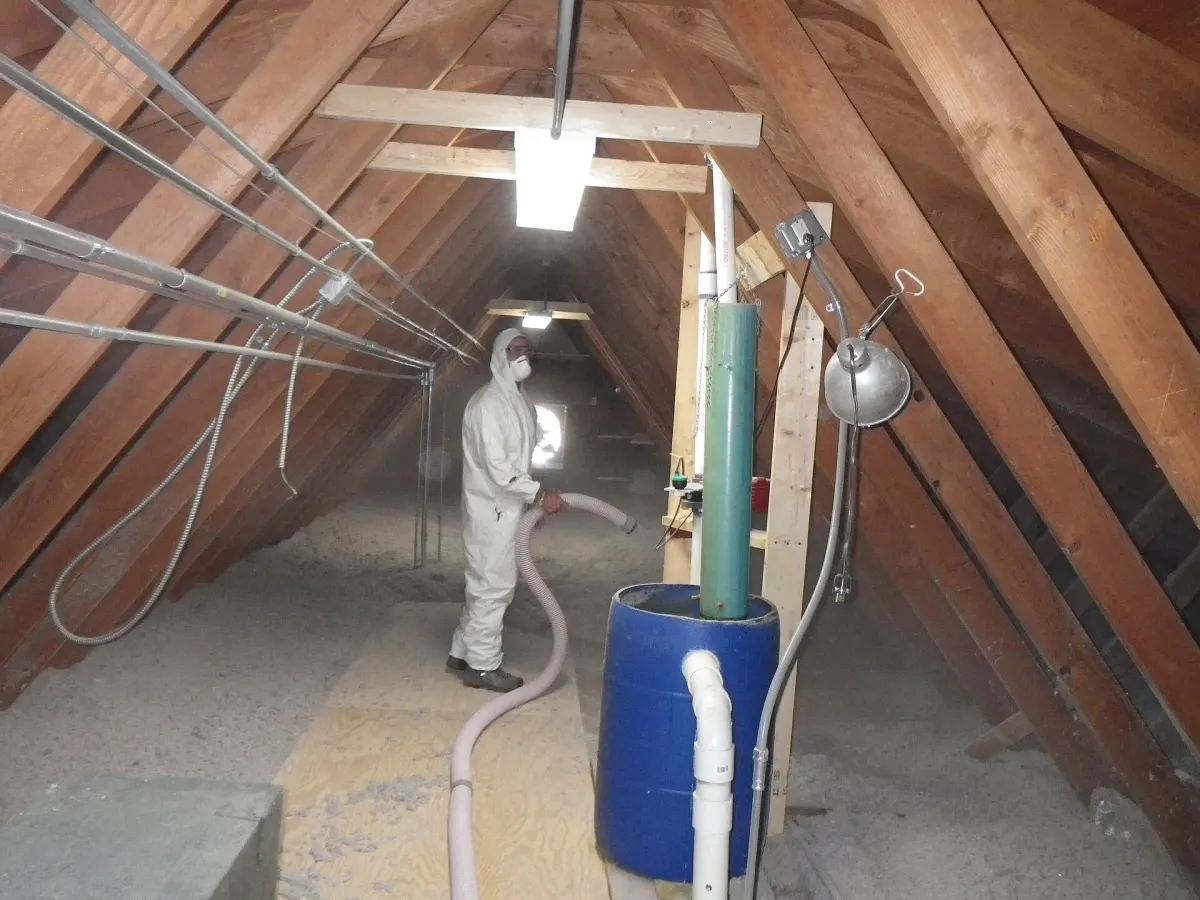
The roof comes first
ENERGY STAR says that if you find any of these in your attic, have a professional correct them before adding insulation. Most of them start at the roof, the soffits or a vent, which is the part of the house a roofer works on.
ENERGY STAR lists wet or damp insulation as a sign of a leaky roof, and says to have a professional correct it before adding insulation. New insulation laid over a leak soaks up the water and hides it.
How to find a roof leak from the atticMoldy or rotted rafters or floor joists point to a moisture problem, which ENERGY STAR also puts on its fix-first list. In a hot, humid attic the cause is often moist air or blocked ventilation, not only a leak.
Attic condensation: causes and fixesENERGY STAR's DIY guide says the most common mistake homeowners make when installing insulation is blocking the flow of air at the eaves. Soffit intake and a ridge or gable exhaust need to work before the attic floor is filled.
Attic ventilation on the coastKitchen, bathroom or clothes dryer vents that blow moist air into the attic instead of outdoors are on ENERGY STAR's list of problems to correct first. Insulation does not fix them; a vent run through the roof or wall does.
Roof ventilation guideWeatherShield's free roof inspection includes an interior attic assessment: active leak detection, mold and mildew screening, and the condition of the insulation. If a leak, a soffit or a vent needs work, you will know before anyone adds insulation.
Ask for a free inspection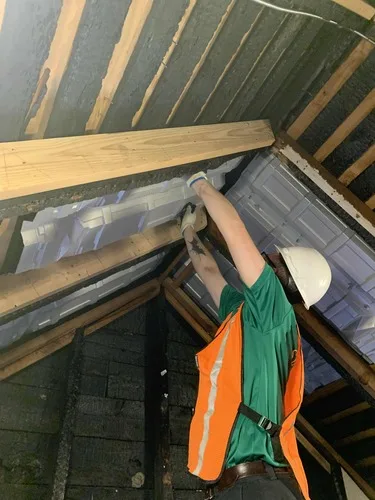
Where the roof and the insulation meet
In summer, ENERGY STAR explains, natural airflow in a well-vented attic moves super-heated air out, protecting the shingles and removing moisture. Insulation pushed into the eaves stops that flow. These are the preparation steps from ENERGY STAR's own instructions.
EPA recommends finishing an attic air sealing project before adding insulation. The largest gaps are usually open stud cavities, dropped soffits over cabinets and the holes around pipes, wires and the flue.
Source: ENERGY STAR (U.S. EPA), Attic Insulation ProjectRafter vents, also called insulation baffles, are stapled to the underside of the roof deck where the attic ceiling meets the floor. They keep a channel open from the soffit vents so insulation can go right out to the edge.
Source: ENERGY STAR (U.S. EPA), A DIY Guide to Sealing and Insulating with ENERGY STAR (2016)The DIY guide notes that blown insulation may need an extra block so it is not blown into the soffit; a piece of rigid foam on the outer edge of the top plate works well.
Source: ENERGY STAR (U.S. EPA), A DIY Guide to Sealing and Insulating with ENERGY STAR (2016)Insulation should stay at least 3 inches away from recessed can lights unless they are rated IC (insulation contact). Sheet metal or wire mesh makes the barrier, and a metal dam keeps insulation off the flue pipe.
Source: ENERGY STAR (U.S. EPA), Attic Insulation ProjectSome attics have vermiculite, a light, pea-size, flaky gray mineral, which may contain asbestos. ENERGY STAR says not to disturb it until an approved lab has tested it.
Source: ENERGY STAR (U.S. EPA), Attic Insulation ProjectChoosing a type
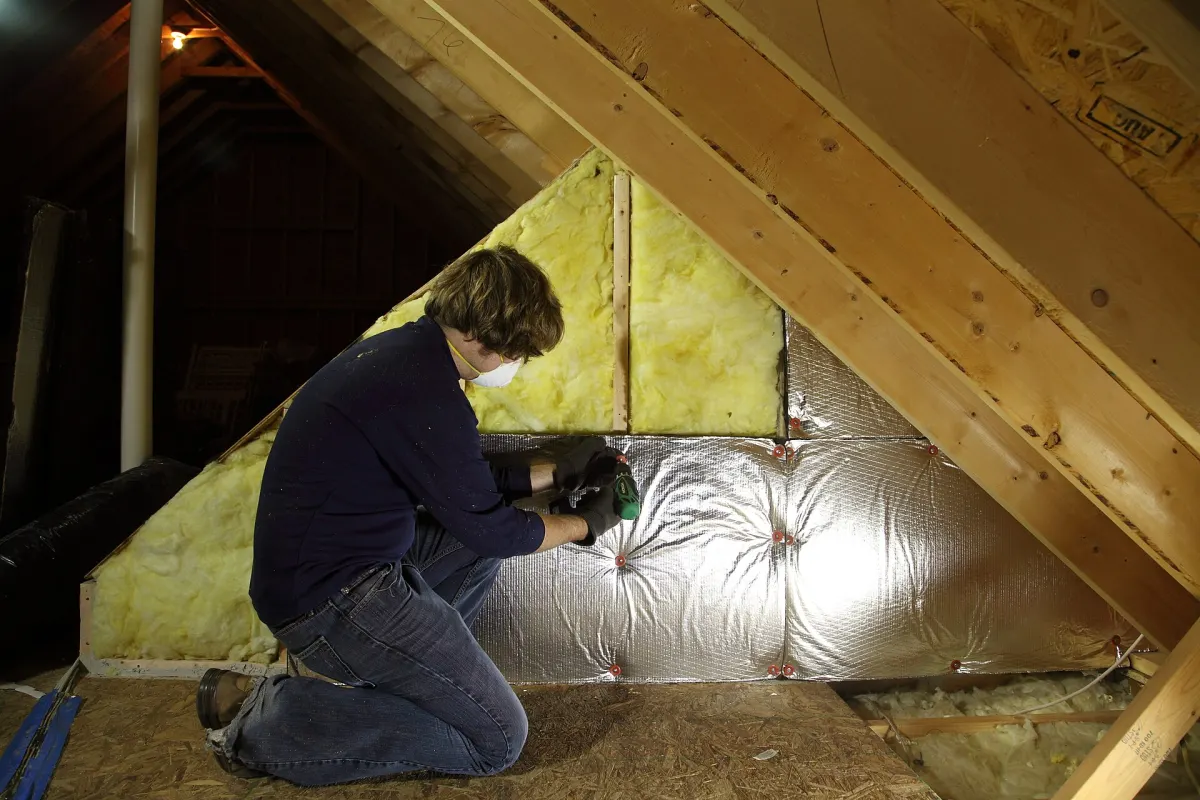
ENERGY STAR says the added layer does not have to be the same material as the old one. Loose fill can be blown over batts or blankets, and batts can go over loose fill as long as they are unfaced, with no paper or foil backing. Batts laid by hand go perpendicular to the joists, over the first layer, to cover the tops of the joists.
Code, savings and the tax credit
State law (S.C. Code Section 6-10-30) makes the 2009 International Energy Conservation Code the Energy Standard, and all new and renovated buildings and additions must comply. New 2024 state building codes take effect January 1, 2027, and the Building Codes Council's notice says the 2009 IECC stays the energy standard by statute. ENERGY STAR's R49 and R38 come from the newer 2021 IECC, so they go beyond the state minimum.
EPA estimates an average of 15% off heating and cooling costs, or 11% off total energy costs, from air sealing and adding insulation in attics, floors over crawl spaces and basements. That is sealing and insulating together. ENERGY STAR also lists better humidity control and less pollen, dust and insects coming in, and says 9 out of 10 U.S. homes are under-insulated.
Not the federal one. The IRS says the Energy Efficient Home Improvement Credit can be claimed for improvements made through December 31, 2025. Insulation installed in 2026 does not qualify. Some pages still advertise the credit, so check the IRS page first. General information only, not tax advice.
Call (843) 877-5539 and ask. Tell us what is in the attic, about how deep it is, and whether you have seen leaks or damp spots, and we will tell you on the phone whether your attic insulation job is one we handle. If your roof is due for repair or replacement, ask about the attic during the same inspection, while the roof deck and eaves are being looked at.
All opened and checked on October 25, 2026.
Grand Strand service area
WeatherShield works on roofs in Myrtle Beach, North Myrtle Beach, Surfside Beach, Garden City, Murrells Inlet, Conway, Carolina Forest, Socastee and Little River. The request form accepts the Horry County and nearby Grand Strand ZIP codes we serve, and our office is at 215 Ronnie Ct. Unit F, Myrtle Beach.
Homeowner questions
ENERGY STAR's retrofit table for climate zone 3 says R49 for an uninsulated attic, or add R38 if the attic already has 3 to 4 inches of insulation. The U.S. Department of Energy's county guide lists Horry and Georgetown counties as climate zone 3A (hot-humid). ENERGY STAR notes its table is based on the 2021 International Energy Conservation Code, Table R402.1.3.
Look across the attic. ENERGY STAR says that if the insulation is level with or below the floor joists, you probably need more; if you cannot see any joists because the insulation is well above them, you probably have enough. Check the eaves too, because insulation is often thin there even when the middle of the attic is full.
ENERGY STAR does not rank one material as the most cost-effective. Its R-value table shows the levels of insulation that are cost-effective for each climate, so the level matters more than the brand. You do not have to match what is already there: loose fill can go over batts, and unfaced batts can go over loose fill. Loose fill needs a blowing machine, which is why ENERGY STAR suggests a professional may be wise for it.
By state law (S.C. Code Section 6-10-30), the 2009 edition of the International Energy Conservation Code is South Carolina's Energy Standard, and all new and renovated buildings and additions must comply with it. The Building Codes Council's 2024 code adoption notice, with the new codes taking effect January 1, 2027, repeats that the 2009 IECC remains the energy standard by statute. ENERGY STAR's retrofit recommendations are based on the newer 2021 IECC, so they are higher than what the state standard sets as a minimum.
For climate zone 3, ENERGY STAR's main R-value table lists R49 for an empty attic; R60 is the level it lists for colder zones, 4 through 8. Its DIY checks page gives a wider range of R30 to R60 for zone 3. So R60 is within ENERGY STAR's range for our climate but above the 2021 IECC-based level for it.
EPA estimates that homeowners can save an average of 15% on heating and cooling costs, or an average of 11% on total energy costs, by air sealing their homes and adding insulation in attics, floors over crawl spaces and basements. That figure is for sealing and insulating together, not insulation alone. ENERGY STAR also says 9 out of 10 U.S. homes are under-insulated.
Yes. ENERGY STAR's DIY guide calls blocking the airflow at the eaves the most common mistake: never cover soffit vents with insulation, use rafter vents instead. Other mistakes on ENERGY STAR's pages: laying insulation over recessed lights that are not IC-rated, putting faced fiberglass over loose fill (it should be unfaced), and insulating over wet insulation from a roof leak.
Not under the federal Energy Efficient Home Improvement Credit. The IRS page (last reviewed April 28, 2026) says you can claim it for improvements made through December 31, 2025. Insulation installed in 2026 does not qualify. Some older pages still advertise the credit, so check the IRS page before counting on it. This is general information, not tax advice; ask your tax preparer about your situation.
Call (843) 877-5539 and ask. Tell us what is in the attic now, roughly how deep it is, and whether you have seen leaks or damp spots, and we will tell you on the phone whether your attic insulation job is one we handle. Our free roof inspection includes an attic assessment that looks at leaks, mold and mildew, and the condition of the insulation.
ENERGY STAR estimates 1 to 2 days when a contractor does the job, and 1 to 3 days if you do it yourself. Air sealing, baffles at the eaves and any roof or vent repairs come first and can add time.
Published by Weather Shield Roofing.
Call to ask whether we handle your attic insulation job, or send your attic details through the form at the top of this page.