
Roof Inspection for Insurance in South Carolina: Renewal, Roof Age & Claim Guide (2026)

Shocking Industry Truth
A roof inspection for insurance is no longer something only claim filers need. In 2026, South Carolina homeowners are being asked for one at renewal, when they switch carriers, when their roof crosses an age threshold, and after every named storm. The report that comes out of that inspection decides whether you keep replacement cost coverage, get moved to actual cash value, lose wind coverage, or get non-renewed entirely.
This guide was rewritten in September 2026 to cover all three kinds of insurance roof inspection that Horry County and Georgetown County homeowners actually face: the underwriting inspection your insurer orders at renewal, the roof-age certification a carrier asks for before it will write or keep your policy, and the damage inspection you need before filing a claim. It also explains what changed this year, including the SC Wind and Hail Underwriting Association rate increase that took effect February 1, 2026, and the continued shift of older roofs to actual cash value coverage across the state.
Timing matters. The National Hurricane Center puts the statistical peak of the Atlantic season on September 10, with most activity between mid-August and mid-October. That is also the window when renewal notices, inspection requests, and claim filings pile up. Getting your roof looked at now, before a storm or a renewal letter forces the issue, gives you time to fix what an insurer would flag.
Free Roof Inspection for Insurance in Myrtle Beach
WeatherShield Roofing provides free roof inspections with dated photo documentation and a written condition report you can hand to your insurer, your agent, or your adjuster. We are GAF Certified Plus, IBHS FORTIFIED certified, BBB accredited with an A rating, and have 80+ public Google reviews from Grand Strand homeowners. Call (843) 877-5539 or request your free inspection online.
Ready to Protect Your Investment?
Schedule your free roof inspection today. No obligations, just peace of mind.
Why South Carolina Insurers Are Demanding Roof Inspections in 2026
If you got a letter this year asking for a roof inspection, photos of your roof, or proof of roof age, you are not being singled out. Three things are driving it across the coastal counties.
1. The SC Wind and Hail rate increase took effect February 1, 2026
The South Carolina Wind and Hail Underwriting Association, the state-backed wind pool that covers coastal homes whose standard insurer excludes wind, filed for and received approval on a rate increase effective February 1, 2026. Per the association's own bulletin, the base rate change is an 8.0% increase on dwelling policies and a 25.6% increase on mobile home policies, applying to new and rewritten business. The previous increase took effect June 1, 2024. You can read the primary source here: SCWHUA Bulletin 25-02.
Why does that matter for inspections? When the wind pool gets more expensive, standard carriers that still write wind coverage on the coast get more selective about the roofs they keep. A documented roof condition report is the fastest way an underwriter can decide whether your home stays in the standard market or gets pushed toward the pool.
2. Older roofs keep getting moved to actual cash value
Beginning in 2025 and continuing through 2026, many South Carolina carriers have moved roofs past a certain age from replacement cost value (RCV) to actual cash value (ACV) at renewal. Under ACV, the insurer pays what your aged roof is worth after depreciation, not what a new roof costs. Independent insurance agents in the state have reported renewal increases of 20 percent or more even for claim-free homeowners, driven largely by reinsurance costs and coastal storm exposure.
A current inspection report showing a sound roof, or a recent replacement, is often the only thing that keeps you on RCV. We cover the age thresholds in detail below, and our companion guide on how roof age affects your insurance coverage goes deeper on the ACV mechanics.
3. Coastal exposure in Horry and Georgetown counties
Myrtle Beach, North Myrtle Beach, Surfside Beach, Murrells Inlet, Pawleys Island, and Georgetown sit in the highest wind-exposure zone in the state. Salt air corrodes fasteners and flashing faster than inland, and afternoon humidity keeps shingle granules loose. Insurers know a 12-year-old roof on the Grand Strand does not look like a 12-year-old roof in Columbia, and they underwrite accordingly. Expect inspection requests earlier and more often here than anywhere else in South Carolina.
The Three Types of Roof Inspection for Insurance
Most confusion comes from treating these as one thing. They are three different inspections, ordered by different people, for different decisions.
| Inspection type | Who orders it | When it happens | What it decides |
|---|---|---|---|
| Underwriting / renewal inspection | Your insurer, usually through a third-party inspection vendor | At new policy, at renewal, or after a carrier change | Whether the policy is written or renewed, and on what terms (RCV vs ACV, wind coverage, surcharges) |
| Roof certification / roof-age inspection | You, at the insurer's or agent's request, using a licensed roofer | When the roof crosses an age threshold or the permit history is unclear | Documented roof age, condition, and estimated remaining service life |
| Claim / damage inspection | You (independent roofer) and the insurer (adjuster) | After a hurricane, wind event, hail, or discovered leak | Whether damage is covered, what caused it, and what the insurer will pay |
The first two are about keeping coverage. The third is about collecting on it. All three produce a written report, and in all three the quality of the photos and the accuracy of the roof-age documentation carry more weight than anything else.
What the insurer's inspector actually does
Underwriting inspections ordered by the carrier are often done from the ground, from a drone, or from aerial imagery, sometimes without anyone telling you. They are looking for reasons to decline, not reasons to approve. If you get a "cure" or "conditional renewal" letter afterward, an independent inspection from a licensed roofer is how you answer it with evidence instead of guesswork.
Roof Age Thresholds: 10, 15, and 20 Years in South Carolina
No South Carolina statute sets a maximum insurable roof age. Each carrier writes its own underwriting rules, and those rules are stricter on the coast. Based on what we see on inspection requests and renewal letters across Horry and Georgetown counties, these are the practical thresholds.
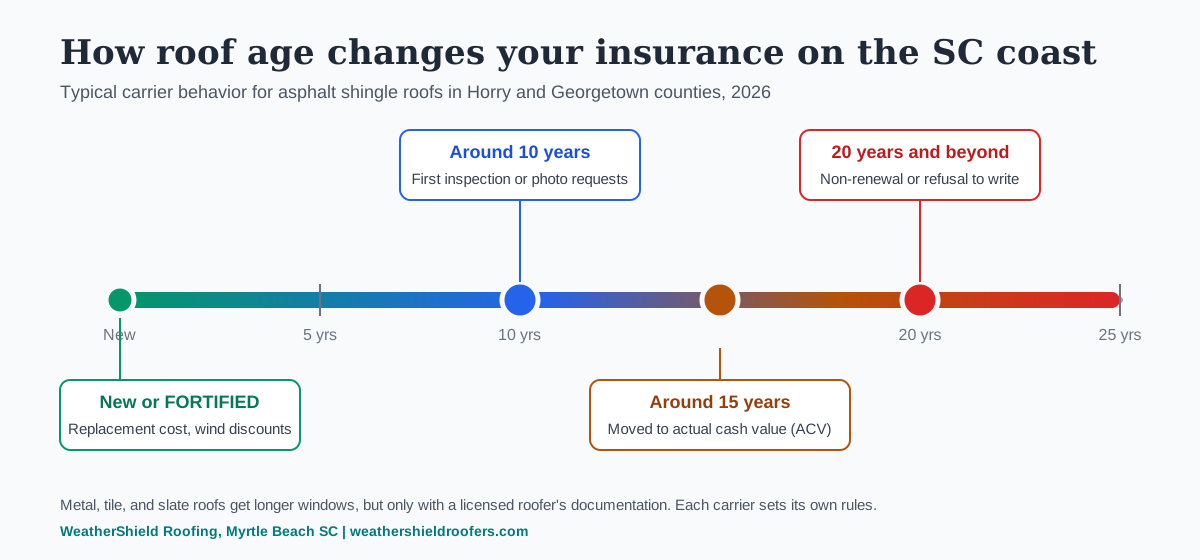
Around 10 years: first inspection requests
Coastal carriers commonly begin asking for a roof inspection or recent photos once an asphalt shingle roof reaches roughly 10 years. At this age a well-installed roof usually passes without issue. The purpose is to establish a documented baseline and confirm there is no storm damage the homeowner never claimed.
Around 15 years: the ACV cliff
This is where most South Carolina policies now change. Many carriers move 3-tab and standard architectural shingle roofs to actual cash value at or around 15 years, and some require a passing inspection to renew at all. Once you are on ACV, a covered total loss pays the depreciated value of the roof, which on a 15-year-old asphalt roof is a fraction of replacement cost. Our guides on whether insurance will cover a 20-year-old roof in Myrtle Beach and the ACV vs RCV roof insurance page walk through exactly how that math works without the marketing spin.
20 years and beyond: non-renewal territory
At 20 years many coastal carriers will not write a new policy on an asphalt roof, and some will non-renew an existing one unless a licensed roofer certifies remaining life. Metal, tile, and slate roofs get longer windows, but only with documentation. If you are at or near this mark, read what happens with a 25-year-old roof in South Carolina before renewal season.
Roof age is what the insurer can prove, not what you remember
Carriers date a roof from the permit record, the closing documents, or the inspection report, whichever they can verify. If your roof was replaced without a permit, or by a previous owner, the insurer may default to the age of the house. A licensed roofer's certification with photos of the shingle stamp, underlayment, and flashing condition is often the only way to correct a wrong roof age on file.
3D Insurance Roof Inspection Simulator
Answer five questions and watch the 3D roof change the way a South Carolina insurer's inspector would see it. Tap a marker on the roof to learn what gets checked there. Nothing is submitted or stored.
Drag to rotate
3D model of a single-story home with a architectural shingle roof aged an unspecified age. No visible problems selected.
What the inspector checks
Red markers show an issue you selected. Tap any marker or button for the inspector's notes.
Answer all five questions to see your likely outcome.
This simulator reflects the age thresholds and underwriting patterns WeatherShield sees on Grand Strand renewal letters. The 3D house is an illustration, not your home. Every carrier sets its own rules, so treat the result as a starting point for a conversation with your agent, not a guarantee.
What Inspectors Check, and What a Roof Certification for Insurance Includes
Whether the inspection is for renewal, certification, or a claim, the checklist overlaps heavily. Here is what a thorough inspection on the Grand Strand covers, and what usually triggers a fail.
Exterior roof surface
- Shingle condition: curling, cupping, cracking, blistering, and granule loss. Heavy granule loss on a south- or ocean-facing slope is the most common coastal fail.
- Missing or lifted shingles: wind creases and broken seal strips, common after named storms even when no shingles are visibly gone.
- Flashing: chimney, wall, valley, and pipe-boot flashing for rust, separation, and failed sealant. Salt air makes this a bigger issue here than inland.
- Ridge and hip caps: the first shingles to fail in high wind.
- Penetrations: vents, satellite mounts, solar attachments, and skylights.
- Drainage: gutters, downspouts, and any ponding on low-slope sections.
- Debris and biological growth: algae streaking, moss, and pine needle buildup in valleys.
Attic and interior
- Decking: soft spots, water staining, and delamination visible from the attic.
- Ventilation: blocked soffits, missing baffles, and inadequate exhaust, which shortens shingle life and can void manufacturer warranties.
- Moisture and mold: active leaks, rusted nail tips, and stained insulation.
- Ceiling stains: inside the living space, matched back to a roof location.
What a roof certification report includes
When an insurer or agent asks for a "roof certification" or "roof condition letter," they want a signed document from a licensed roofing contractor that states:
- Property address, inspection date, and the inspector's license and contact information.
- Roof covering type (architectural shingle, 3-tab, metal, tile, flat membrane) and number of layers.
- Roof age, with the basis for it (permit, invoice, manufacturer stamp, or visual estimate).
- Overall condition rating and estimated remaining service life.
- Photos of every slope, all flashing, and any defect found, with dates.
- Any repairs completed or recommended, and whether the roof is considered insurable in its current state.
WeatherShield produces this report as part of every free inspection. If you are unsure whether your carrier wants a certification or a full condition report, ask your agent for the form name before we come out. Our Myrtle Beach roof inspection service page explains what the visit involves.
What Happens If Your Roof Fails the Insurance Inspection
A failed inspection is not a denial. It is the start of a short negotiation, and the outcome depends on how quickly you respond with evidence.
The cure letter
Most carriers send a conditional renewal or "cure" letter listing the defects found and a deadline to fix them. The deadline is stated in the letter and is usually short, so read it the day it arrives. The fix is typically one of: repair the listed items and send photos, replace the roof, or provide a licensed roofer's certification that disputes the finding.
The common outcomes, from mildest to most serious
- Renewed with a roof surcharge or higher deductible. Coverage stays, cost rises.
- Roof coverage moved to ACV. The rest of the policy is unchanged, but the roof itself is now paid at depreciated value.
- Wind and hail excluded. The carrier keeps your fire and liability coverage but drops wind. On the coast this pushes you to the SC Wind and Hail Underwriting Association for a separate wind policy, at the rates that increased February 1, 2026.
- Non-renewal. The policy ends at expiration. South Carolina requires advance written notice of non-renewal, and you will need a new carrier or the wind pool plus a fire policy before the lapse date.
Why September is the worst month to be caught unprepared
Roofers are busiest from the hurricane peak through late fall. If your cure letter lands in September and requires a replacement, scheduling and material lead times work against you. Homeowners who inspect in spring or early summer have room to fix problems before renewal. Homeowners who wait until the letter arrives often do not.
Do not sign an assignment of benefits to "make it go away"
After every storm, out-of-town crews canvass Grand Strand neighborhoods offering to handle the inspection and the insurer for you if you sign paperwork on the spot. That paperwork is often an assignment of benefits or an open-ended contingency agreement. WeatherShield does not use either. Read our storm chaser warning for South Carolina before signing anything.
Roof Inspection for an Insurance Claim: The Short Version
When a storm has already hit, the inspection serves a different purpose: proving that covered damage happened, when, and how much. Here is the process that gets claims paid on the Grand Strand.
Get an independent inspection before you call the insurer
Once you file, the insurer's adjuster controls the narrative. An independent inspection first gives you a dated, photographed record of the damage and a professional opinion on cause, so the adjuster's report has something to be measured against. It also tells you whether the damage exceeds your deductible before you put a claim on your record.
Know which deductible applies
South Carolina coastal policies usually carry two deductibles: a flat all-perils deductible and a separate named storm or hurricane deductible expressed as a percentage of your dwelling coverage. Whether a storm triggers the percentage deductible depends on the policy language and whether the National Hurricane Center named the storm. The difference can be large, so read your declarations page and our guide to all-perils vs named storm deductibles in SC before you file.
ACV vs RCV changes what the claim is worth
If your roof was moved to ACV at a prior renewal, the insurer pays depreciated value and you cover the gap. If you are still on RCV, most policies pay ACV first and release the recoverable depreciation after the work is completed and invoiced. Check your declarations page for which applies before the adjuster visit.
Document damage the right way
- Photograph every slope from the ground, then close-ups of each damaged area with a tape measure or coin for scale.
- Photograph interior stains, wet insulation, and any debris on the property that shows wind direction.
- Save weather reports and news coverage for the storm date.
- Keep receipts for emergency tarping. Most policies require you to prevent further damage and reimburse reasonable costs.
- Do not make permanent repairs before the adjuster has seen the damage.
Our insurance claim documentation page and post-storm roof inspection checklist break this down step by step.
The adjuster visit
Have your roofer present if at all possible. Walk the adjuster through your inspection report, point out every item, and ask for a copy of their scope before they leave. Do not agree to a settlement figure on site. If the adjuster's scope leaves out items your inspection found, request a reinspection in writing. Our page on public adjusters vs insurance adjusters explains who each person actually works for.
For hurricane-specific steps, see what to do first after hurricane roof damage in Myrtle Beach and our SC hurricane roof insurance claim guide. For hail, which is less common here but does happen, see the hail damage roof insurance claim guide.
South Carolina Claim Deadlines and Homeowner Rights
South Carolina does not publish a single homeowner claim deadline. The rules come from your policy language plus a few state statutes. Here is what is actually written down.
- Prompt notice. Nearly every policy requires you to report a loss "promptly" or "as soon as practicable." There is no fixed number of days in state law, so treat this as days, not months. Late notice is one of the most common reasons for a denial.
- Insurer conduct. The South Carolina Improper Claim Practices Act, S.C. Code Section 38-59-20, requires insurers to acknowledge claims and act on them with reasonable promptness, to give a reasonable explanation for a denial, and not to misrepresent policy terms. It does not set a specific day count, but it is the basis for a Department of Insurance complaint.
- Lawsuit deadline. Claims on an insurance contract generally fall under South Carolina's three-year statute of limitations for contract actions, S.C. Code Section 15-3-530. Your policy may contain its own shorter suit-limitation clause, and the two interact in ways only an attorney should advise on. The practical point is the same: do not wait.
- Right to choose your contractor. Your insurer can recommend a preferred vendor. It cannot require you to use one.
- Appraisal clause. Most policies include an appraisal provision that lets either side demand a neutral valuation when the dispute is about the amount, not coverage. Read your policy for the exact process.
- Complaints. The SC Department of Insurance Consumer Services division handles complaints against insurers. Phone (803) 737-6180, or file online at doi.sc.gov.
If Your Claim Is Denied or Underpaid, and When a Public Adjuster Makes Sense
A denial or a low scope is not the end of the process. Work through these steps in order, and keep everything in writing.
- Get the reason in writing. South Carolina requires a reasonable explanation. "Wear and tear" and "pre-existing" are the usual ones on older coastal roofs.
- Compare it to your independent report. If your roofer documented wind creases and broken seals the adjuster called wear, that is a factual dispute you can win with photos.
- Request a reinspection. Ask for a different adjuster and have your roofer present.
- Invoke appraisal if the disagreement is about how much, not whether.
- File a complaint with the SC Department of Insurance if the insurer is not responding or is misrepresenting the policy.
- Consider a public adjuster or attorney for large, complex, or split-coverage claims.
When a public adjuster is worth it
Public adjusters represent you, not the insurer, and are paid a percentage of the settlement set out in a written fee agreement. They make sense when the claim is large, the insurer's scope is far below your contractor's, coverage is split between a standard carrier and the SC Wind and Hail Underwriting Association, or you have already been denied once. They are rarely worth the fee on a small, straightforward repair. South Carolina licenses public adjusters through the Department of Insurance, so verify the license and get the fee agreement in writing before signing. Our detailed page on what to do when a roof insurance claim is denied covers each option in depth.
The SC Wind and Hail Underwriting Association and Split Coverage
Thousands of Grand Strand homes carry their wind and hail coverage through the South Carolina Wind and Hail Underwriting Association, the state's insurer of last resort for wind, because their standard carrier excluded wind at renewal. If that is you, two things change.
- Inspections. The association has its own eligibility rules and may require its own inspection or documentation of roof condition and age. Its FORTIFIED credits apply to the wind premium, which is now on the rate schedule that took effect February 1, 2026.
- Claims. After a storm you may need to file two claims: wind damage to the wind pool, and any non-wind damage (for example, water intrusion the policy treats separately) to your primary carrier. Each sends its own adjuster, and the two scopes must line up. An independent inspection report that separates wind damage from other damage keeps the two insurers from each pointing at the other.
If you are not sure whether your wind coverage is with your primary carrier or with the association, your declarations page or your agent will say. Find out before hurricane season peaks, not after.
Choosing the Right Inspector, and How to Book a Free One
The wrong inspector costs you coverage. Whether you need a renewal report, a roof certification, or claim documentation, use these criteria.
- South Carolina licensed and insured, with a physical local address you can visit. Storm chasers do not have one.
- Manufacturer certified, which means the inspector has been trained on the product on your roof. WeatherShield holds GAF Certified Plus status.
- IBHS FORTIFIED certified if you want the report to support a FORTIFIED discount or a future upgrade.
- Produces a written, photographed, dated report in a format insurers accept, not a verbal opinion and a sales pitch.
- Willing to be present at the adjuster visit.
- No assignment of benefits, no contingency contracts, no pressure to file. If the roof passes, a good inspector tells you so.
- Public, verifiable reviews from homeowners in your area. WeatherShield has 80+ public Google reviews from Myrtle Beach and Grand Strand customers.
Book Your Free Roof Inspection for Insurance
WeatherShield Roofing inspects roofs across Myrtle Beach, North Myrtle Beach, Conway, Carolina Forest, Surfside Beach, Murrells Inlet, Pawleys Island, and the rest of Horry and Georgetown counties. Every inspection is free and includes a written condition report with dated photos you can send straight to your insurer, your agent, or your adjuster. We are GAF Certified Plus, IBHS FORTIFIED certified, and BBB accredited with an A rating. We never ask you to sign an assignment of benefits.
Call (843) 877-5539, request a free inspection online, or get a quote if your insurer has already told you the roof needs replacing.
Related reading: do you need a roof inspection before renewing your policy, pictures of roofs that need to be replaced, and our storm damage roof repair service in Myrtle Beach.
The Cost Comparison: Maintenance vs. Neglect
Without Maintenance
- Roof lifespan: 12-15 years
- Insurance claims often denied
- Emergency repairs cost 3x more
- Property value decreases by 5-10%
- Warranty becomes void
- Total 20-year cost: $382
With Regular Maintenance
- Roof lifespan: 25-30+ years
- Insurance claims approved
- Prevent costly emergencies
- Property value protected
- Full warranty coverage maintained
- Total 20-year cost: $8,000-10,000
Need a roofer?
Call (843) 877-5539 for a free estimateNeed Professional Help?
Weather Shield Roofing is a Myrtle Beach roofing company with 80+ public Google reviews. We can help with any roofing need:
Frequently Asked Questions
About the Author
David Karimi
Owner & Licensed Roofing Contractor
David Karimi is the owner of WeatherShield Roofing with extensive experience in residential and commercial roofing in Myrtle Beach, SC. A Licensed Roofing Contractor specializing in coastal roof systems, David has inspected thousands of roofs across Horry County and understands how salt air, humidity, and hurricanes accelerate roof aging in ways that national guides simply do not cover. He holds GAF Certified status and is certified in IBHS FORTIFIED Home construction.
The Bottom Line: Your Roof, Your Choice
Every day you wait is another day closer to that emergency call no homeowner wants to make. The statistics are clear: 80% of roofs fail prematurely, and 61% of homeowners can't afford the emergency repairs that follow.
What You Get with Weather Shield Roofing:
Don't Wait Until It's Too Late
Join thousands of smart Myrtle Beach homeowners who protect their investment with regular maintenance.
Emergency? Call our 24/7 hotline: (843) 877-5539
Our Roofing Services
Serving the Grand Strand
Weather Shield Roofing proudly serves homeowners across the Grand Strand and surrounding communities. Find your local roofing experts:
Related Articles
Will Insurance Cover a 25-Year-Old Roof in South Carolina? (2026 Guide)
Will insurance cover a 25-year-old roof in SC? Myrtle Beach roofer explains ACV vs RCV depreciation on aging roofs, SC insurer policies by roof age, coastal degradation factors, SC Code 38-75-790 non-renewal protection, SC Safe Home Program upgrades, and a 5-step action plan for 25+ year old roofs. Call (843) 877-5539.

How to Get Insurance to Pay for Roof Replacement in South Carolina (2026)
Step-by-step guide to getting insurance to pay for roof replacement in SC. Policy review, ACV vs RCV, hurricane deductibles, documentation, adjuster negotiation, SC Safe Home grants, AOB warnings, denial appeals, mortgage escrow, and claim timeline. Call (843) 877-5539.

Insurance Lowballed Your Roof Claim? What SC Homeowners Can Do (2026)
Insurance lowballed your roof claim in SC? Myrtle Beach roofer explains how to fight back: Xactimate line-item review, SC bad faith law (38-59-40), 90-day payment rule, supplement requests, public adjusters, SC DOI complaints, and appraisal clause. Call (843) 877-5539.