
By the Weather Shield Roofing team · Published October 23, 2026
The short answer
- The code allows it, with limits. South Carolina enforces the 2021 International Residential Code, in effect since January 1, 2023. It permits a new roof covering over an existing one, but not over a roof that is water-soaked or deteriorated, not over slate or tile, and not where the roof already has two or more layers.
- One layer of shingles is the most a recover can go over. When articles say codes allow "two layers," they mean two in total, the old roof plus the new one. A roof that already has two layers needs a tear-off.
- How the metal is fastened decides how it holds in a hurricane. Horry County's design wind lines are 140 and 150 mph. FEMA documented a metal recover that failed because the wood strips under the panels were nailed down too lightly.
- Salt air limits the warranty, not the code. Two Galvalume panel warranties we read exclude homes within 1,500 feet of breaking surf, and one maker offers no warranty on painted Galvalume within half a mile of salt water.
- An overlay rules out FORTIFIED. The FORTIFIED Roof standard requires the old roof covering to come off down to the deck. That matters here because SC Wind & Hail gives a 20% credit to certified FORTIFIED homes, and SC Safe Home's largest roof award follows FORTIFIED Roof guidelines.
- The permit depends on your address. Inside Myrtle Beach city limits, the city requires a permit for roof replacement. Horry County's own rule for unincorporated areas speaks only to replacing shingles, so ask the county before a metal recover.
Metal over shingles on the Grand Strand, by the numbers
1 layer
Most existing roofing a recover can go over
No recover where the roof already has two or more layers. 2021 IRC R908.3.1.1.
Jan. 1, 2023
When SC's 2021 residential code took effect
The 2024 codes take effect January 1, 2027. SC Building Codes Council.
140–150 mph
Design wind speed lines across Horry County
150 mph along the coast, 140 mph inland. SC Building Codes Council wind map.
1,500 ft
Breaking-surf exclusion in two Galvalume warranties
800 ft from a large bay, 400 ft from marsh. McElroy Metal and Sheffield Metals.
0.8–1.5 psf
Weight a metal roof adds
One layer of shingles weighs 2.4 to 3.2 psf. Sentrigard technical bulletin.
20%
SC Wind & Hail credit for certified FORTIFIED homes
FORTIFIED requires a tear-off to the deck, so an overlay can't qualify. SCWIND, IBHS.
What the South Carolina code allows
South Carolina builds homes to the 2021 International Residential Code, adopted by the state's Building Codes Council with an effective date of January 1, 2023; the 2024 edition takes effect January 1, 2027 (SC Building Codes Council). The rules for a new roof over an old one are in Section R908 (2021 IRC, Chapter 9). We found no South Carolina change to R908 or to the metal panel rules in R905.10 in the state's list of 2021 modifications.
- Replacement means removing the existing layers of roof covering down to the roof deck (R908.3).
- A recover, a new roof covering over the existing one, is permitted when it is installed to the roofing maker's approved instructions. Complete and separate systems such as standing-seam metal, designed to carry roof loads to the building's framing without relying on the old roof, don't require the old roofing to come off (R908.3.1).
- A recover is not allowed where the existing roof is water-soaked or deteriorated so it can't serve as a base, where it is slate, clay, cement or asbestos-cement tile, or where it already has two or more layers (R908.3.1.1).
- The framing has to carry it. Structural roof parts must support the new roof covering and the loads during installation (R908.2), and existing flashings, edgings, outlets and vents must be replaced where rusted, damaged or deteriorated (R908.5).
- The roof has to be steep enough for the panel. Lapped metal panels without lap sealant need at least a 3-in-12 slope, lapped panels with sealant at least 1/2-in-12, and standing-seam systems at least 1/4-in-12 (R905.10.2). Our guide to the minimum pitch for a metal roof covers slope in more detail.
| Your roof today | Recover allowed? | Code section |
|---|---|---|
| One layer of shingles, deck and shingles sound, metal installed to the panel maker's instructions | Yes | R908.3.1, item 1 |
| A complete, separate system (such as standing-seam metal) that carries its load to the framing, not to the old roof | Yes | R908.3.1, item 2 |
| Existing roof is water-soaked or deteriorated so it can't serve as a base | No | R908.3.1.1, item 1 |
| Existing roof is slate, clay, cement or asbestos-cement tile | No | R908.3.1.1, item 2 |
| Roof already has two or more layers of any roof covering | No | R908.3.1.1, item 3 |
Recover allowed
One layer of shingles, deck and shingles sound, metal installed to the panel maker's instructions
R908.3.1, item 1
Recover allowed
A complete, separate system (such as standing-seam metal) that carries its load to the framing, not to the old roof
R908.3.1, item 2
Recover not allowed
Existing roof is water-soaked or deteriorated so it can't serve as a base
R908.3.1.1, item 1
Recover not allowed
Existing roof is slate, clay, cement or asbestos-cement tile
R908.3.1.1, item 2
Recover not allowed
Roof already has two or more layers of any roof covering
R908.3.1.1, item 3
“Two layers” means two in total. When an article or the Metal Roofing Alliance says most codes allow two layers, that counts the old roof plus the new one. The code text South Carolina uses bars a recover once the roof already has two or more layers, so a metal recover can go over one existing layer, not two.
Straight onto the shingles, or onto wood strips
There are two ways to lay metal over shingles: screwed straight through them, or fastened to wood strips laid over them. Panel makers and the metal trade group set conditions for both.
- 1Rafter (the roof framing)
- 2Roof deck (sheathing)
- 3Old asphalt shingles: one layer at most
- 4Barrier: felt or synthetic underlayment
- 5Wood strips (furring or purlins)
- 6New metal panel, screwed to the strips
Panels screwed straight through the shingles
- McElroy Metal says a barrier between the shingles and the metal is required, such as #30 felt, synthetic underlayment or thin foil-faced insulation, so the shingles don't wear through the panels as they expand and contract.
- The same maker warns that steel can mirror the bumps in the deck and shingles, and that ventilating above the deck is hard with this method.
- Sentrigard's re-roof bulletin says it does not recommend this method.
Panels on wood strips (furring or purlins) over the shingles
- The Metal Construction Association says purlins must be fastened with screws or nails to the rafters, not just to the roof sheathing.
- It warns that lumber treated with copper or other metal-based solutions must not touch aluminum or steel panels; McElroy says a barrier of #30 felt or synthetic underlayment should go between treated furring and the panels.
- McElroy's own installation detail for this method says the furring spacing is determined by an engineer.
Sources: McElroy Metal, Metal Construction Association retrofit white paper and Sentrigard TB721.
Hurricane wind: how a metal recover holds
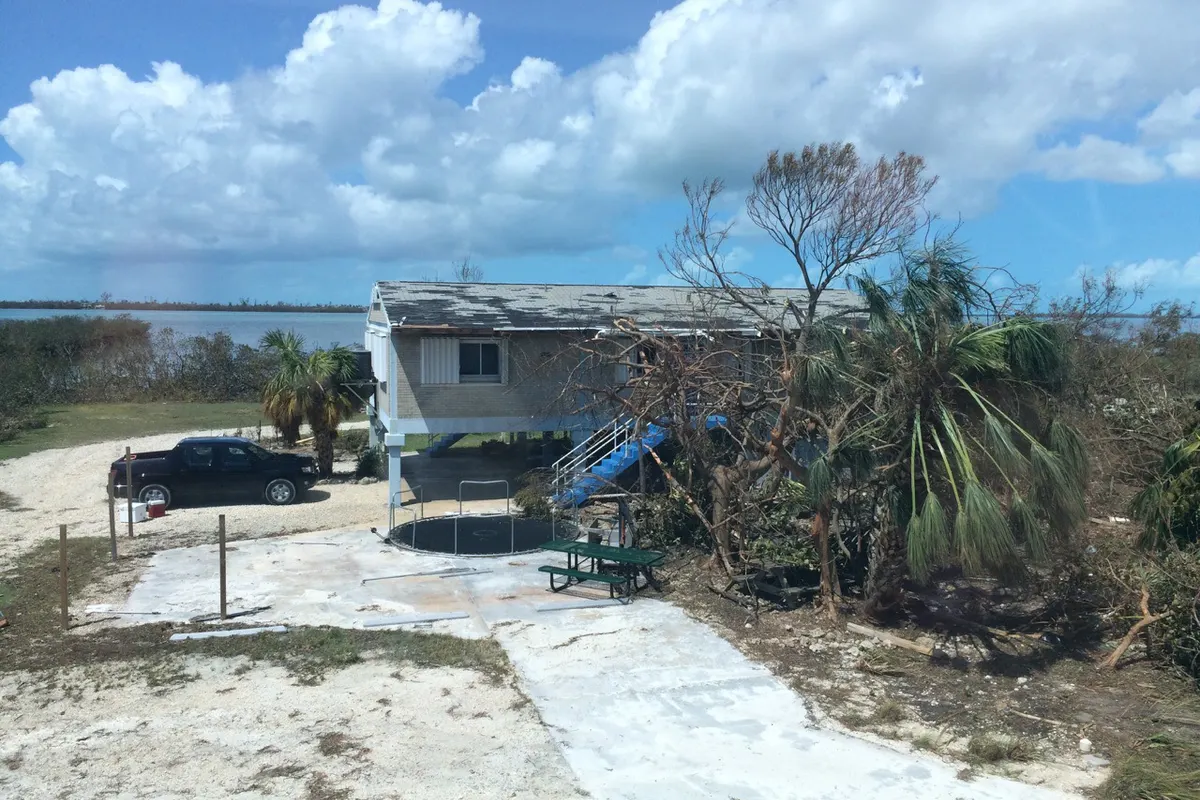
Horry County's approved wind speed map draws a 150 mph line along the coast and a 140 mph line inland (SC Building Codes Council). A metal recover is only as strong as what holds it down, and on an overlay that is the screws and strips, not the old shingles.
- A failure FEMA photographed. FEMA's coastal construction guide shows an asphalt shingle roof that had been re-covered with 5V-Crimp metal panels screwed to nailers. The failure was caused by the nailers being attached to the sheathing with widely spaced nails (FEMA P-499, Fact Sheet 7.6).
- Edges and corners get the most force. FEMA tells designers to specify uplift loads for the field, perimeter and corners of the roof, and recommends at least two clips along eaves, ridges and hips where the design wind speed is 110 mph or more, with the first eave clip within 2 to 3 inches of the eave. That 110 mph figure is on an older wind standard (ASCE 7-05); FEMA gives 142 mph as the equivalent under ASCE 7-10.
- Screws, not nails, where a fastener is pulled. FEMA recommends screws when clip or panel fasteners are loaded in withdrawal, and says exposed-fastener panels make it easy to check after installation that the right number of fasteners went in.
- Into the framing. The Metal Construction Association says strips under the panels must be fastened to the rafters, not just the roof sheathing.
Our guide to SC wind zone roofing requirements covers wind rules for the rest of the roof.
Salt air: distance from the water and the panel warranty
None of the top-ranking articles we read for this search mentions salt air, and on the Grand Strand it matters. FEMA says salt spray is greatest near breaking waves and falls off fastest in the first 300 to 3,000 feet from the shoreline, but that faster corrosion has been measured as far as 5 to 10 miles inland (FEMA Technical Bulletin 8). Panel warranties draw their own lines:
McElroy Metal, Galvalume warranty
Excludes salt-water marine settings: within 1,500 ft of a coastline with breaking surf, 800 ft of a large bay, 400 ft of marsh.
Read the sourceSheffield Metals, AZ50 Galvalume warranty
Same three distances: 1,500 ft from breaking surf, 800 ft from a large bay, 400 ft from marsh.
Read the sourceEnglert, U.S. roof warranty (Rev. 7)
Within one half mile of the seacoast, salt water or brackish water, no warranty for any period on prepainted Galvalume.
Read the sourceFEMA P-499, Fact Sheet 7.6
Within 3,000 ft of the ocean line, 300 series stainless steel clips and fasteners are recommended.
Read the sourceThe code accepts stainless steel fasteners for metal roofs (R905.10.4). Before you choose a panel, measure how far your house sits from the surf, the Intracoastal Waterway or a marsh, and read that maker's warranty for that distance. An overlay doesn't change any of this, but it is easy to overlook when the conversation is about saving the tear-off. More on fasteners in our guide to salt spray and roofing fasteners.
Do you need underlayment between the shingles and the metal?
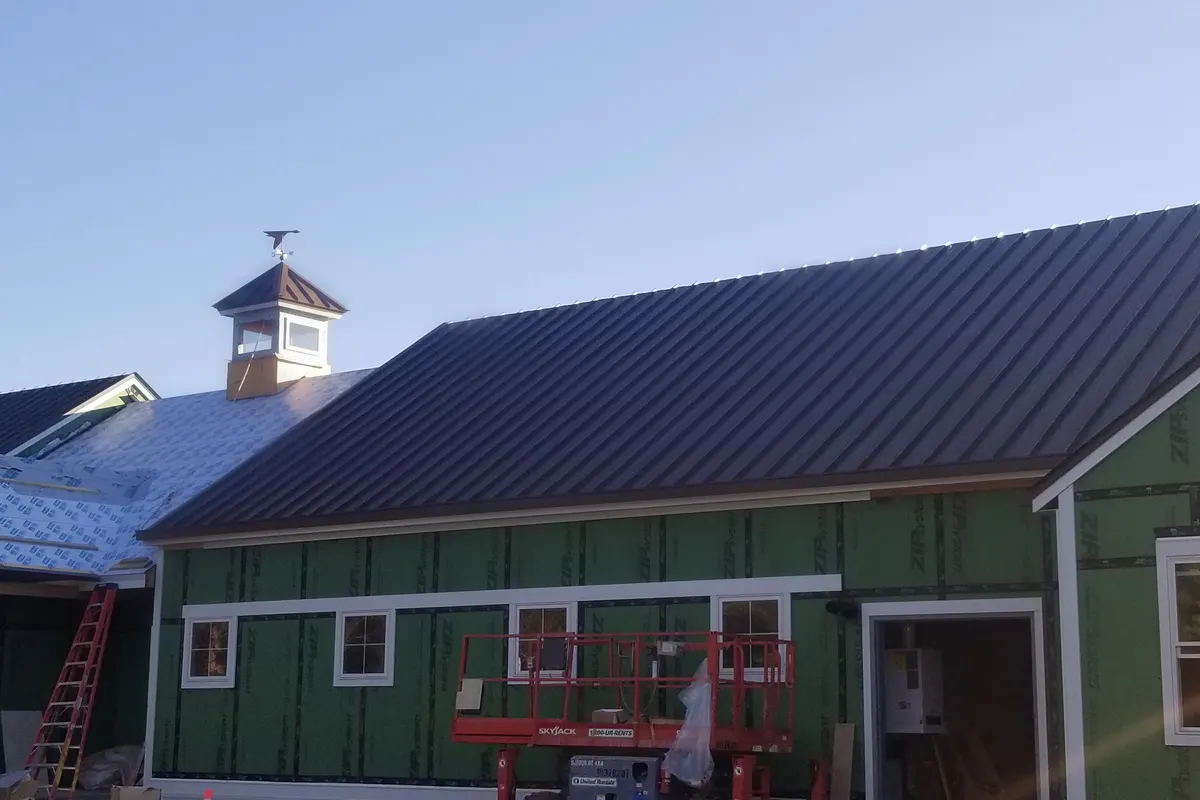
Yes. The code says underlayment under metal roof panels must meet the general underlayment rules in R905.1.1 (R905.10.5). For an overlay, McElroy Metal says a barrier between the old shingles and the new metal is required when panels go straight on, naming #30 felt, synthetic underlayment or thin foil-faced insulation, because the shingles can wear through the panels as the metal expands and contracts (McElroy Metal). The Metal Construction Association says underlayment also serves as a slip sheet that protects the back of the panels.
Weight and the roof framing
Weight is rarely the deciding factor, but it is easy to measure. Sentrigard's re-roofing bulletin says one layer of shingles weighs 2.4 to 3.2 pounds per square foot and two layers about 5.0 to 6.0, while a metal roof adds 0.8 to 1.5 (Sentrigard TB721). The Metal Roofing Alliance puts steel at 80 to 100 pounds per 100 square feet and aluminum at 50, against 275 to 425 for asphalt (Metal Roofing Alliance). The code still requires the framing to carry the new covering plus the loads during installation (R908.2), so sagging rafters or a bowed ridge are reasons to look closer before adding anything.
FORTIFIED, SC Safe Home and insurance: what an overlay gives up
This is the part most guides skip, and it matters on this coast. FORTIFIED is a roofing standard written by the Insurance Institute for Business & Home Safety (IBHS). Its 2025 standard says that although some jurisdictions allow a new roof over an existing one, FORTIFIED requires the existing roof covering to be removed to the deck. It then calls for the deck to be re-nailed with ring-shank nails and sealed (2025 FORTIFIED Home Standard), and says metal roof panels must be tested for site-specific design pressures (IBHS).
- SC Wind & Hail credits. The association applies a 20% credit to the policies it issues on certified FORTIFIED homes and a 5% credit to homes that met SC Safe Home standards. Its other credits are for opening protection, roof tie-downs, masonry construction and building code year; roof covering type is not one of them (SCWIND mitigation credits notice).
- SC Safe Home grants. The state grant pays for roof retrofits such as strengthening deck attachment, adding a secondary water barrier and upgrading to a high wind-rated roof covering, and its largest award tier is for roof retrofits meeting SC Safe Home and IBHS FORTIFIED Roof guidelines. Horry and Georgetown are on its county list, approval has to come before the work starts, and on October 23, 2026 the program said it was not currently accepting applications (SC Department of Insurance; Safe Home FAQs).
- Other carriers. State law requires insurers to tell you which premium discounts they offer for construction that reduces windstorm losses (SC Code 38-75-755). None of the sources we read says a metal roof by itself lowers a premium; ask your carrier in writing.
If any of these is in your plans, decide before the roof goes on: a recover closes the FORTIFIED door until the roof is replaced again. Our FORTIFIED roof guide and SC Safe Home program page go deeper.
Permits: who issues it depends on your address
The Grand Strand is several building departments, not one. What each official page said on October 23, 2026:
City of Myrtle Beach
The city's residential permit packet says a permit is required for roof and siding replacement, along with HOA approval if your neighborhood has one. Construction Services: (843) 918-1111.
City residential permit packetUnincorporated Horry County
The county's building permit page says its permit rule does not apply to replacing shingles unless structural sheathing is replaced. A metal recover is not shingle replacement, and the page doesn't name it, so ask before you start. Horry County Code Enforcement: (843) 915-5090.
Horry County: when to get a building permitCity of North Myrtle Beach
The city's Roofing Letter, which is uploaded to the building permit file, has a line for metal roofs: the contractor or owner states the metal roof was installed per the manufacturer's specifications or per code. Building: (843) 280-5560.
North Myrtle Beach Roofing LetterGeorgetown County (unincorporated)
County code lists home improvements that need no building permit: painting, replacing windows and doors, repairing plumbing fixtures and replacing rotten wood. Reroofing is not on that list, so check with the county before work starts.
Georgetown County Code Sec. 7-10Whoever does the work, South Carolina lists roofers among the residential specialty contractors who must be registered with the Residential Builders Commission (SC Code 40-59-20 and 40-59-220).
Six checks before any overlay
The biggest drawback of an overlay is what it hides. These are the things to settle before metal covers them for decades:
- 1Soft or rotted deckingHave the roof and the attic checked for sagging, dark stains or daylight. The code bars a recover over a roof that is water-soaked or deteriorated, and a soft deck can't hold the screws or strips that keep metal down in a storm.
- 2Active leaksFind and fix the source first. Once metal covers the old roof, the spot where water gets in can no longer be seen from above.
- 3How many layers are already thereCount them at a roof edge or a vent opening. If you find two layers, the code requires a tear-off.
- 4Flashing, vents and pipe bootsAny that are rusted, damaged or deteriorated must be replaced as part of a recover (R908.5).
- 5Any open storm claimIf you are claiming hail or wind damage on the shingles, settle the claim first. Once metal covers them, an adjuster can no longer see the damage on the old roof.
- 6Attic ventilation and moistureMcElroy notes that above-sheathing ventilation is hard to achieve when panels go straight onto shingles, and humid coastal air makes attic airflow worth checking before any new roof goes on.
See our guides to roof decking and attic ventilation on the SC coast.
Overlay or tear-off, side by side
| Factor | Metal over shingles | Tear-off, then metal |
|---|---|---|
| What the code allows | Only over one sound layer, and not over tile or slate (R908.3.1.1). | The standard route: replacement means removing the old layers down to the deck (R908.3). |
| Seeing the deck | The old shingles stay, so soft or rotted sheathing under them stays hidden. | The deck is exposed, so damaged boards can be found and replaced. |
| FORTIFIED Roof | Not possible. FORTIFIED requires the existing roof covering removed to the deck. | Possible, if the job is built and documented to the FORTIFIED Roof standard. |
| Hold in high wind | Depends on strips or panels fastened into the rafters, not just the old sheathing. | Panels fasten to a deck that can be inspected and re-nailed. |
| Weight | Metal adds 0.8 to 1.5 psf on top of the shingles left in place (2.4 to 3.2 psf for one layer). | Only the metal's weight stays on the roof. |
| The next reroof | Two layers come off next time, because a replacement removes every layer down to the deck (R908.3). | One layer comes off next time. |
| Flashings and vents | Existing flashings, edgings and vents must still be replaced where rusted, damaged or deteriorated (R908.5). | New flashings go on with the new roof. |
What the code allows
- Metal over shingles
- Only over one sound layer, and not over tile or slate (R908.3.1.1).
- Tear-off, then metal
- The standard route: replacement means removing the old layers down to the deck (R908.3).
Seeing the deck
- Metal over shingles
- The old shingles stay, so soft or rotted sheathing under them stays hidden.
- Tear-off, then metal
- The deck is exposed, so damaged boards can be found and replaced.
FORTIFIED Roof
- Metal over shingles
- Not possible. FORTIFIED requires the existing roof covering removed to the deck.
- Tear-off, then metal
- Possible, if the job is built and documented to the FORTIFIED Roof standard.
Hold in high wind
- Metal over shingles
- Depends on strips or panels fastened into the rafters, not just the old sheathing.
- Tear-off, then metal
- Panels fasten to a deck that can be inspected and re-nailed.
Weight
- Metal over shingles
- Metal adds 0.8 to 1.5 psf on top of the shingles left in place (2.4 to 3.2 psf for one layer).
- Tear-off, then metal
- Only the metal's weight stays on the roof.
The next reroof
- Metal over shingles
- Two layers come off next time, because a replacement removes every layer down to the deck (R908.3).
- Tear-off, then metal
- One layer comes off next time.
Flashings and vents
- Metal over shingles
- Existing flashings, edgings and vents must still be replaced where rusted, damaged or deteriorated (R908.5).
- Tear-off, then metal
- New flashings go on with the new roof.
An overlay skips the tear-off. Whether that saving outweighs the rows above depends on the roof, and on how close it is to the water.
Questions to ask any roofer about metal over shingles
- How many layers are on my roof now, and how did you check?
- Did you look at the deck from the attic, and what did you find?
- Will the panels go straight onto the shingles or onto strips? What fastens the strips, and into what: rafters or only sheathing?
- What goes between the shingles and the metal: felt, synthetic underlayment or something else?
- What metal and coating are the panels, and what are the screws and clips made of? How far is my house from the ocean, a bay or marsh, and does the panel warranty cover that distance?
- Is the panel system tested for wind uplift, and how are the edges, eaves and corners fastened?
- Who pulls the permit for my address, and what does it require?
- If I may want FORTIFIED, an SC Safe Home grant or an insurance credit later, does this plan keep that door open?
Weather Shield Roofing installs metal roofs in Myrtle Beach. Whether we would lay metal over your existing shingles or tear off first is a question to ask us on the call. See our metal roofing page or call (843) 877-5539.
Questions about metal roofs over shingles
Can you put a metal roof over shingles in South Carolina?
Yes, if the roof qualifies. South Carolina enforces the 2021 International Residential Code, in effect since January 1, 2023. Section R908.3.1 allows a new roof covering over an existing one when it is installed to the roofing maker's approved instructions, and R908.3.1.1 bars a recover where the existing roof is water-soaked or deteriorated, where it is slate, clay, cement or asbestos-cement tile, or where it already has two or more layers. In practice, that means one sound layer of shingles at most.
Can you install a standing seam metal roof over shingles?
Yes. The code names standing-seam metal as an example of a complete and separate roofing system: one designed to carry its load to the building's framing without relying on the old roof does not require the existing roofing to be removed (2021 IRC R908.3.1). How it is fastened is the real question on the coast: the Metal Construction Association says purlins must be fastened to the rafters, not just the sheathing, and FEMA recommends at least two clips along eaves, ridges and hips in its higher wind zones (110 mph on the older ASCE 7-05 basis, which FEMA equates to 142 mph under ASCE 7-10).
Can you put a metal roof over shingles without furring strips?
Some systems allow it, but makers set conditions. McElroy Metal says panels screwed straight onto shingles need a barrier such as #30 felt, synthetic underlayment or thin foil-faced insulation, warns that steel can show the bumps of the shingles underneath, and says ventilating above the deck is hard with this method. Sentrigard's re-roofing bulletin says it does not recommend putting panels directly on shingles. Follow the instructions of the exact panel going on your roof, since the code ties a recover to them.
Do you need underlayment for a metal roof over shingles?
Yes. The code says underlayment for metal roof panels must meet the general underlayment rules in R905.1.1, and McElroy Metal says a barrier between the shingles and new metal is required when panels are screwed straight on, such as #30 felt, synthetic underlayment or thin foil-faced insulation, so the shingles don't wear through the panels. The Metal Construction Association adds that underlayment can act as a slip sheet that protects the back of the panels.
Does homeowners insurance go down with a metal roof?
Not on the metal alone, in the sources we read. SC Wind & Hail's dwelling credits go to certified FORTIFIED homes (20%), homes that met SC Safe Home standards (5%), and four individual measures: opening protection, roof tie-downs, masonry construction and building code year. Roof covering type is not one of the four. State law (SC Code 38-75-755) requires insurers to tell you which windstorm discounts they offer, so ask your own carrier. A FORTIFIED Roof requires a tear-off, so an overlay can't earn that credit.
How much does it cost to put a metal roof over shingles?
We don't publish prices, and online ranges are not written for Grand Strand wind or salt. The parts of the job that change the total are whether the old shingles come off, deck repairs, whether strips are added, the panel metal and coating your distance from salt water calls for, and the fastening a 140 to 150 mph wind zone needs. Ask any roofer for a written quote that lists each of those.
Can you put a metal roof over two layers of shingles?
No, not under the code South Carolina enforces. Section R908.3.1.1 of the 2021 International Residential Code says a recover is not allowed where the existing roof has two or more applications of any type of roof covering. When articles say codes allow two layers, they mean two in total: the old roof plus the new one.
Is a metal roof over shingles louder in the rain?
Not by much. The Metal Roofing Alliance says there is little difference between metal and other materials when it comes to noise from rain or hail, and its rain fact sheet puts the difference from asphalt shingles within just a few decibels.
Do I need a permit to put a metal roof over shingles in Myrtle Beach?
Inside City of Myrtle Beach limits, yes: the city's residential permit packet says a permit is required for roof replacement, plus HOA approval if your neighborhood has one. In unincorporated Horry County, the county's permit page speaks only to replacing shingles (no permit unless structural sheathing is replaced) and does not name a metal recover, so call Horry County Code Enforcement at (843) 915-5090 before work starts. North Myrtle Beach files a Roofing Letter with a metal-roof line to the building permit.
Will a metal roof over shingles void the warranty?
It depends on the panel maker's own warranty and installation instructions, so read them before you sign. The code itself only allows a recover installed to the roofing maker's approved instructions. On the coast, distance from salt water matters too: McElroy and Sheffield exclude Galvalume within 1,500 feet of breaking surf, and Englert offers no warranty on prepainted Galvalume within half a mile of salt water.