
Hurricane Roof Damage in Myrtle Beach: What to Do First (2026 Guide)

Shocking Industry Truth
Your roof just took a hit from a hurricane. What you do in the next 24 to 72 hours determines whether you protect your home, preserve your insurance claim, or lose thousands of dollars to avoidable mistakes. This guide is written specifically for Myrtle Beach and Grand Strand homeowners — because our hurricane exposure, insurance landscape, and contractor risks are different from anywhere else in the country.
Myrtle Beach sits in one of the most hurricane-vulnerable corridors on the East Coast. Since 1989, our area has been impacted by Hugo (1989), Floyd (1999), Matthew (2016), Florence (2018), Isaias (2020), and Ian (2022) — plus dozens of tropical storms. Each event generates thousands of roof damage claims across Horry County, and each one brings a wave of storm chasers and contractor scams that cost homeowners just as much as the storm itself.
This guide covers what to do immediately after hurricane damage, how to document damage for your SC insurance claim, what each hurricane category does to different roof types, how to spot storm chaser contractors, and when emergency repairs versus full replacement make sense. Bookmark this page — you will want it when the next storm hits.
Emergency Roof Damage? Call Now
If your roof is actively leaking or has visible damage from a hurricane or storm, call WeatherShield Roofing at (843) 877-5539. We are a local, licensed Myrtle Beach roofing contractor rated 5.0 stars on Google with 82+ reviews. We provide emergency tarping, damage documentation for insurance claims, and permanent repairs.
Ready to Protect Your Investment?
Schedule your free roof inspection today. No obligations, just peace of mind.
The First 24 Hours: What to Do Immediately After Hurricane Roof Damage
Safety comes first. Do not climb on your roof. After a hurricane, roof surfaces are wet, debris-covered, and structurally compromised. Even professional roofers wait for conditions to stabilize before walking on storm-damaged roofs. Here is what you should do instead, in order.
Step 1: Ensure Personal Safety
- Stay away from downed power lines. Assume all downed lines are live. Report them to Santee Cooper or Horry Electric at their emergency numbers.
- If your roof has collapsed or there is significant structural damage, do not enter the home. Call 911 or Horry County Emergency Management.
- Watch for standing water, which may be electrically charged from submerged outlets or appliances.
Step 2: Document Everything from the Ground
- Take photos and video immediately — before any cleanup or temporary repairs. Photograph damage from multiple angles, including wide shots that show the full roof and close-ups of specific damage areas.
- Photograph interior damage: Water stains, wet insulation, ceiling damage, damaged belongings. Document everything with timestamps.
- Photograph the debris field: Shingles, flashing, vent covers, and other roof components on the ground are evidence of the storm's impact on your roof.
- Record video of active leaks showing water entering the home during or immediately after the storm.
Step 3: Prevent Further Damage (Emergency Tarping)
Your insurance policy requires you to take reasonable steps to prevent additional damage. This is called the "duty to mitigate." If your roof is breached, covering the damaged area with a tarp is the standard emergency response.
- Do not attempt to tarp your own roof if it requires climbing on a damaged, wet, or debris-covered surface. Call a professional.
- Keep receipts for all emergency expenses — tarps, buckets, towels, emergency contractor fees. These are reimbursable under most SC homeowner policies.
- Use heavy-duty tarps (minimum 6-mil thickness) that extend at least 4 feet past the damaged area on all sides. Lightweight tarps tear in subsequent wind events.
Step 4: Contact Your Insurance Company
File your claim as soon as possible. Most SC homeowner policies require "prompt" notification of damage. Do not wait for a contractor estimate — file the claim first and provide documentation later. When you call, note the claim number, adjuster name, and any deadlines they provide.
How Each Hurricane Category Damages Roofs in Myrtle Beach
Understanding the Saffir-Simpson Hurricane Wind Scale helps you assess what kind of damage your roof likely sustained — and what a proper inspection should find. Here is what each category does to common Myrtle Beach roof types.
| Category | Wind Speed | Typical Roof Damage |
|---|---|---|
| Tropical Storm | 39-73 mph | Loose shingles lifted, minor flashing displacement, gutter damage, debris impact. Sealant strips on older shingles may fail. Damage often invisible from the ground. |
| Category 1 | 74-95 mph | Shingle tabs torn or missing, ridge cap damage, soffit panels blown off, vent covers displaced. Older 3-tab roofs may lose significant shingle coverage. Flashing can be peeled from chimneys and walls. |
| Category 2 | 96-110 mph | Major shingle loss across large areas, exposed underlayment, flashing torn from penetrations, possible decking exposure on older roofs. Metal panels on exposed-fastener systems may peel. Significant wind-driven rain intrusion. |
| Category 3 | 111-129 mph | Severe structural damage to non-hurricane-rated roofs. Decking can peel from trusses on older homes. Gable-end failures. Even newer architectural shingles may sustain major loss. Standing seam metal designed to resist this level. |
| Category 4-5 | 130+ mph | Catastrophic. Complete roof system failure on homes not built to current code. Only FORTIFIED-designated and properly engineered metal roofs reliably survive intact. |
Hidden Damage: What You Cannot See from the Ground
The most financially dangerous hurricane damage is the damage you cannot see. Even in tropical storms and Category 1 events, wind can:
- Break sealant strips on shingles that still appear flat from the ground but are no longer sealed and will blow off in the next wind event
- Strip granules in patterns that are invisible from ground level but leave the asphalt exposed to UV degradation
- Loosen flashing at chimneys, walls, and penetrations — creating slow leaks that may not appear for weeks
- Lift nails through the "nail pop" effect where pressure changes cause fasteners to back partially out of the deck
- Create micro-fractures in tile and slate from airborne debris impact
This is why professional inspection after every named storm is essential — even if your roof "looks fine" from the driveway. Our storm damage repair guide covers what a thorough post-storm inspection includes.
Filing a Hurricane Roof Damage Insurance Claim in South Carolina
The insurance claims process for hurricane roof damage in SC has specific rules, deadlines, and pitfalls that can cost you thousands if you do not handle them correctly. Here is a step-by-step walkthrough.
Step 1: File Your Claim Immediately
Call your insurance company or file online as soon as it is safe to do so. SC law does not specify a rigid filing deadline for hurricane claims, but most policies require "prompt" or "timely" notice. Filing within 48 to 72 hours of the storm establishes your claim timeline and prevents disputes about when the damage occurred.
Step 2: Document Before and After
Your insurance adjuster will compare your damage documentation against the storm's track and intensity data. The stronger your documentation, the stronger your claim. Include:
- Date-stamped photos of all damage (exterior and interior)
- Video of active leaks
- Photos of your roof before the storm (if available from prior inspections or real estate listings)
- Receipts for emergency repairs (tarping, water extraction)
- A written damage report from a licensed roofing contractor
Step 3: Get an Independent Inspection
Do not rely solely on your insurance company's adjuster. Insurance adjusters work for the insurance company, not for you. Get an independent inspection from a licensed, local roofing contractor who can identify damage the adjuster may miss or undervalue. A detailed contractor report with photos strengthens your claim significantly.
Step 4: Understand Your Deductible
Most SC coastal homeowner policies have separate wind/hurricane deductibles — typically 2 to 5 percent of your home's insured value, not a flat dollar amount. On a home insured for $350,000, a 2 percent hurricane deductible is $7,000. A 5 percent deductible is $17,500. Know your deductible before the storm hits so you are not blindsided.
Step 5: Watch for RCV vs. ACV
Check whether your roof is covered at Replacement Cost Value (RCV) or Actual Cash Value (ACV). Under ACV, your payout is depreciated based on roof age — which can reduce your check by 30 to 60 percent on an older roof. Our insurance coverage cliff guide explains the difference in detail.
Step 6: Do Not Sign an Assignment of Benefits (AOB)
Some contractors — especially storm chasers — will ask you to sign an Assignment of Benefits, which transfers your insurance claim rights to the contractor. This removes your control over the claim and can lead to disputes between the contractor and your insurer that delay or complicate your repair. In South Carolina, you are not required to sign an AOB, and we recommend against it.
How to Spot Storm Chaser Contractors After a Hurricane
After every hurricane that hits Myrtle Beach, hundreds of out-of-state contractors flood the area looking for quick business. Some are legitimate. Many are not. Storm chaser contractors are the second most expensive disaster after the storm itself — and they cause damage that lasts far longer.
Red Flags: How to Identify Storm Chasers
- They knock on your door uninvited within days of the storm. Legitimate local contractors are already booked with existing customers. They do not need to canvass neighborhoods.
- Out-of-state license plates and no local address. Ask for their SC contractor license number and verify it with the SC Residential Builders Commission at llr.sc.gov. If they cannot provide one, stop the conversation.
- They offer to waive your deductible. This is insurance fraud in South Carolina. Any contractor who offers to cover, waive, or absorb your deductible is committing a crime — and involving you in it.
- They pressure you to sign a contract immediately. Legitimate contractors understand you need time to review options and consult with your insurance company. High-pressure tactics ("this deal is only available today") are a hallmark of storm chasers.
- They ask for large upfront payments. Reputable contractors may require a deposit after the contract is signed and permits are pulled, but they will not demand full payment or large cash advances before work begins.
- They offer to handle your entire insurance claim. While a good contractor will help document damage, they should not be managing your claim, negotiating with your adjuster, or asking you to sign an Assignment of Benefits.
- No local references or Google reviews. A contractor who has been in the Myrtle Beach area for years will have a Google Business profile, local reviews, and references from Horry County homeowners. Storm chasers have none of this.
What Happens When You Hire a Storm Chaser
- Substandard materials and workmanship: Storm chasers prioritize speed and profit. They often use the cheapest materials available and skip code-required details like proper nailing patterns, underlayment, and flashing.
- No warranty enforcement: When problems develop six months later, the storm chaser has moved on to the next disaster zone. Their phone number is disconnected. Their LLC is dissolved. You have no recourse.
- Code violations: Work done without proper permits or to substandard quality can create code violations that affect your insurance coverage, home value, and ability to sell.
- Insurance complications: If a storm chaser overcharges your insurance company, submits fraudulent documentation, or performs work that does not match the claim scope, your insurer may deny or reduce your claim — and you are responsible for the difference.
Protect Yourself: Hire Local
WeatherShield Roofing is locally owned and operated in Myrtle Beach. We hold SC contractor license, carry full insurance, and have been serving Horry County for years. Our 5.0-star Google rating with 82+ reviews from real local homeowners is our best credential. After a storm, call (843) 877-5539 — not the guy who knocked on your door.
Types of Hurricane Roof Damage and How to Identify Them
Hurricane damage to roofs falls into four categories, each with different repair requirements and insurance implications.
1. Wind Damage
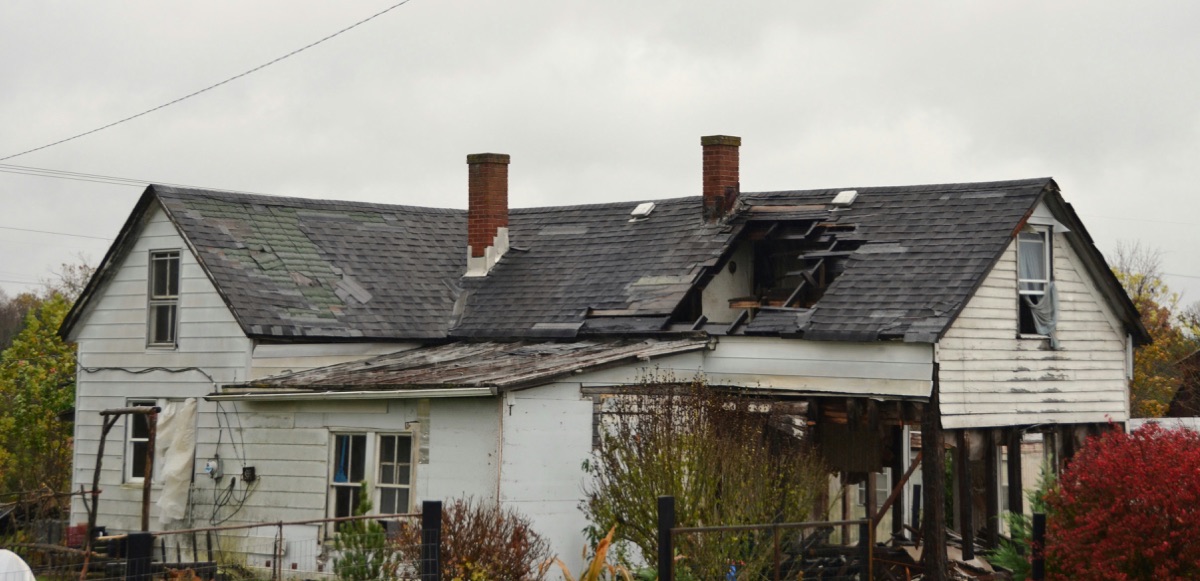
Wind damage is the most common form of hurricane roof damage. It includes lifted, torn, or missing shingles; ridge cap displacement; soffit and fascia damage; and gable-end failures. Wind damage patterns typically show the most severe impact on the windward side of the roof (the side facing the storm) and at edges, corners, and ridges where wind uplift forces are strongest.
2. Wind-Driven Rain Damage
When hurricane winds combine with heavy rainfall, water is driven horizontally and even upward under shingles, flashing, and other components that shed water normally during vertical rain. Wind-driven rain can enter through breaches as small as a lifted shingle tab or a loosened piece of flashing. The resulting water damage to attic insulation, decking, ceilings, and walls can exceed the cost of the exterior roof damage itself.
3. Debris Impact Damage
Airborne debris — tree branches, construction materials, outdoor furniture, and other objects — becomes projectiles in hurricane-force winds. Impact damage creates punctures, cracks, and dents in roofing materials. On asphalt shingle roofs, debris impact can crack shingles and strip granules across large areas. On metal roofs, it can create dents that compromise the paint system and eventually lead to localized corrosion.
4. Pressure Damage (Uplift)
Hurricanes create rapid pressure differentials between the exterior and interior of your home. This pressure difference creates an upward force on your roof (uplift) that can peel sections of roof away from the structure. Uplift damage is most common on older homes built before modern wind code requirements. Homes without adequate roof-to-wall connections (hurricane clips or straps) are most vulnerable to catastrophic uplift failure.
A thorough post-hurricane inspection must check for all four damage types. Wind damage to shingles is often the only type visible from the ground, while wind-driven rain, debris impact, and pressure damage may require attic inspection and hands-on evaluation of the roof surface.
Emergency Repair vs. Full Replacement After Hurricane Damage
After a hurricane, the immediate question is: can this be repaired, or does the entire roof need replacement? The answer depends on the extent of damage, the age and condition of the existing roof, and your insurance situation.
When Emergency Repair Is Appropriate
- Damage is limited to a specific area (less than 25 percent of the roof surface)
- The existing roof was in good condition before the storm (under 10 years old in coastal SC)
- Underlayment and decking are intact beneath the damaged shingles
- Matching or compatible replacement shingles are available
- The repair is structurally sound and meets current code
When Full Replacement Is the Right Call
- Damage exceeds 25 to 30 percent of the roof surface
- The existing roof was already approaching end of life (10+ years in coastal SC)
- Underlayment or decking is damaged (soft spots, moisture staining, delamination)
- Hurricane-force winds compromised the structural attachment (truss connections, wall ties)
- Your insurance company is covering the full replacement (especially if your roof is covered at RCV)
- Matching shingles are discontinued or unavailable — mismatched repairs affect both aesthetics and resale value
The Insurance Upgrade Opportunity
A hurricane damage claim that results in full replacement is one of the few times homeowners can upgrade their roof system without bearing the full cost. If your insurance covers replacement, you can often upgrade from standard architectural shingles to impact-resistant shingles or from asphalt to metal by paying only the cost difference between the insured and upgraded systems. This is the ideal time to consider a metal roof or FORTIFIED designation that will better protect your home in the next storm.
Myrtle Beach Hurricane History: Lessons for Homeowners
Understanding our area's hurricane history helps you prepare and respond more effectively. Here are the storms that have most significantly impacted roofs in the Myrtle Beach area.
Hurricane Hugo (1989) — The Code Changer
Hugo made landfall as a Category 4 hurricane near Charleston, but its damage extended well into the Grand Strand. Hugo exposed catastrophic weaknesses in building construction standards — particularly roof-to-wall connections and sheathing attachment. The destruction from Hugo led directly to South Carolina's adoption of stricter building codes for wind resistance that remain the foundation of current requirements.
Hurricane Matthew (2016) — The Flood and Wind Combo
Matthew skirted the SC coast as a Category 1 hurricane but brought sustained tropical storm and hurricane-force gusts to the Myrtle Beach area. The combination of wind damage to roofs and record rainfall exposed thousands of homes to water intrusion. Homeowners learned that even a "near miss" hurricane can cause significant roof damage, and that post-storm inspection is essential even when the eye does not make direct landfall.
Hurricane Florence (2018) — The Slow Mover
Florence stalled near the Carolina coast and dumped historic rainfall — over 20 inches in parts of Horry County. While wind damage was less severe than a direct-hit hurricane, the prolonged wind-driven rain overwhelmed roof systems and created water intrusion in thousands of homes. Florence demonstrated that slow-moving storms can be more damaging to roofs than fast-moving ones because of the extended duration of wind-driven rain.
The Lesson for Myrtle Beach Homeowners
Myrtle Beach is not a question of "if" but "when." Our area averages a significant hurricane or tropical storm impact every 3 to 5 years. Each storm takes a cumulative toll on your roof — even storms that do not cause obvious damage. The homeowners who fare best are those who maintain their roofs proactively, carry adequate insurance with full RCV coverage, and respond quickly and correctly when damage occurs.
How to Protect Your Roof Before the Next Hurricane
The best time to prepare for hurricane roof damage is before hurricane season starts on June 1. Here is a practical pre-season checklist for Myrtle Beach homeowners.
Pre-Hurricane Season Roof Checklist
- Schedule a professional inspection in April or May. A qualified roofer will check shingle condition, flashing integrity, fastener security, ventilation, and structural connections. Fix any issues before storm season.
- Clean gutters and downspouts. Clogged drainage systems cause water to back up under shingles during heavy rain events. Clean them completely before June.
- Trim trees within 10 feet of the roof. Dead branches and overhanging limbs become projectiles in hurricane winds. Remove them in spring when tree services are less booked.
- Secure loose rooftop items. Satellite dishes, antenna mounts, solar panel frames, and other rooftop equipment should be verified as securely fastened.
- Review your insurance policy before June 1. Confirm your roof coverage type (RCV vs. ACV), know your hurricane deductible (dollar amount, not percentage), and understand what is covered and what is excluded.
- Document your roof condition with dated photos. Walk around your property and photograph the roof from all angles. These "before" photos are invaluable for insurance claims when compared against "after" documentation.
- Know your roofing contractor's emergency number. Identify a trusted local contractor before the storm, not after. After a hurricane, every contractor in the area is overwhelmed with calls. Having an existing relationship with a local roofer means faster response.
- Consider a FORTIFIED upgrade. If your roof is approaching replacement age anyway, upgrading to an IBHS FORTIFIED-designated roof system before hurricane season gives you the best protection available — plus insurance discounts of 15 to 30 percent.
Pre-Season Inspection Special
WeatherShield Roofing offers free pre-hurricane-season roof inspections for Myrtle Beach area homeowners. We check your roof's storm readiness, document its current condition for insurance purposes, and identify any vulnerabilities that should be addressed before June 1. Call (843) 877-5539 to schedule.
The Cost Comparison: Maintenance vs. Neglect
Without Maintenance
- Roof lifespan: 12-15 years
- Insurance claims often denied
- Emergency repairs cost 3x more
- Property value decreases by 5-10%
- Warranty becomes void
- Total 20-year cost: $382
With Regular Maintenance
- Roof lifespan: 25-30+ years
- Insurance claims approved
- Prevent costly emergencies
- Property value protected
- Full warranty coverage maintained
- Total 20-year cost: $8,000-10,000
Need a roofer?
Call (843) 877-5539 for a free estimateNeed Professional Help?
WeatherShield Roofing is Myrtle Beach's highest-rated roofing company with a perfect 5.0-star Google rating. We can help with any roofing need:
Frequently Asked Questions
About the Author
David Karimi
Owner & Licensed Roofing Contractor
David Karimi is the owner of WeatherShield Roofing with extensive experience in residential and commercial roofing in Myrtle Beach, SC. A Licensed Roofing Contractor specializing in coastal roof systems, David has inspected thousands of roofs across Horry County and understands how salt air, humidity, and hurricanes accelerate roof aging in ways that national guides simply do not cover. He holds GAF Certified Plus™ certification and is certified in IBHS FORTIFIED Home construction.
The Bottom Line: Your Roof, Your Choice
Every day you wait is another day closer to that emergency call no homeowner wants to make. The statistics are clear: 80% of roofs fail prematurely, and 61% of homeowners can't afford the emergency repairs that follow.
What You Get with Weather Shield Roofing:
Don't Wait Until It's Too Late
Join thousands of smart Myrtle Beach homeowners who protect their investment with regular maintenance.
Emergency? Call our 24/7 hotline: (843) 877-5539
Our Roofing Services
Serving the Grand Strand
Weather Shield Roofing proudly serves homeowners across the Grand Strand and surrounding communities. Find your local roofing experts:
Related Articles
Storm Damage Roof Repair in Myrtle Beach: Complete 2026 Guide
Expert guide to storm damage roof repair in Myrtle Beach, SC. Learn what to do after hurricane, hail, or wind damage. 5.0-rated contractor. Call (843) 877-5539.

Wind Damaged Roof: How to Identify, Document & Repair Wind Damage (2025)
How to identify wind damage on your roof: signs of lifted shingles, exposed decking, and structural damage. Learn documentation for insurance claims, repair vs replacement decisions, costs, and what wind speeds cause roof damage. Expert guide.

What Does Hail Damage Look Like on a Roof? Complete Visual Identification Guide (2025)
What does hail damage look like? Visual guide showing 10 signs of hail damage on asphalt shingles, metal, tile roofs. Learn when to act, how to document for insurance claims, repair costs, and Myrtle Beach hail statistics. Expert photos and timelines.