
By the Weather Shield Roofing team · Published November 8, 2026
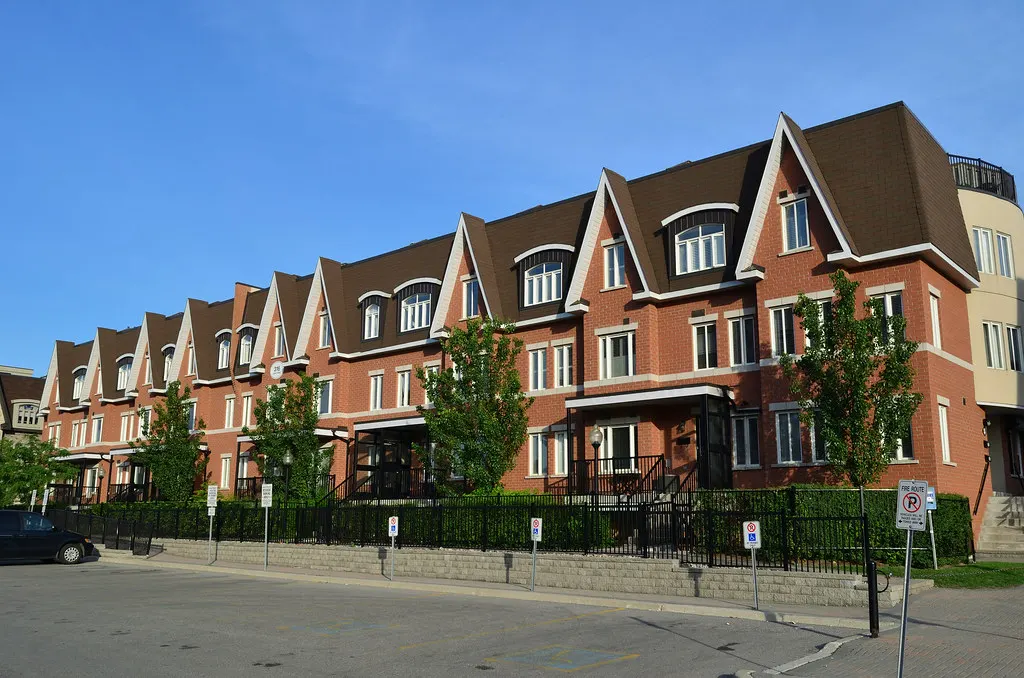
The South Carolina default, by what you own
Condo regime
Association, by default. The Horizontal Property Act lists roofs among the general common elements, and all owners share their upkeep by master-deed percentage. Check how your master deed describes the common elements.
Townhome
Depends on the deed. In a regime, same as a condo. On its own lot, the declaration decides, and with no roof duty in it, the owner pays.
House in an HOA
Owner, unless the declaration gives the association roof duties. Approval rules on materials and colors may still apply.
Start here: which of the three do you own?
“Townhome” describes the shape of a building, not the way it is owned. South Carolina's HOA Act defines a unit as either “an apartment in a horizontal property regime, or a lot in a subdivision” (S.C. Code 27-30-120), and the roof answer changes with that line. The SC Department of Consumer Affairs sums up the split: the Horizontal Property Act “applies to apartments/condominiums,” while the HOA Act applies to communities and horizontal property regimes that require owners to pay assessments.
- Look for the words “Horizontal Property Regime.” The Act requires the master deed to give the regime a name followed by those words, and it accepts a deed that describes a unit by its letter or number followed by “in Horizontal Property Regime” (S.C. Code 27-31-100(e), 27-31-120). If your deed or your closing papers say that, you own a unit in a regime.
- If your deed conveys a lot in a subdivision and the community runs under a recorded declaration of covenants, you are in a planned community. The Horizontal Property Act's common-element rules do not reach your house.
- Where the papers are. A regime's master deed and bylaws are recorded in the county where the property is (S.C. Code 27-31-100, 27-31-150). On the Grand Strand that is the Horry County Register of Deeds or the Georgetown County Register of Deeds, depending on the county your property is in.
Who pays: South Carolina, by property type and cause
Find your row, then the column for why the roof needs work. Each cell gives the state default and where it comes from; your recorded documents can change the answer wherever the statute lets them.
| What you own | Old roof wearing out | Storm damage | Leak into another unit |
|---|---|---|---|
| Condo, or a townhome, in a horizontal property regimeThe master deed names the regime, and the name ends with the words “Horizontal Property Regime.” | Old roof wearing outThe association, paid for by every owner. The Act lists roofs among the general common elements (flat roofs “except as otherwise provided or stipulated”), and each owner pays their master-deed percentage toward maintenance and repair of the general common elements. Check the master deed: it must describe the general common elements and, in proper cases, the limited common elements reserved to certain units.S.C. Code 27-31-20(f) and (g), 27-31-100(c), 27-31-190 | Storm damageThe association’s insurance first. The association must insure the property, and damaged property it must insure has to be repaired or replaced promptly, unless that would be illegal under a state statute or local health ordinance, or at least 80% of owners (more if the bylaws say so) vote not to rebuild. Cost above the insurance proceeds and reserve is a common expense (see the note on 27-31-260 below). The statute does not say who bears the policy deductible.S.C. Code 27-31-240, 27-31-250, 27-31-260 | Leak into another unitFixing the roof: the association, like any common element. Damage inside your unit: the Act makes the association insure “the property” (the land, the building and its improvements) and repair damaged property it must insure, but it does not list the risks the policy must cover, where a unit’s boundaries run or who bears the deductible. The master deed’s insurance and maintenance terms, the association’s policy and your own unit-owner policy settle those. The board may enter your unit at reasonable hours to work on common elements in it or reachable through it, or to make emergency repairs that prevent damage to the common elements or another unit.S.C. Code 27-31-20(k), 27-31-190, 27-31-240, 27-31-250, 27-31-280 |
| Townhome on its own lot in a planned communityYour deed conveys a lot, and the community runs under a recorded declaration. | Old roof wearing outWhoever the declaration names. Neither South Carolina’s HOA Act nor its Horizontal Property Act assigns the roof of a home on its own lot. If the declaration gives the association roof or exterior duties, the association pays under its assessment terms. If it gives the association none, the roof is yours.S.C. Code Title 27, Chapters 30 and 31; SC Department of Consumer Affairs | Storm damageWhoever must insure the building under the declaration: the association’s policy if the declaration makes it insure the buildings, otherwise your own homeowners policy.Your declaration’s insurance article | Leak into another unitThe declaration’s maintenance and insurance articles. No South Carolina statute sets a default for a leak from one attached home into the next.Your declaration |
| Single-family house in an HOAYou own the lot and the house on it. | Old roof wearing outYou, unless the declaration gives the association roof duties. South Carolina’s consumer agency puts it plainly: an HOA “can only do what state law allows and what their governing documents allow.” Read the architectural rules on materials and colors before you sign a roofing contract.SC Department of Consumer Affairs, HOA FAQs | Storm damageYour homeowners policy, unless the declaration has the association insure the homes.Your policy and your declaration | Leak into another unitDoes not arise between detached houses. A leak into your own house is a repair and homeowners-insurance question.— |
The cause decides the column. A written inspection with photos gives the board, the insurer or you a record of the roof's condition and any damage. Our free roof inspection includes a photo-based roof report.
Who decides on the work
In a condo or townhome regime
- The bylaws must name the form of administration (an administrator, a board or otherwise) and its powers, and must provide for the care, upkeep and surveillance of the common elements. Look there for who can hire a roofer for the common roof (S.C. Code 27-31-160(a) and (c)).
- The Act defines a “majority of co-owners” as 51% or more of the basic value of the property as a whole, using the master deed percentages, and requires the bylaws to say a majority of at least 51% is needed to adopt decisions (27-31-20(h), 27-31-160(b)). Some decisions need more, such as the vote below.
- After damage to property the association must insure, rebuilding is the default. Not rebuilding takes a vote of at least 80% of the owners, including the owner of any unit that would not be rebuilt; the bylaws can set a higher percentage but not a lower one. Repair is also excused if it would be illegal under a state statute or local health ordinance (27-31-250(A)).
- The board has an irrevocable right to enter each unit at reasonable hours to maintain, repair or replace common elements in it or reachable through it, and to make emergency repairs needed to prevent damage to the common elements or another unit (27-31-280).
On your own lot
- You choose and contract with the roofer for a roof that is yours, but the declaration’s architectural rules can require approval of the material and color first.
- South Carolina’s HOA Act requires an association’s governing documents to be recorded in the county to be enforceable. Its rules take effect when adopted, but to remain enforceable they must be recorded by January 10 of the year after they are adopted or amended. Ask the association for the recorded version of any roof rule (S.C. Code 27-30-130).
For what architectural committees ask for in specific communities, see our guides to Carolina Forest, Grande Dunes and Waterbridge.
What to pull from the master deed and bylaws
The SC Department of Consumer Affairs starts every HOA question in the same place: associations “can only do what state law allows and what their governing documents allow,” and those documents include the declaration, master deeds and bylaws. For a regime, read these seven things, in this order:
1. The description of the common elements
The master deed must describe the general common elements and, in proper cases, the limited common elements and the units they are restricted to. Look for the word “roof,” and for any roof or roof section reserved to certain units (S.C. Code 27-31-100(c), 27-31-20(g)).
2. Your unit’s percentage
The master deed must state the value of the property and of each unit and, from those values, the percentage each owner carries in the expenses of the common elements. That percentage is your share of a roof assessment (27-31-100(d), 27-31-60, 27-31-190).
3. The owners’ rights and obligations
The master deed must describe the full legal rights and obligations of the unit owner, the co-owners and the person who set up the regime. Read it for maintenance duties (27-31-100(f)).
4. The bylaws on administration and collection
Who runs the property and with what powers, how owners are called to meetings, how the common elements are cared for, and how common expenses are collected (27-31-160).
5. The insurance terms
What the association’s policy is meant to cover, who bears the deductible, and where each unit’s boundaries run. The statute requires the association to insure the property but does not list the risks, set the amount or assign the deductible (27-31-240).
6. Recorded changes to the administration
Owners holding two thirds of the property’s total value can change the system of administration, but the change takes effect only once it is recorded in the same office and manner as the master deed (27-31-160).
7. The expense book
The board must keep a chronological account of receipts and expenditures that specifies the maintenance and repair expenses of the common elements, and the book and its vouchers are open to every owner at announced hours on working days (27-31-180). It shows what has been spent on the common elements so far.
For a house or townhome on its own lot, read the declaration for:
- The maintenance article: does it name roofs, or “exteriors,” as the association’s job?
- The architectural review article: what approval a re-roof needs, and what to submit.
- The assessment article: how special assessments are approved and charged.
- The insurance article: whether the association or each owner insures the buildings.
- The recorded rules and their recording dates (S.C. Code 27-30-130).
How to get copies
- From the county: the Horry County or Georgetown County Register of Deeds, where a regime's master deed and bylaws are recorded and where an HOA's governing documents must be recorded to be enforceable (S.C. Code 27-31-100, 27-31-150, 27-30-130).
- From the association. If it is a nonprofit corporation (check the Secretary of State's business search), a member who gives written notice at least five business days ahead may inspect and copy the records it must keep at its principal office, including its bylaws and the minutes of member meetings for the past three years. Accounting records are open to a member whose request is made in good faith and for a proper purpose, describes the purpose and the records with reasonable particularity, and asks for records directly connected with that purpose. The corporation may charge a reasonable fee for copies (S.C. Code 33-31-1601 to 33-31-1603).
- If the association is not subject to the Nonprofit Corporation Act, the HOA Act applies that Act's records-access sections (33-31-1602 to 33-31-1605) so homeowners can inspect and copy the annual budget and the membership list (S.C. Code 27-30-150).
- Buying? The state's HOA: Before You Buy sheet suggests finding out how much is in reserve, when dues last rose or a special assessment was imposed, and asking to see “the association's insurance declaration page.”
How insurance fits
The association's policy, in a regime
- “The council of co-owners shall insure the property against risks, without prejudice to the right of each co-owner to insure his apartment on his own account and for his own benefit” (S.C. Code 27-31-240). The Act defines “property” as the land, the building and all improvements and structures on the land (27-31-20(k)). It does not list the risks, set the amount or assign the deductible; the documents and the policy do.
- Damaged property that the association is required to insure must be repaired or replaced promptly, unless repair would be illegal under a state statute or local health ordinance, or at least 80% of the owners (or a higher share the bylaws set) vote not to rebuild. Cost above the insurance proceeds and reserve is treated as a common expense (S.C. Code 27-31-250).
- Section 27-31-260, last amended in 1967, says that where the property is not insured, or the insurance does not cover the cost of reconstruction, the rebuilding costs are paid by the owners directly affected by the damage in proportion to the value of their units, “or as may be provided in the bylaws.” It also lets the majority go ahead at the expense of all the owners who benefit if some refuse to pay, and its terms can be changed by a unanimous resolution after the disaster. It and 27-31-250, last amended in 2006, can point different ways on a shortfall; how they apply to your building is a question for the association's lawyer.
Your own policy
A condo owner's own policy, sometimes called an HO-6, can include loss assessment coverage. Washington State's insurance regulator, the Office of the Insurance Commissioner, explains it with the exact case this page is about: “wind damage to the roofs of several units may exceed the coverage limits of the community master policy, and a special assessment may be charged to unit owners to cover the remainder of the damage.” It adds that if the cause of the damage is covered under your unit-owner policy, the loss assessment for that cause is covered too. Read your own policy, and ask your agent whether it includes loss assessment coverage and what its limit is.
On your own lot, check whether the declaration has the association insure the homes; if it does not, your homeowners policy is the one to read. Our guides on whether homeowners insurance covers roof replacement and storm damage roof claims in South Carolina cover that side.
How special assessments fit
In a regime
- Every owner must contribute their master-deed percentage toward the expenses of administration and of maintenance and repair of the general common elements and, in the proper case, the limited common elements. No owner can get out of it by waiving use of the common elements or by abandoning the unit (S.C. Code 27-31-190).
- The bylaws must set the manner of collecting common expenses from the owners (27-31-160(d)).
- Your liability for common expenses is limited to the amounts assessed under the Act, the master deed and the bylaws (27-31-290).
- An unpaid assessment is a lien on the unit that ranks ahead of every other lien except tax liens on the unit and recorded mortgages and other recorded liens. The board can foreclose it like a mortgage, or sue for a money judgment without foreclosing (27-31-210).
- When a unit sells, unpaid assessments are paid first out of the sale price or by the buyer, behind only past-due taxes and payments due under recorded mortgages or other recorded encumbrances (27-31-200). A buyer, other than a buyer at a mortgage foreclosure sale, is jointly and severally liable with the seller for amounts owed up to the sale and can recover them from the seller; on request the association must give the buyer a statement of the amounts due, and the buyer's liability is limited to that statement (27-31-220). Buying on the Grand Strand while a roof project is pending? Ask for that statement.
- Work on the common elements that the association duly authorized is treated as done with every owner's consent, so a roofer's mechanic's lien can attach to each unit. Any owner can release their own unit by paying that unit's share, computed from the master deed percentages (27-31-230).
In a planned community
Look in the declaration and bylaws for how special assessments are approved. The state's Before You Buy sheet describes the risk: if an HOA “doesn't have enough money to make capital improvements, they may impose a ‘special assessment,’ money you pay in addition to your standard dues.” For the regular annual budget, the HOA Act requires notice at least 48 hours before the meeting where an increase is decided, though that rule does not apply to an association incorporated under the Nonprofit Corporation Act (S.C. Code 27-30-140).
If you disagree with the board
- Start where the SC Department of Consumer Affairs says to start: talk with the board, and check your governing documents for a formal dispute process. If that fails, the department suggests using the association's own elections to seat board members more responsive to owners.
- A complaint to the department goes through voluntary mediation. The department cannot force either side to take part, require an outcome or arbitrate, and the HOA Act bars it from serving as an arbiter (S.C. Code 27-30-340).
- For money disputes, the department notes that magistrate's court “may hear monetary disputes involving a homeowners association if the amount in issue does not exceed $7,500” (SCDCA). The HOA Act gives magistrate's court concurrent jurisdiction over money disputes arising under it, within the court's usual limits (S.C. Code 27-30-160).
- In a regime, the Act requires each owner to comply with the bylaws, the rules and the master deed's covenants, and an owner's failure to comply is grounds for a civil action by the board or, in a proper case, by an aggrieved owner (S.C. Code 27-31-170). For a dispute with the board itself, talk to a South Carolina lawyer; the South Carolina Bar runs a lawyer referral service at 1-800-868-2284.
When the roof is yours, or you need to know why it failed
If the table puts the roof on you, the next step is a replacement plan your HOA will approve. Weather Shield Roofing replaces roofs across Myrtle Beach, Horry County, the Grand Strand and nearby Georgetown County; our roof replacement in Myrtle Beach page covers how the job runs.
If you are on a condo board planning a full re-roof, our condo and hotel roof replacement guide is written for the board's side of the project.
In a regime, do not hire a roofer for the common roof on your own. The bylaws provide for the care and upkeep of the common elements, and the Act treats work on them as done with every owner's consent when the association, its board or administrator authorizes it (S.C. Code 27-31-160, 27-31-230). Report the problem to the board or manager in writing, with photos.
Questions about HOA and condo roofs in South Carolina
Does the HOA cover roof replacement in South Carolina?
It depends on what you own. In a condominium, which South Carolina law calls a horizontal property regime, the Horizontal Property Act lists roofs among the general common elements, so by default the roof is cared for under the bylaws and every owner pays a percentage set in the master deed toward its maintenance and repair (S.C. Code 27-31-20, 27-31-160 and 27-31-190). Check how your master deed describes the common elements and whether it reserves any to certain units. For a house or a townhome on its own lot, no state statute assigns the roof: the recorded declaration does, and if it gives the association no roof duties, the roof is the owner’s.
Does the HOA need to know about a roof replacement?
In a horizontal property regime, the Act lists roofs among the common elements, the bylaws provide for their care and upkeep, and the Act treats work on them as done with every owner’s consent when the association, its board or administrator authorizes it (S.C. Code 27-31-20, 27-31-160, 27-31-230). Tell the board before any roof work. On a lot, read the declaration’s architectural review article: it says whether a re-roof needs approval and what to submit, such as the product and color.
Do HOA fees cover roof repairs?
In a condo regime, owners must contribute their percentage toward maintenance and repair of the general common elements, which by default include roofs, so the common-expense charges owners pay, whatever the association calls them, fund roof repair (S.C. Code 27-31-190). In a single-family HOA, dues pay for roofs only if the declaration gives the association roof duties.
Who pays when a condo roof leaks into my unit?
Repairing the roof is a common expense when the roof is a common element. The Horizontal Property Act makes the association insure “the property,” which it defines as the land, the building and its improvements, and repair damaged property it must insure; your belongings are not in that definition. The Act does not list the risks the policy must cover, where your unit’s boundaries run or who bears the deductible, so the master deed’s insurance and maintenance terms, the association’s policy and your unit-owner policy decide how damage inside the unit is paid (S.C. Code 27-31-20(k), 27-31-240, 27-31-250). Report the leak to the board in writing. The board has the right to enter units at reasonable hours to work on common elements and to make emergency repairs that prevent damage to another unit (S.C. Code 27-31-280).
Can a condo association make me pay a special assessment for a new roof?
Yes, when it is assessed under the Act, the master deed and the bylaws, which set how common expenses are collected (S.C. Code 27-31-160(d)). Each owner must contribute their percentage toward maintenance and repair of the common elements and cannot get out of it by waiving use of them or abandoning the unit (S.C. Code 27-31-190), and an owner’s liability is limited to the amounts assessed under the Act, the master deed and the bylaws (27-31-290). An unpaid assessment becomes a lien on the unit that the board can foreclose like a mortgage (27-31-210).
Is a townhome roof the HOA’s responsibility?
Only if the documents make it so. A townhome can sit in a horizontal property regime, where the roof is a common element by default, or on its own lot in a planned community, where the declaration decides. South Carolina’s HOA Act defines a unit as either “an apartment in a horizontal property regime, or a lot in a subdivision” (S.C. Code 27-30-120). Your deed shows which one you own.
How do I find my master deed in Horry County?
The master deed and bylaws of a horizontal property regime are recorded in the county where the property is (S.C. Code 27-31-100 and 27-31-150). On the Grand Strand that means the Horry County or the Georgetown County Register of Deeds, depending on the county your property is in. Search by the regime’s name, which the Act requires to be followed by the words “Horizontal Property Regime.” You can also ask your association or its manager for a copy.