
2026 Atlantic Hurricane Season Forecast: Is Your Myrtle Beach Roof Ready Before June 1?
Shocking Industry Truth
The 2026 Atlantic hurricane season opens June 1. Forecasters expect a calmer year than usual. That sounds like good news for Myrtle Beach homeowners. It is also the single most dangerous assumption you can make about your roof.
NOAA's official outlook calls for a below-normal season, and Colorado State University agrees. But a quiet forecast is a basin-wide average, not a promise about your street. The Carolinas have been flattened by storms during "slow" years before. The only forecast that protects your home is the condition of your own roof on May 31.
This guide breaks down exactly what the 2026 numbers mean for the Grand Strand, why "below-normal" is a trap, and the specific steps to take before June 1. If a storm has already left you scrambling, skip ahead to our Myrtle Beach storm damage roof repair team — but the smartest move is to prepare while the skies are still clear.
Want the action plan first? Jump to our printable 2026 hurricane roof checklist for Myrtle Beach, then come back for the why behind each step.
Ready to Protect Your Investment?
Schedule your free roof inspection today. No obligations, just peace of mind.
The 2026 Atlantic Hurricane Season Forecast at a Glance
Two of the most respected forecasting groups have spoken, and they agree. The 2026 Atlantic season is expected to run below the long-term average. A developing El Niño is the main reason. El Niño increases vertical wind shear over the Atlantic, which tends to tear apart developing storms.
NOAA's Climate Prediction Center issued its outlook in late May 2026. It calls for a 55% chance of a below-normal season, a 35% chance of near-normal, and only a 10% chance of above-normal activity.
| 2026 Forecast | Named Storms | Hurricanes | Major (Cat 3+) |
|---|---|---|---|
| NOAA (70% range) | 8–14 | 3–6 | 1–3 |
| Colorado State (Apr 9, 2026) | 13 | 6 | 2 |
| Average Season (1991–2020) | 14 | 7 | 3 |
Here are the key takeaways for South Carolina homeowners:
- Below-normal, not zero. NOAA still projects up to 14 named storms and as many as 3 major hurricanes.
- El Niño is the wild card. If it develops slower than expected, the season could turn more active fast.
- The forecast is basin-wide. It says nothing about where storms make landfall.
- One landfall is all it takes. Your roof does not care about the seasonal total.
Sources: NOAA 2026 Atlantic Hurricane Season Outlook and Colorado State University Tropical Forecasting.
Why "Below-Normal" Does Not Mean Your Roof Is Safe
This is the most important section in the guide. A calm forecast creates false comfort. History shows the danger clearly.
The 1992 Atlantic season was forecast and confirmed as below-normal. It produced only seven named storms and four hurricanes. By the seasonal numbers, it was a quiet, forgettable year. Then one of those storms became Hurricane Andrew, a Category 5 that flattened parts of South Florida and rewrote building codes for a generation.
The lesson NOAA repeats every year:
It only takes one storm to turn a "quiet" season into the worst year of your life. Seasonal forecasts measure activity across the entire Atlantic. They do not forecast your zip code.
Why a low seasonal total still threatens the Grand Strand:
- Fewer storms can mean stronger storms. Quiet seasons still spawn intense, fast-developing hurricanes.
- Landfall is luck, not math. A single track shift puts the eye over Horry County.
- Tropical storms damage roofs too. You do not need a Category 5 to lose shingles and flashing.
- Forecasts get revised. NOAA updates its outlook in August, often upward, mid-season.
Source: NOAA / National Weather Service — Hurricane Andrew 30th Anniversary.
What the 2026 Outlook Means for Myrtle Beach & the Grand Strand
Colorado State University does more than count storms. It also estimates the odds of a major hurricane striking specific stretches of coast. For 2026, those landfall odds are below average — but they are far from zero.
CSU's April forecast put the chance of a major hurricane tracking up the U.S. East Coast, including the Florida peninsula, at 15%, compared to an average year of 21%. That is roughly a one-in-seven chance for the broader East Coast in a single season, before counting weaker Category 1 and 2 storms or tropical-storm-force winds that still rip off shingles.
Why Myrtle Beach roofs face outsized risk regardless of the seasonal total:
- Direct Atlantic exposure. The Grand Strand juts into the ocean with little to slow incoming wind.
- Salt air weakens fasteners. Coastal corrosion loosens nails and brackets before a storm even arrives.
- Wind-driven rain. Horizontal rain finds gaps that vertical rain never would.
- Aging roof stock. Many area roofs are already past 15 years and lost their wind seal.
- Storm surge plus wind. Low-lying neighborhoods face water and wind at once.
If your roof is already showing wear, do not gamble on a quiet forecast. A pre-season Myrtle Beach roof inspection tells you exactly where you stand. For homes due for an upgrade, hurricane-resistant roofing in Myrtle Beach is the long-term fix.
The Carolinas Have a Long Memory: Hugo, Florence & Helene
South Carolina does not need a hyperactive season to suffer. The state's worst roofing disasters arrived as single, focused storms. Each one is a reminder that preparation beats prediction.
Hurricane Hugo (1989)
Hugo made landfall just north of Charleston as a Category 4 with winds near 135–140 mph. Its storm surge pushed up the coast from Charleston toward Myrtle Beach, and hurricane-force gusts reached deep into western North Carolina. Damage totaled roughly $8–10 billion at the time.
Hurricane Florence (2018)
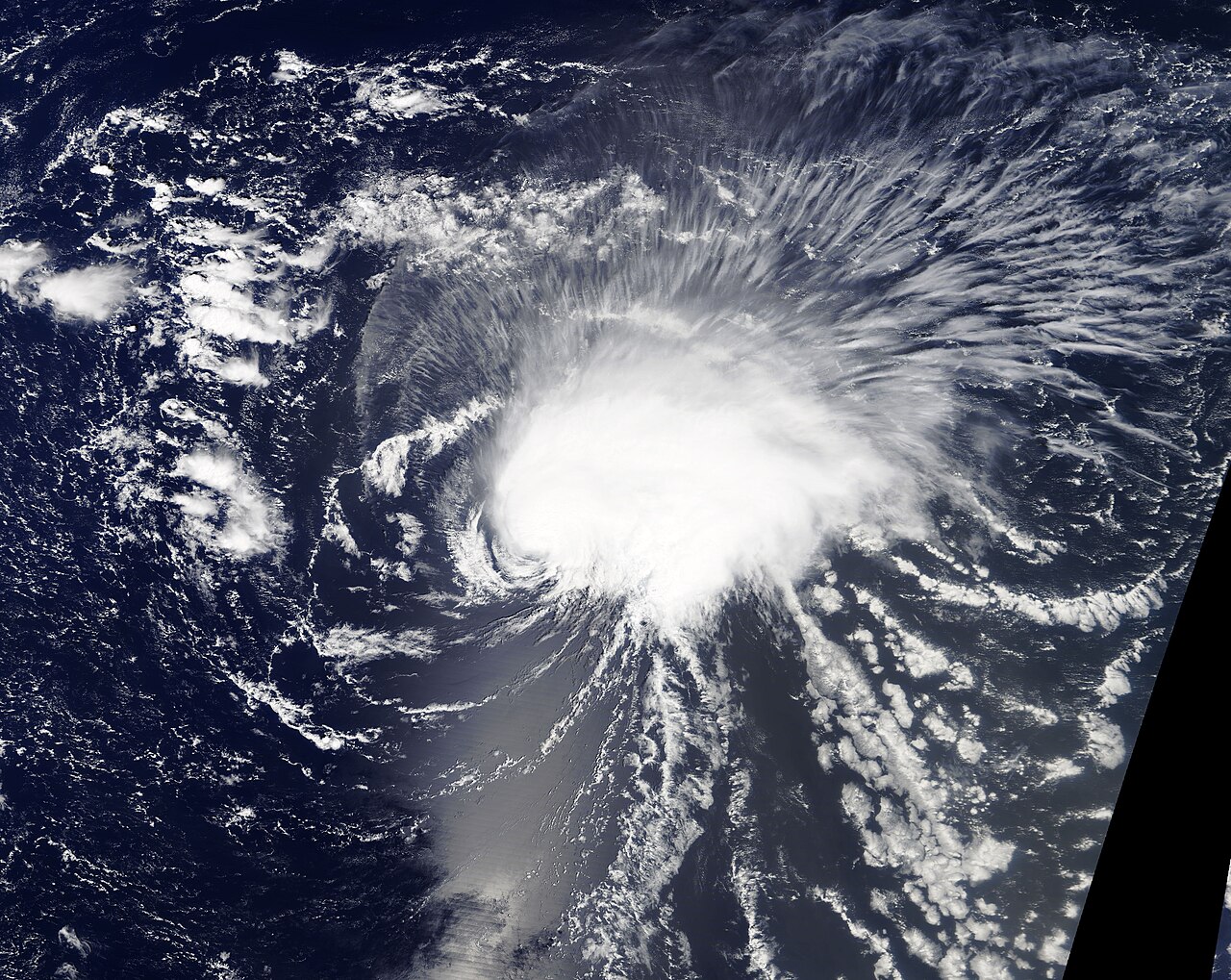
Florence stalled over the Carolinas and dumped historic rainfall for days. The pictured satellite image shows it filling the entire approach to the coast. Wind-driven rain and prolonged saturation destroyed countless roofs and ceilings across both states.
Hurricane Helene (2024)
Helene drove catastrophic wind and flooding far inland, proving that coastal storms punish the Carolinas hundreds of miles from the beach. It became one of the costliest U.S. hurricanes on record.
The pattern across decades is consistent:
- The big ones are unpredictable. Hugo and Andrew both stunned forecasters and residents.
- Roof damage is the universal outcome. Wind, water, and debris always target the roof first.
- Recovery is slow when everyone files at once. Early preparation moves you to the front of the line.
Source: NOAA / National Weather Service Charleston — Hurricane Hugo.
Your Roof Is the First Thing a Hurricane Attacks
When a hurricane reaches your home, the roof takes the first and hardest hit. Once wind lifts a single edge, it peels the system open and lets water pour into everything below.
The numbers confirm it. Post-storm studies from the Insurance Institute for Business & Home Safety (IBHS) find that between 70% and 90% of hurricane-related insurance claims include roof damage. The roof is the make-or-break component of storm survival.
Here is how wind defeats an unprepared roof, step by step:
- Uplift breaks the seal. Wind gets under shingle edges and breaks the adhesive bond.
- Shingles peel and fly. Loose shingles tear off and expose the underlayment.
- Flashing fails at the joints. Vents, chimneys, and valleys open up first.
- Decking gets exposed. Bare decking soaks up wind-driven rain in minutes.
- Water spreads inside. One opening floods insulation, ceilings, and walls.
Common pre-existing weak points we find on Grand Strand roofs:
- Corroded or backed-out nails from years of salt exposure.
- Cracked or lifting flashing around chimneys and skylights.
- Curling or brittle shingles that have lost their wind rating.
- Clogged gutters that trap water against the roof edge.
- Overhanging branches ready to become airborne battering rams.
Source: Insurance Institute for Business & Home Safety (IBHS).
Your Pre-June-1 Roof Readiness Checklist
You cannot control the forecast. You can control your roof. Work through these steps before the season opens, ideally in May.
- Schedule a professional roof inspection. A trained eye catches lifted shingles, failed seals, and hidden flashing gaps you will never see from the ground.
- Re-secure loose shingles and flashing. Fixing a few dozen fasteners now prevents a full tear-off later.
- Clear and secure the gutters. Free-flowing gutters move water away fast and stay attached in high wind.
- Trim overhanging branches. Remove the limbs that could puncture your roof or smash a window.
- Check attic ventilation and seals. Proper airflow and sealed penetrations reduce uplift pressure inside the roof.
- Inspect skylights, vents, and chimneys. These penetrations are the most common leak points in a storm.
- Photograph the roof in good condition. Dated, clear photos are your strongest insurance evidence after a storm.
- Confirm your emergency contact. Save a trusted local roofer's number before phone lines jam.
Do this first:
Book a pre-season inspection now. Our free Myrtle Beach roof inspection documents your roof's condition and flags every vulnerability before June 1. For the full printable version, use our 2026 hurricane roof checklist.
If an inspection reveals damage too far gone to patch, weigh a roof replacement in Myrtle Beach before peak season, when crews and materials are still easy to schedule.
Document Your Roof Now to Survive the Insurance Claim Later
The hardest part of a hurricane claim is proving the storm caused the damage, not age or neglect. Insurers look for any reason to reduce a payout. Pre-storm documentation removes that excuse.
Build your evidence file before a storm is ever named:
- Dated photos of every roof slope. Capture shingles, flashing, gutters, and penetrations.
- A copy of your roof's age and any warranties. Note the install year and last repair.
- A written inspection report. A professional report carries weight with adjusters.
- Your full insurance policy. Read the wind, hail, and named-storm sections in advance.
- Your deductible details. Coastal SC policies often carry a separate hurricane deductible.
That last point surprises many homeowners. In South Carolina's coastal counties, policies frequently include a named-storm or hurricane deductible that is a percentage of your home's insured value, not a flat dollar amount. Know that number now. Our guide to the SC named-storm deductible explains how it works and what it can cost.
When a storm does hit, move fast and follow a proven process. See what to do in the first 24 hours after storm roof damage and our step-by-step storm damage roof insurance claim guide for South Carolina. For direct help, our hurricane roof insurance claim team works alongside you.
Strengthen Your Roof — and Lower Your Premium
If your roof is near the end of its life, hurricane season is the perfect reason to upgrade to a system built for the coast. A stronger roof does more than survive storms. It can cut your insurance bill at the same time.
The IBHS FORTIFIED standard is the gold benchmark for storm-resistant roofs. IBHS research found that homes with a FORTIFIED roof had about 35% fewer claims after hurricanes Matthew, Florence, Dorian, and Isaias. Building to the higher FORTIFIED standard has been shown to prevent the majority of roof-related losses in major storms.
What makes a roof truly hurricane-ready:
- Sealed roof deck. A water-resistant barrier keeps the home dry even if shingles blow off.
- High-wind shingles or metal. Materials rated for 130+ mph instead of bargain 60–70 mph products.
- Ring-shank nails and enhanced fastening. Stronger attachment resists uplift.
- Reinforced roof-to-wall connections. Clips and straps keep the structure together.
- Corrosion-resistant fasteners. Critical against Grand Strand salt air.
South Carolina homeowners may also tap the SC Safe Home grant program for FORTIFIED upgrades, and many carriers offer wind-mitigation discounts for qualifying roofs. Learn more about FORTIFIED roof installation in Myrtle Beach and compare the best roofing materials for hurricane zones.
Key 2026 Hurricane Season Dates to Mark
Timing matters. The window to prepare is now, not when a storm is three days out and every roofer is booked. Mark these dates.
- June 1, 2026 — Season opens. The official start of the Atlantic hurricane season.
- Now through late May — Prep window. The calm, low-demand time to inspect and repair.
- August — NOAA mid-season update. Watch for a revised, often higher, outlook.
- Around September 10 — Statistical peak. The climatological height of Atlantic activity.
- November 30, 2026 — Season ends. The official close, though late storms still occur.
The single most valuable day is today.
Every roof repaired before June 1 is one less emergency during peak season. Booking now means you choose the timing, not the storm.
Source: NOAA National Hurricane Center — Tropical Cyclone Climatology.
Repair, Replace, or Call a Pro: Making the Decision Before the Storm
Once you know your roof's condition, the next decision is simple but urgent. Use this framework to act before the season, not after.
Choose minor repair if:
- Your roof is under 15 years old with isolated, localized wear.
- Only a few shingles or one flashing section need attention.
- An inspection confirms the underlying deck is sound.
Choose full replacement if:
- Your roof is 15–20+ years old, especially with budget shingles.
- Damage covers a large share of the surface, or leaks appear in multiple rooms.
- You want FORTIFIED protection and the insurance savings that follow.
Call immediately if you already see warning signs:
- Missing shingles, daylight in the attic, or active leaks.
- Sagging areas or soft, spongy spots on the deck.
- Granules filling the gutters, a sign shingles are failing.
Not sure which signs are serious? Review the warning signs your roof won't survive the next storm. If a storm has already struck, request emergency roof repair in Myrtle Beach and call to confirm current availability.
Beat the rush before June 1.
Get your free roof inspection or request a quote today. A roof that is ready before the season is the only forecast that protects your home.
The Cost Comparison: Maintenance vs. Neglect
Without Maintenance
- Roof lifespan: 12-15 years
- Insurance claims often denied
- Emergency repairs cost 3x more
- Property value decreases by 5-10%
- Warranty becomes void
- Total 20-year cost: $382
With Regular Maintenance
- Roof lifespan: 25-30+ years
- Insurance claims approved
- Prevent costly emergencies
- Property value protected
- Full warranty coverage maintained
- Total 20-year cost: $8,000-10,000
Need a roofer?
Call (843) 877-5539 for a free estimateNeed Professional Help?
Weather Shield Roofing is a Myrtle Beach roofing company with 80+ public Google reviews. We can help with any roofing need:
Frequently Asked Questions
About the Author
Weather Shield Roofing
Coastal Roofing & Storm Response Team — Myrtle Beach, SC
Weather Shield Roofing is a locally based roofing contractor serving Myrtle Beach, Horry County, and coastal South Carolina. The team specializes in storm-damage roof repair, full roof replacement, and hurricane-resistant roofing systems built for the Atlantic coast's wind, salt air, and driving rain. Every spring, the crew helps Grand Strand homeowners inspect, document, and strengthen their roofs before hurricane season opens.
The Bottom Line: Your Roof, Your Choice
Every day you wait is another day closer to that emergency call no homeowner wants to make. The statistics are clear: 80% of roofs fail prematurely, and 61% of homeowners can't afford the emergency repairs that follow.
What You Get with Weather Shield Roofing:
Don't Wait Until It's Too Late
Join thousands of smart Myrtle Beach homeowners who protect their investment with regular maintenance.
Emergency? Call our 24/7 hotline: (843) 877-5539
Our Roofing Services
Serving the Grand Strand
Weather Shield Roofing proudly serves homeowners across the Grand Strand and surrounding communities. Find your local roofing experts:
Related Articles

2026 Hurricane Roof Checklist for Myrtle Beach: Prepare Before the Storm
The printable, step-by-step roof preparation checklist every Myrtle Beach homeowner should complete before hurricane season opens.
Storm Damage Roof Insurance Claim in South Carolina: Step-by-Step Guide
How to file a winning storm damage roof claim in SC, from documentation and deductibles to adjuster meetings and payouts.
Best Roofing Materials for Hurricane Zones: Wind Ratings & Coastal Durability
Compare the most hurricane-resistant roofing materials by wind rating, impact resistance, and coastal longevity for South Carolina homes.
What to Do in the First 24 Hours After Storm Roof Damage
A calm, prioritized action plan for the critical first day after a storm damages your roof, including safety, documentation, and emergency repairs.